
Navigating the Maze: Where to Find Student Claim Support
Why International Student Claim Help Is Harder to Find Than It Should Be
International student claim help is something thousands of students urgently need every year — whether it’s after an unexpected medical bill, a tuition refund dispute, or a denied insurance request.
Here is a quick overview of where to start, based on your situation:
| Your Situation | Where to Get Help |
|---|---|
| Health insurance claim (US) | Your insurer or third-party administrator (e.g., via your university plan) |
| Emergency funds needed | University ISSS office or funding counselor |
| Scholarship or financial aid | Free databases like IEFA; your university financial aid office |
| Complaint about your school (Australia) | Commonwealth Ombudsman |
| Dispute with a NZ education provider | Study Complaints (free, government-funded) |
| Denied insurance claim | File an appeal with supporting documents through your insurer |
Being an international student is already a full-time job. Add a medical emergency, a course cancellation, or a surprise bill — and suddenly you’re drowning in paperwork written in a language that feels like a foreign language within a foreign language.
The financial pressure is real. Nearly 60% of tuition payments for international undergraduates in the US come directly from personal or family savings. There is very little room for things to go wrong.
And yet things do go wrong — regularly.
The good news: there are clear steps you can take, and real organizations built to help you. This guide walks you through all of them.
Know your international student claim help terms:
- Australian student insurance claims
- claim injury student travel
- illness claim student travel
Understanding the Different Types of Student Claims

When we talk about “claims,” we aren’t just talking about a doctor’s visit. For an international student, a claim is any formal request to get back money you’ve spent or to receive funding you’re entitled to. Navigating university-specific claim portals can feel like trying to solve a Rubik’s cube in the dark, but understanding the categories makes it easier.
- Health Insurance Claims: These are requests to your insurance provider to pay for medical services. In the US and Australia, this is the most common type of claim.
- Tuition Refunds: If you have to withdraw from a course due to an emergency or if a provider fails to deliver a program, you may need to file a claim for a refund.
- Financial Aid & Grants: While not a “claim” in the traditional sense, applying for emergency funds or academic support often involves a similar administrative process of proving need and submitting documentation.
- Housing Disputes: Claims for the return of a rental bond or compensation for uninhabitable living conditions arranged through your provider.
Common Issues Facing Students in 2026
As of April 2026, the landscape for international students has become increasingly complex. We see several recurring issues:
- Emergency Medical Situations: Unexpected hospitalizations where students are unsure if their policy covers “out-of-network” stabilization.
- Health Denials: Claims rejected because the insurer deems the treatment “not medically necessary” or a “pre-existing condition.”
- Tuition Disputes: Issues arising from course closures or significant changes to study programs that weren’t agreed upon at enrollment.
- Academic Misconduct Claims: Students needing to appeal decisions that might lead to enrollment cancellation and, subsequently, visa issues.
Visa-Specific Claim Considerations
Your visa status dictates the “rules of engagement” for your claims.
- F-1 Students: Must maintain a full course of study. Filing a claim for a tuition refund or withdrawal must be coordinated with your DSO (Designated School Official) to ensure your SEVIS record remains active.
- J-1 Scholars: Health insurance is a strict regulatory requirement for maintaining J-1 status. A gap in coverage or a denied claim that leads to unpaid bills can sometimes complicate your standing.
- OPT Holders: Once you transition to Optional Practical Training, you are often responsible for finding your own insurance. Claims here are handled directly with private insurers rather than through a university health center.
- Dependents: Those on F-2 or J-2 visas often have different coverage limits. It is vital to ensure that any international student claim help you seek accounts for the specific policy riders attached to dependents.
Step-by-Step International Student Claim Help for Insurance
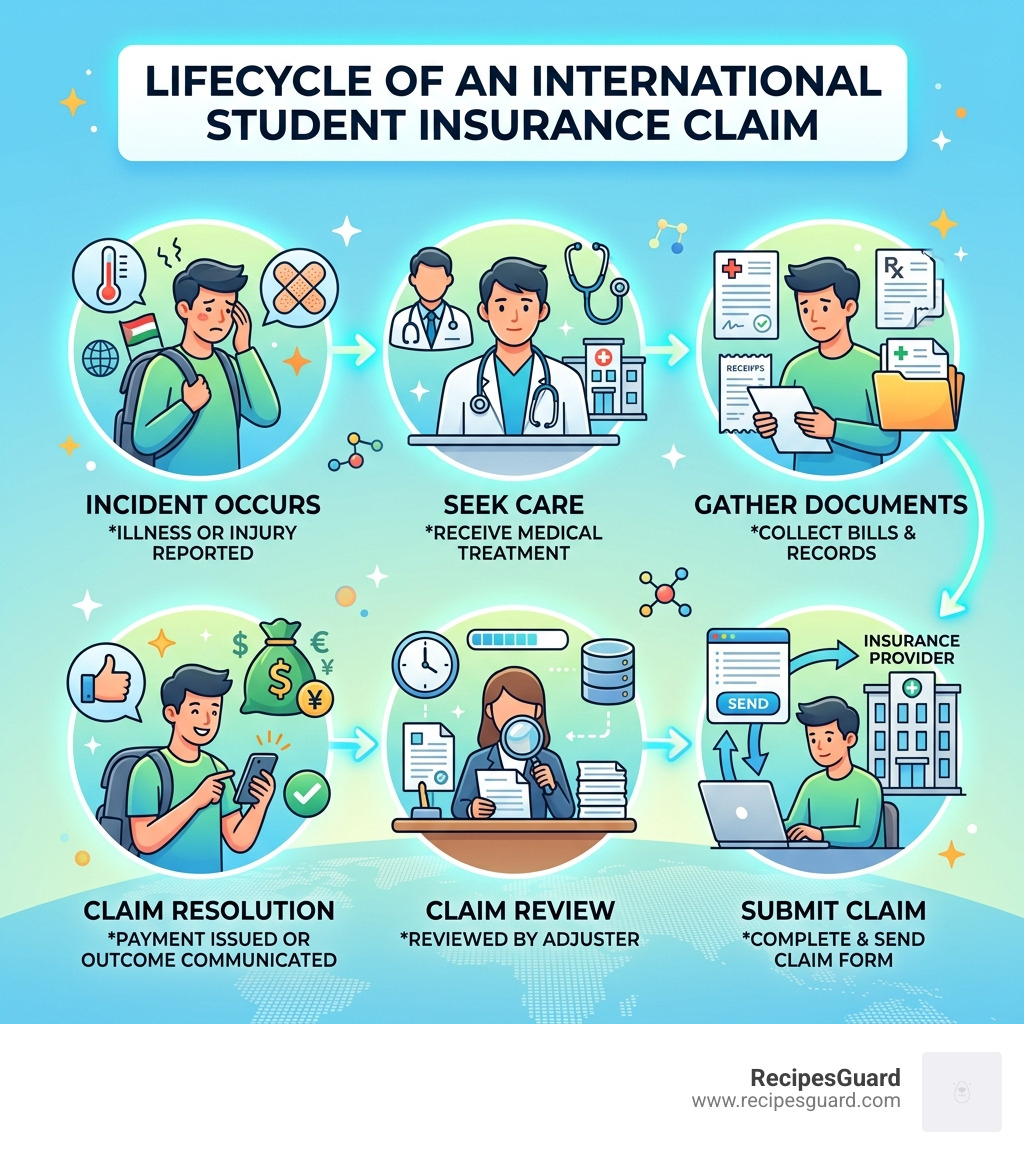
Filing an insurance claim is the “final boss” of international study. But it doesn’t have to be a nightmare. First, you need to know how the money moves.
| Feature | Direct Billing | Reimbursement |
|---|---|---|
| Who pays the doctor? | The insurance company pays directly. | You pay upfront, then the insurer pays you back. |
| Student Action | Show insurance card and pay copay. | Pay full bill, get itemized receipt, file claim form. |
| Paperwork Level | Low (handled by provider). | High (handled by you). |
| Cash Flow Impact | Minimal. | Significant (you need the cash upfront). |
Industry statistics show that providers have paid out over $100 million in medical services claims for international students over the decades. Most modern plans prefer direct billing through large provider networks to keep things simple for you.
How to File a Health Insurance Claim
If you find yourself at a clinic that doesn’t offer direct billing, follow these steps:
- Gather Itemized Bills: A simple credit card receipt isn’t enough. You need a bill that shows the “ICD-10” (diagnosis) and “CPT” (procedure) codes.
- Complete the Claim Form: Download this from your insurer’s portal. Double-check your member ID and date of birth.
- Submit via Portal: Most insurers in 2026 use digital submission portals. This is faster than mail and provides a digital paper trail.
- The 30-Day Rule: Most claims are processed within 30 business days. If you haven’t heard anything by day 31, it’s time to call the claims department.
Understanding Your Explanation of Benefits (EOB)
After your claim is processed, you’ll receive an EOB. Warning: An EOB is not a bill. It is a document explaining what the insurance company paid and what you might still owe the doctor.
- Patient Responsibility: This is the amount you owe (deductibles + copayments).
- Mailing Address: Ensure your university and insurer have your current physical address. EOBs containing sensitive medical info are often sent via physical mail.
Where to Get International Student Claim Help for Denied Requests
If your claim is denied, don’t panic. Errors happen.
- Check for Simple Mistakes: Sometimes a claim is denied simply because a name was misspelled or a birthdate was swapped.
- Contact the Claims Department: Ask for the specific reason for the denial.
- The Appeal Process: If the denial is substantive (e.g., “not covered”), you must file a formal appeal. This requires a letter of medical necessity from your doctor and copies of all relevant medical records.
- RecipesGuard Advice: We always recommend keeping a log of every person you speak to at the insurance company, including the date and a reference number for the call.
Accessing Financial Aid and Emergency Funding
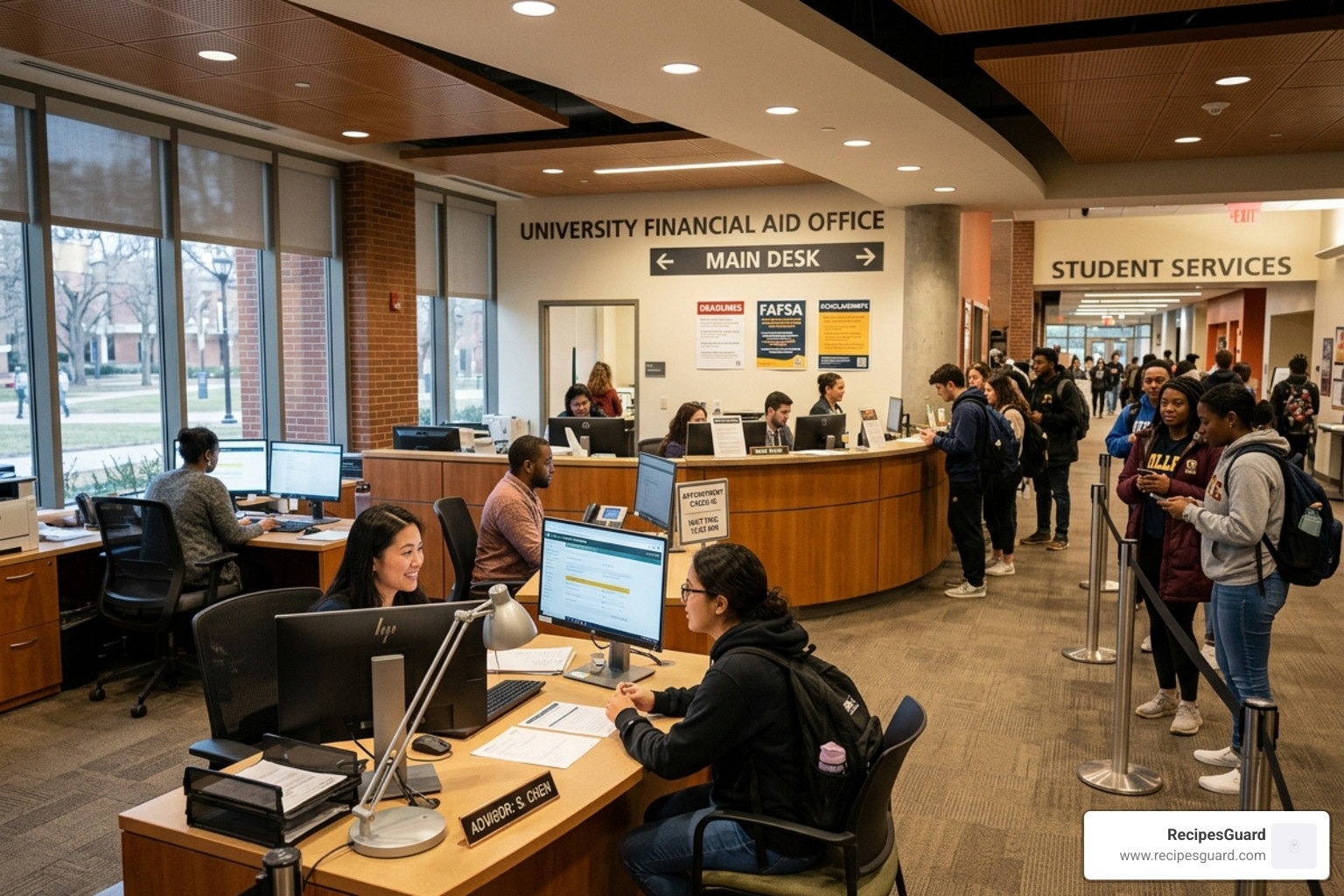
With nearly 60% of funding coming from personal sources, a financial emergency can be catastrophic. However, many students leave money on the table because they don’t know how to “claim” support.
International Student Claim Help for Emergency Funding
Most large universities have specific funds for F-1 and J-1 students facing a crisis (like a natural disaster in their home country or the death of a sponsor).
- Institutional Emergency Funds: These are often one-time grants that do not need to be repaid.
- Funding Counselors: Universities like the University of Minnesota or McGill provide dedicated counselors to help you navigate these applications.
- Crisis Grants: These are specifically for immediate needs like food, housing, or emergency travel.
Scholarships and Academic Support Claims
Don’t stop at the university level. There are massive databases like IEFA that list thousands of awards.
- Private Fellowships: Often based on your country of origin or field of study.
- Departmental Funds: Sometimes your specific academic department has “hidden” funds for travel to conferences or research materials.
- Fee Waivers: If you are in a documented financial hardship, some universities will waive certain administrative fees if you file a formal request.
Avoiding Financial Pitfalls and Scams
When looking for international student claim help, you might run into predators.
- Scholarship Scams: Never pay money to apply for a scholarship. If they ask for a “processing fee,” run away.
- Tax Treaties: Many countries have tax treaties with the US and Australia. By filing a 1040NR (in the US) with a tax treaty letter, you might be able to claim a refund on taxes withheld from your scholarships.
- Unauthorized Employment: Never try to solve a financial crisis by working off-campus without authorization. This will void your visa and make you ineligible for future claims or support.
How to Resolve Complaints with Education Providers
Sometimes the “claim” isn’t about money—it’s about justice. If your school isn’t living up to its end of the bargain, you have rights.
Working with National Education Ombudsmen
In Australia, the Commonwealth Ombudsman is a powerful ally. They investigate complaints about private education providers.
- What they cover: Course fees, refunds, incorrect advice from agents, and issues with how your school handled your initial complaint.
- What they don’t cover: Public universities (which have their own state ombudsmen) or “academic merit” (they won’t change your grade just because you think you deserved an A).
Dispute Resolution and Quality Assurance
In New Zealand, Study Complaints provides a free, government-funded service for international students. They handle:
- Financial Disputes: Refunds and compensation.
- Contractual Breaches: If the school changed your course without notice or closed down.
- Pastoral Code: Ensuring the school is looking after your well-being as required by law.
The Role of ISSS Offices in Claim Mediation
Your International Student and Scholar Services (ISSS) office should be your first stop. They can’t always give you money, but they provide the legal framework for your claims. They help with:
- Travel Signatures: Ensuring you can return to the country if you have to leave for an emergency.
- Employment Authorization: Helping you apply for CPT or OPT so you can earn money legally.
- Legal Status Maintenance: Ensuring that while you are fighting a claim or a dispute, your visa remains valid.
Frequently Asked Questions about Student Claims
How long does it take to process a medical claim?
Typically, it takes about 30 business days from the moment the insurer receives the documentation. If the claim is missing info, the clock restarts once the new info is submitted. You will know it’s done when you receive your EOB.
Can I make a claim without going through my school first?
For insurance, yes—you deal with the insurer. However, for complaints about tuition or grades, most national ombudsmen (like those in Australia and NZ) require you to follow your school’s internal grievance process first. Only after the school gives you a final “no” can you escalate to the national level.
What should I do if my insurance claim is denied?
- Request the “Reason for Denial” in writing.
- Gather supporting evidence (doctor’s notes, itemized bills).
- Submit a formal appeal form.
- If the appeal is denied, you can sometimes escalate to a state insurance commissioner or a student advocacy group.
Conclusion
At RecipesGuard, we know that the “maze” of international student life is complicated enough without adding the stress of a denied claim or a financial crisis. Our mission is to provide student-focused, step-by-step tutorials that turn complex insurance jargon into actionable steps.
Whether you are navigating the Australian student health cover system or trying to figure out how to handle a travel injury, you have rights. You are a consumer of education and insurance, and you deserve the coverage you paid for.
Don’t let a pile of paperwork stand between you and your degree. Use the resources in this guide, keep your documents organized, and never be afraid to ask for help from your university’s ISSS office or a professional advisor.
More info about insurance claim services

My name is Bianca, and my journey into the world of fermentation and food safety began with a costly mistake. I once lost an entire season’s harvest of chili peppers because I relied on guesswork instead of science. That failure was my turning point.
