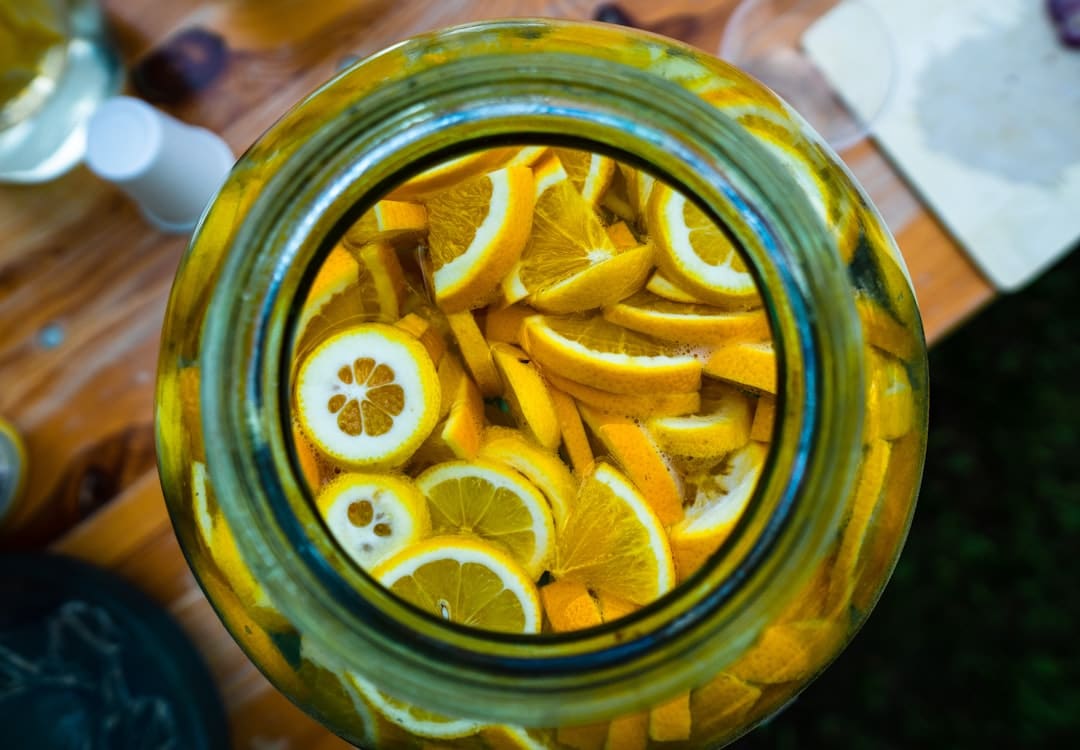
Main Squeeze: The Ultimate Guide to Preserving Citrus
Why Learning How to Preserve Citrus Fruits Is Worth Your Time
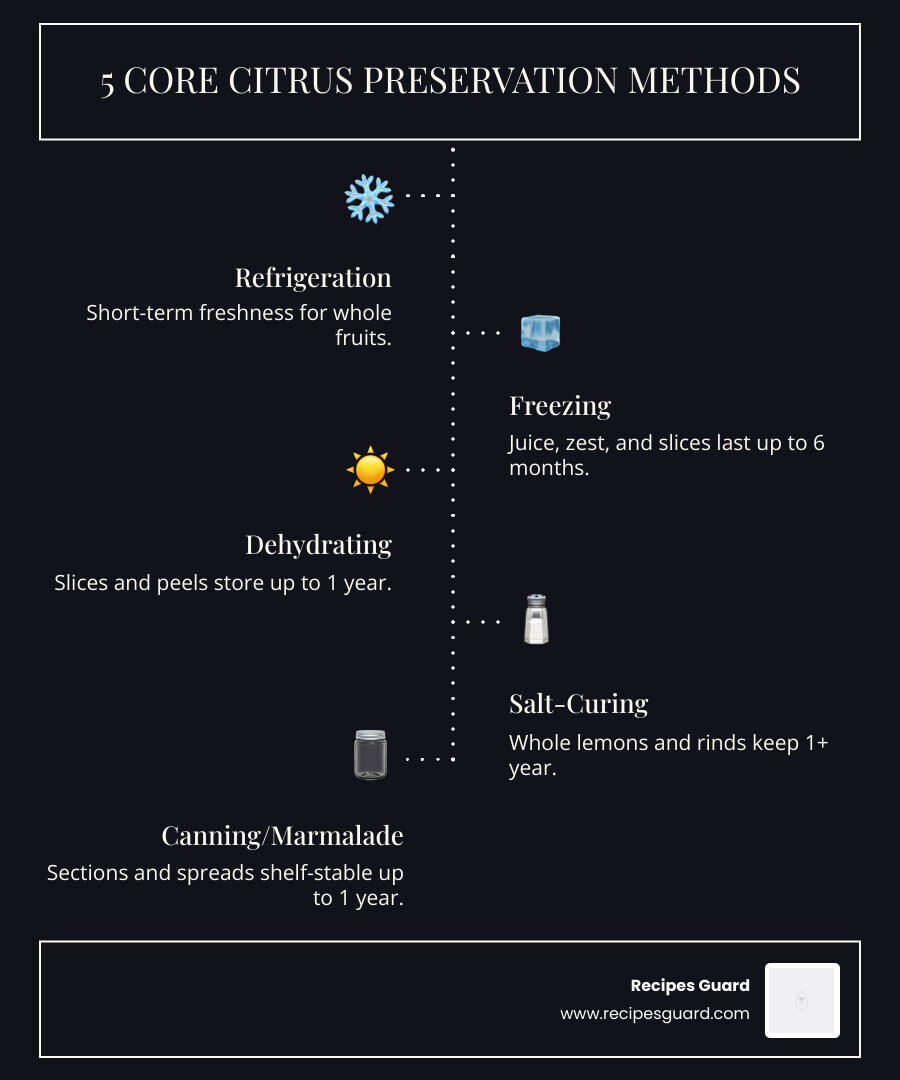
Knowing how to preserve citrus fruits can save you money, reduce waste, and give you bright, zesty flavors all year long. Here are the most effective methods at a glance:
Core citrus preservation methods:
| Method | Best For | Shelf Life |
|---|---|---|
| Refrigeration | Short-term freshness | 3-4 weeks |
| Freezing | Juice, zest, slices | Up to 6 months |
| Dehydrating | Slices, peels | Up to 1 year |
| Salt-curing | Whole lemons, rinds | 1+ year |
| Canning / Marmalade | Sections, spreads | Up to 1 year |
Citrus season doesn’t last forever. And if you’ve ever watched a bag of lemons shrivel on the counter, you know the frustration.
The good news? Most citrus is incredibly easy to preserve — and many techniques you already use for one citrus fruit transfer directly to others.
Consider this: one medium lemon delivers 35% of your daily Vitamin C with only 18 calories. That’s worth holding onto. And with roughly 95% of U.S. lemons grown in California and Arizona, peak season produce is both abundant and affordable — the perfect moment to preserve.
Whether you’re stocking up on a neighbor’s surplus oranges or stretching a farmers market haul, this guide walks you through every method, from quick freezing to lacto-fermentation, so nothing goes to waste.
Preparing Your Harvest: Selection and Storage Basics
Before we dive into the “how-to,” we must start with the “what.” The quality of your preserved goods depends entirely on the quality of the fresh fruit. When we select citrus for preservation in April 2026, we look for fruit that is heavy for its size—this indicates a high juice content. The skin should be firm, with a fine texture and no soft spots or visible mold.
One of the most important things to remember is that citrus fruits do not ripen after they are picked. If you are harvesting from your own tree, wait until the fruit has reached its full color (at least 25% for oranges) and perform a taste test. If it’s sour on the tree, it will be sour in the jar!
Essential Equipment for Citrus Preservation
To master how to preserve citrus fruits, you’ll need a few specialized tools. We recommend using non-reactive cookware—think stainless steel, enamel, or glass. Citrus is highly acidic, and reactive metals like aluminum or unlined copper can leach a metallic taste into your preserves.
Your toolkit should include:
- Microplane Zesters: Essential for removing the fragrant flavedo (the colored part of the peel) without hitting the bitter white pith.
- Canning Jars: Standard Mason jars are perfect for everything from marmalade to salt-cured lemons.
- Fermentation Weights: These glass or ceramic weights keep fruit submerged under brine, which is critical for safety.
- Candy Thermometers: Precision is key for gelling marmalades; you’re looking for that magic 220°F (at sea level).
- Dehydrator: While an oven works, a dedicated dehydrator offers better airflow and temperature control at the necessary low settings (125°F).
Cleaning and Prepping for Longevity
Citrus from the grocery store is often coated in a food-grade wax to prevent moisture loss. While safe to eat, this wax can interfere with some preservation methods, especially if you’re using the peel. To remove it, we recommend a “boiling plunge”—dip the fruit in boiling water for a few seconds and then scrub with a produce brush under cool tap water.
For many recipes, you’ll want to “supreme” your segments. This involves cutting off both ends, slicing away the peel and pith following the fruit’s curve, and then cutting the individual segments out from between the membranes. This removes the tough, bitter parts, leaving you with pure, juicy fruit. Always ensure your workspace is sanitized; we suggest checking out our guide on Preserving Basics for a deep dive into hygiene protocols.

Citrus Storage Comparison Table
| Storage Method | Conditions | Average Shelf Life |
|---|---|---|
| Countertop | Cool, dark, well-ventilated | 5–7 days |
| Refrigerator (Loose) | Crisper drawer | 2–3 weeks |
| Refrigerator (Sealed) | Airtight bag or container | 4 weeks+ |
| Water Submersion | Submerged in jar in fridge | 1 month+ |
How to Preserve Citrus Fruits: Beginner-Friendly Methods
If you are new to preservation, don’t feel like you have to start with complex canning recipes. Some of the most effective ways to keep that “zest for life” are also the simplest. Freezing and dehydrating are excellent entry points that require minimal specialized knowledge but offer massive culinary rewards.
Step-by-Step: How to Preserve Citrus Fruits by Freezing
Freezing is arguably the most versatile method. According to the Freezing Citrus Fruits – National Center for Home Food Preservation, you can freeze juice, sections, or even zest with great success.
- Juice Cubes: Squeeze your lemons, limes, or oranges. Pour the juice into ice cube trays. Once frozen, transfer the cubes to a freezer-safe bag. Each cube is usually about 2 tablespoons—perfect for recipes!
- Zest: Always zest your fruit before juicing. We like to freeze zest in small airtight containers. You can even mix it with a little sugar or oil to prevent clumping.
- Slices and Wedges: Line a baking sheet with parchment paper. Place citrus slices in a single layer (this is called flash freezing). Once they are hard, move them to a bag. This prevents them from sticking together in one giant citrus-ice-brick.
- Headspace: If you are freezing juice in jars, leave at least an inch of “headspace” at the top. Liquid expands as it freezes, and you don’t want a glass explosion in your freezer!
How to Preserve Citrus Fruits Using Dehydration
Dehydrating citrus creates beautiful, shelf-stable garnishes that last for a year.
- The Process: Slice your fruit thinly (about 1/8 inch). Arrange them on dehydrator trays.
- Temperature: Set your dehydrator to 125°F. If using an oven, use the lowest possible setting (usually around 170°F) and keep the door slightly propped.
- The Goal: You want the slices to be brittle or leathery with no remaining moisture. This usually takes 8 to 12 hours.
- Conditioning: After drying, let the slices sit in a closed jar for a few days. If you see any condensation, they need more time in the dehydrator.
Advanced Techniques: Canning and Fermenting Citrus
Ready to level up? This is where we at Recipes Guard get really excited. Fermentation and canning transform the flavor profile of citrus, moving it from “bright and acidic” to “complex, salty, and savory.”
Mastering the Art of Marmalade and Curds
Marmalade is the king of citrus preserves. Unlike jam, it uses the whole fruit—peel and all. The secret is the pectin found in the seeds and the white pith (albedo).
- Pectin Extraction: Many traditional recipes involve soaking the seeds and pith in a muslin bag while the fruit simmers.
- The Gelling Point: You must reach 220°F (at sea level) for the marmalade to set. We recommend the “wrinkle test”: place a small spoonful of hot marmalade on a cold plate in the freezer for a minute. If it wrinkles when you push it with your finger, it’s ready.
- Foaming: To reduce foam while boiling, add a tiny pat of unsalted butter to the pot.
Salt-Curing and Moroccan Preserved Lemons
This is a staple in our Fermented Recipes collection. Preserved lemons are a delicacy that adds incredible depth to stews and dressings.
- Prepare the Jar: Use a sterilized wide-mouth jar.
- The Cut: Quarter the lemons from the top, but don’t cut all the way through the bottom. They should stay attached like a flower.
- The Salt: Pack the inside of the lemon with coarse sea salt.
- The Pack: Push the lemons into the jar with force. You want them to release their own juice.
- Submersion: The lemons must be fully submerged in juice. If they aren’t covered, add more fresh lemon juice.
- The Wait: Let them sit at room temperature for 3–4 days (shaking daily), then move them to the fridge for at least 3 weeks. They will last over a year!
Safety First: Avoiding Spoilage and Botulism
When we discuss how to preserve citrus fruits, safety is our top priority. Citrus is naturally high in acid (typically with a pH between 3.6 and 4.3), which makes it a low-risk food for botulism, as Clostridium botulinum cannot grow in high-acid environments. However, mold and yeast can still cause spoilage.
If you are water bath canning, you must follow tested recipes to ensure the acidity remains at a safe level. For more on this, read our Safety First: A Guide to Preserving Fermented Foods article. Altitude matters! Water boils at a lower temperature at higher elevations, so you’ll need to increase your processing time by about 5 minutes for every 1,000 feet above sea level.
Recognizing Signs of Spoilage
Even with the best intentions, things can go wrong. Here is what to look for:
- Mold: Any fuzzy growth on the surface of your preserves is a sign to discard the entire jar.
- Off-Odors: If it smells like rotten eggs or “funk” that isn’t characteristic of fermentation, toss it.
- Kahm Yeast: In fermentation, you might see a thin, white, wavy film on the surface. This is Kahm yeast. While not harmful, it can affect the flavor. You can scrape it off, but if it’s thick, it’s better to start over.
- Seal Integrity: If a canned jar’s lid pops up or feels loose, the seal has failed.
Zero-Waste Citrus: Utilizing Peels, Zest, and Seeds
One of our favorite parts of how to preserve citrus fruits is that you can use literally every part of the plant.
- Candied Peels: Simmer citrus rinds in a simple syrup (equal parts sugar and water) until translucent, then toss in sugar. They are better than candy!
- Citrus Vinegar: Fill a jar with leftover citrus peels and cover with white vinegar. Let it sit for two weeks, strain, and you have a powerful, non-toxic, great-smelling cleaning spray.
- Homemade Pectin: Don’t throw away those seeds! You can boil citrus seeds and pith to create a liquid pectin for use in other fruit jams.
- Alcohol Infusions: Steep lemon rinds in vodka for several weeks to create homemade Limoncello.
Frequently Asked Questions about Citrus Preservation
Can you freeze whole lemons and oranges?
Yes, you can! Simply wash and dry the whole fruit and place it in a freezer bag. The texture will change significantly; the cell walls rupture, making the fruit mushy once thawed. However, this actually makes them easier to juice! Use whole frozen citrus within 6 months.
How do you adjust canning times for high altitudes?
Because water boils at lower temperatures as you go up in elevation, you must process your jars longer to kill bacteria. A general rule is to add 5 minutes of processing time if you are between 1,001 and 3,000 feet, and 10 minutes if you are between 3,001 and 6,000 feet. Always check a reliable altitude chart before starting.
What is the best way to store preserved lemons once opened?
Once you’ve opened your jar of salt-preserved lemons, keep them in the refrigerator. The most important rule is to always use a clean utensil to remove a lemon. Introducing bacteria from a used spoon can spoil the whole batch. As long as they stay submerged in their salty brine, they can last up to a year in the fridge.
Conclusion
Preserving citrus is more than just a kitchen chore; it’s a way to capture the sunshine of the harvest and keep it in your pantry for those rainy days. From the simple joy of a zesty ice cube in your tea to the complex, fermented depth of a Moroccan preserved lemon, these techniques empower you to run a more sustainable, flavorful kitchen.
At Recipes Guard, we believe that understanding the “why” behind preservation makes the “how” much more rewarding. We hope this guide has inspired you to grab a bag of citrus and start your journey. Ready to learn more? Start your journey with our Preserving Basics Guide and discover the endless possibilities of home food preservation. Happy squeezing!