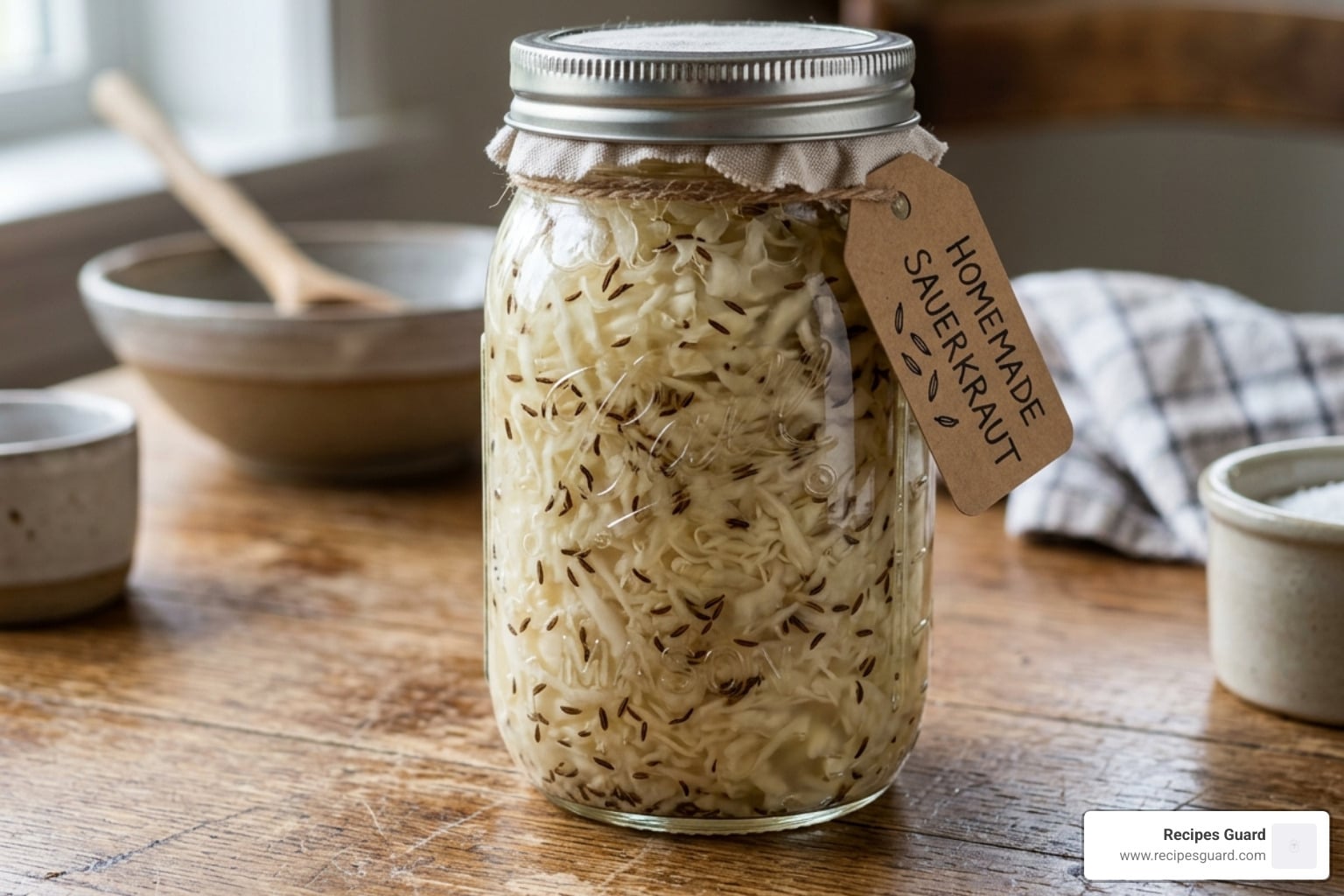
How to Make Traditional Caraway Sauerkraut Like a Pro
Essential Ingredients and the Perfect Salt Ratio
When embarking on a caraway sauerkraut recipe, the quality of your ingredients is the foundation of your success. Because fermentation is a “wild” process—meaning we rely on the beneficial bacteria already present on the vegetables—starting with fresh, clean produce is non-negotiable.
The Cabbage
For traditional kraut, green cabbage is the gold standard. We recommend looking for heads that feel heavy for their size and have tightly packed leaves. In our experience, the “flat” cabbage varieties often found in late summer or autumn are particularly sweet and tender, though standard round green cabbage works perfectly well. If you can, choose organic cabbage to ensure a healthy population of natural microbes and to avoid pesticide residues that might interfere with the delicate fermentation process.
The Salt
Salt is the most critical tool in your fermentation kit. It performs three vital functions:
- It draws moisture out of the cabbage to create the brine.
- It hardens the pectins in the cabbage, keeping it crunchy rather than mushy.
- It creates an environment where “good” lactic acid bacteria thrive while “bad” spoilage bacteria are inhibited.
We always suggest using a high-quality sea salt or Himalayan pink salt. Avoid standard table salt, as the added iodine and anti-caking agents can turn your brine cloudy or give the kraut an off-flavor.
The Caraway Seeds
Caraway is what transforms a standard kraut into a “Bavarian-style” masterpiece. These seeds offer an earthy, nutty flavor with hints of anise and citrus. Beyond flavor, caraway has been used for centuries in European traditions to aid digestion and reduce bloating—making it the perfect partner for fermented cabbage.
The Golden Ratio: 2.5% Salinity
One of the most common questions we get at Recipes Guard is: “How much salt do I actually need?” While some old-school recipes are incredibly salty, modern fermentation experts (and our own kitchen tests) suggest a 2.5% salt-to-vegetable ratio by weight.
If you don’t have a kitchen scale, a reliable rule of thumb is 1 tablespoon of salt for every 2 pounds of cabbage. This ratio provides enough protection to prevent spoilage while allowing the complex flavors of the cabbage and caraway to shine through.
| Cabbage Weight | Salt Amount (Volume) | Salt Amount (Weight) | Caraway Seeds |
|---|---|---|---|
| 2 lbs (approx. 1 head) | 1 tbsp | 15-18g | 1-2 tsp |
| 4 lbs (approx. 2 heads) | 2 tbsp | 30-36g | 1 tbsp |
| 6 lbs (approx. 3 heads) | 3 tbsp | 45-54g | 2 tbsp |
For more inspiration on using salt in ferments, check out this Sauerkraut With Caraway Recipe – Chef’s Resource Recipes.
Step-by-Step Caraway Sauerkraut Recipe from Scratch
Making sauerkraut is a tactile, sensory experience. It’s about rhythm, pressure, and patience. Follow these steps to ensure your first batch is professional-grade.
1. Preparation and Shredding
Start by removing the tattered outer leaves of your cabbage. Pro Tip: Save one or two clean outer leaves; we’ll use them later as a “follower” to keep the shredded bits submerged. Quarter the cabbage and remove the tough inner core.
Using a sharp chef’s knife, a mandoline, or a dedicated sauerkraut slicer, shred the cabbage into thin strips, about 1/8-inch wide. Avoid using a food processor for this step; the high-speed blades tend to pulverize the cabbage, resulting in a mushy texture rather than a pleasant crunch.
2. The Massage
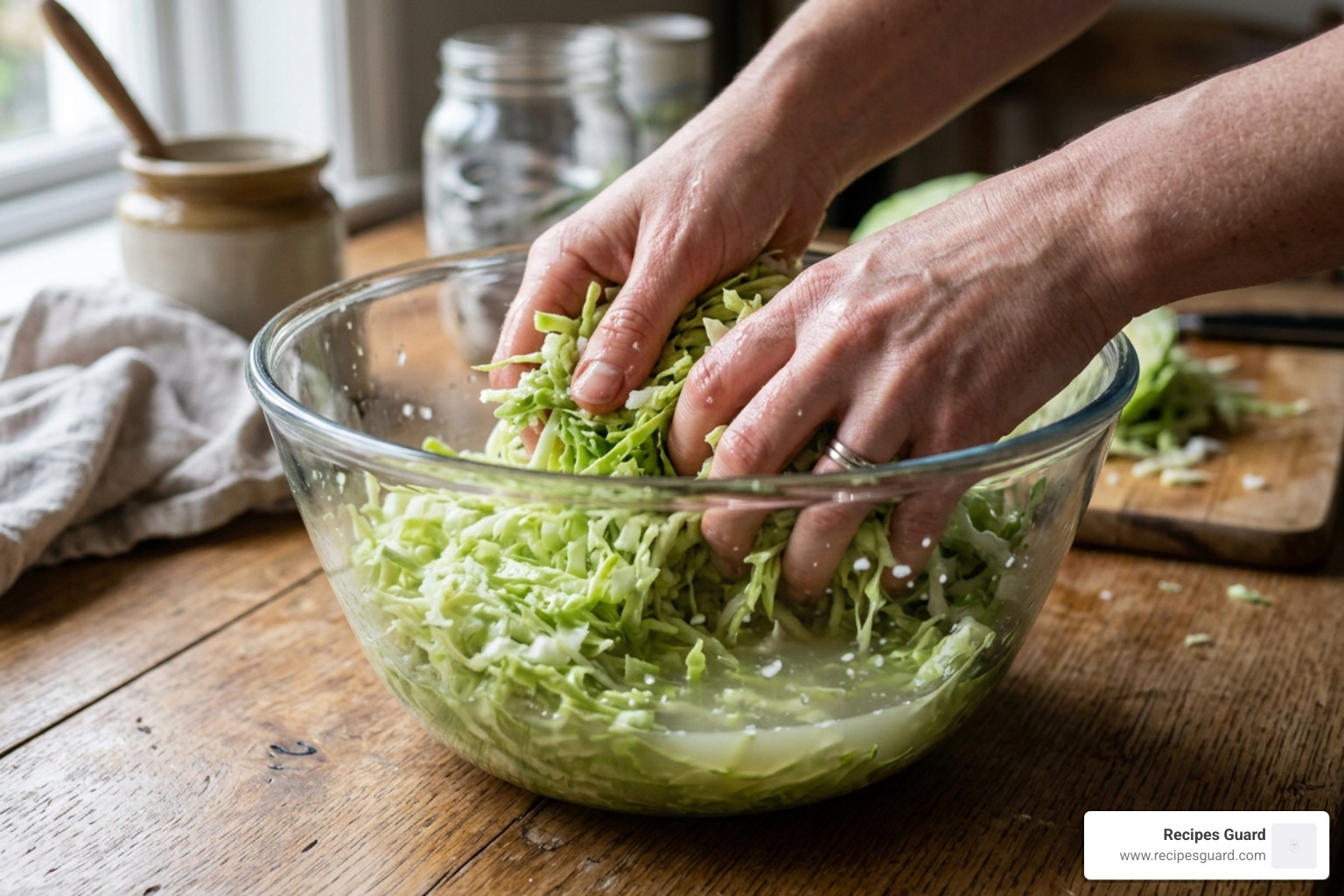
Place your shredded cabbage in a very large bowl. Sprinkle your measured salt over the top. Now, roll up your sleeves—it’s time to massage. Squeeze the cabbage firmly with your hands. You’ll notice that after about 5 to 10 minutes of vigorous squeezing, the cabbage will shrink in volume, turn translucent, and begin to release a significant amount of liquid. This liquid is your “natural brine.”
If your hands get tired, let the cabbage rest for 10-15 minutes. The salt will continue to work its magic through osmosis, drawing out more juice while you take a break.
3. Adding the Flavor
Once you have a puddle of brine at the bottom of your bowl, stir in your caraway seeds. Some fermented food enthusiasts like to lightly crush the seeds with a mortar and pestle first to release the essential oils, but whole seeds work beautifully for a slow, 6-week ferment. If you’re feeling adventurous, you can browse More Fermented Recipes to see how other spices like juniper berries or dill can be layered in.
4. Packing the Jar
Transfer the cabbage into a clean wide-mouth glass jar. As you add each handful, use your fist or a wooden “kraut pounder” to pack it down as tightly as possible. The goal is to eliminate air pockets.
Once all the cabbage is in the jar, pour the remaining brine from the bowl over the top. The cabbage must be completely submerged. If your cabbage was a bit dry and didn’t produce enough juice, you can top it off with a simple 2% salt brine (1 teaspoon of salt dissolved in 1 cup of filtered water).
Leave at least 1 to 2 inches of “headspace” between the top of the brine and the rim of the jar. Fermentation is an active process that creates bubbles, and without headspace, your jar will likely overflow!
Mastering the Fermentation Environment and Equipment
While you can make sauerkraut in a simple jar with a loose lid, using the right equipment can significantly decrease the risk of mold and improve the final flavor.
The Importance of Submersion
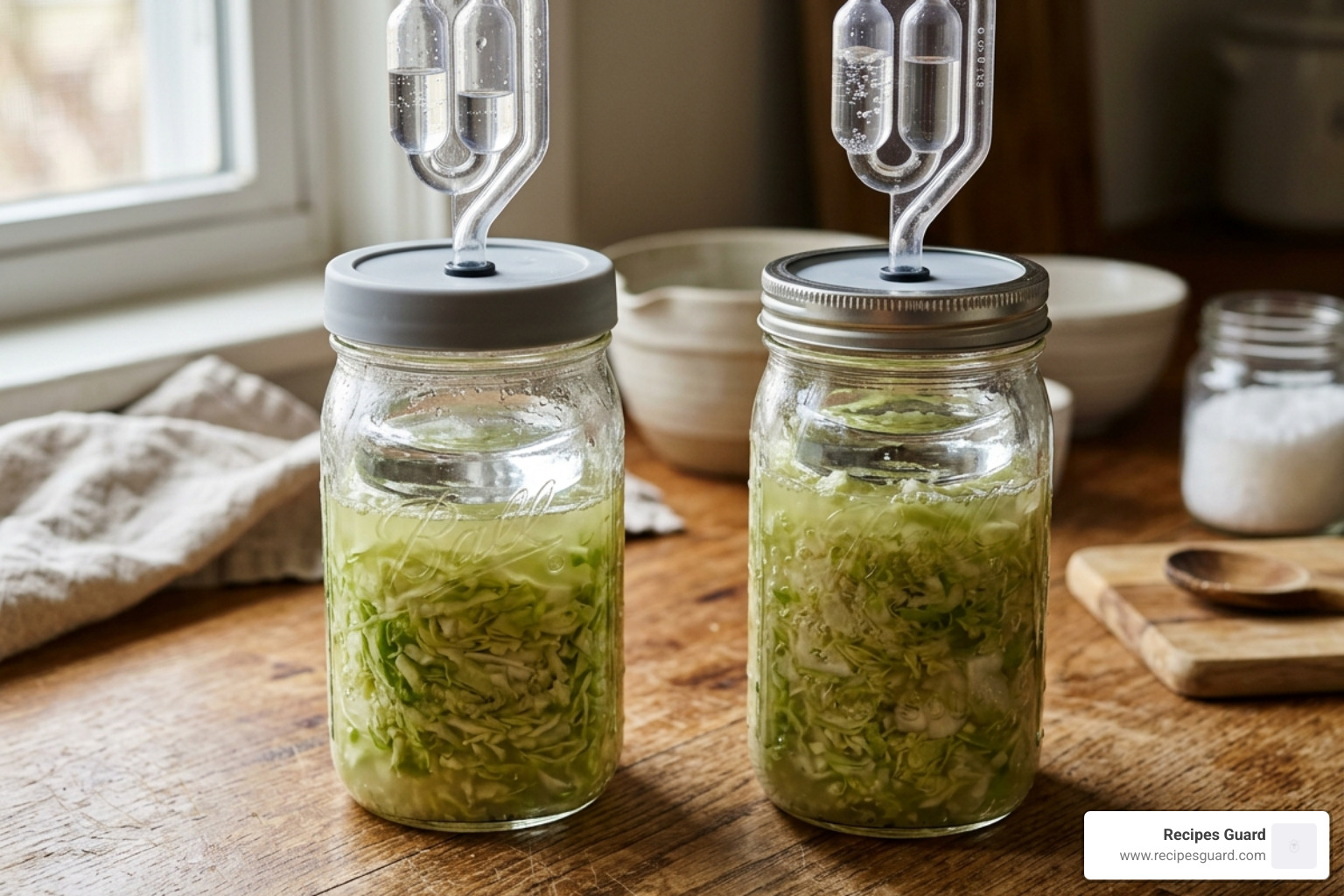
The most important rule of fermentation is: Under the brine, all is fine. Above the brine, mold will find. To keep the cabbage submerged, take that outer leaf you saved earlier and tuck it over the top of the shredded cabbage. Then, place a glass fermentation weight on top of the leaf. This ensures that no stray bits of cabbage float to the surface where they might be exposed to oxygen.
Using Air-Locks vs. Burping
We highly recommend using an air-lock lid. These lids allow carbon dioxide (a byproduct of fermentation) to escape while preventing oxygen and dust from entering. If you don’t have an air-lock, you can use a standard plastic lid, but you must “burp” the jar daily—briefly opening the lid to let the gas out—during the first week of active fermentation.
Temperature and Timing
Where you store your jar matters just as much as what’s inside it.
- Optimal Temperature: 64°F to 72°F is the “sweet spot.” If the room is too cold (below 60°F), fermentation will be sluggish. If it’s too hot (above 80°F), the cabbage may soften too quickly or develop off-flavors.
- Duration: While you can eat your kraut after just 7 days, we believe a caraway sauerkraut recipe reaches its peak flavor between 6 and 8 weeks. This longer duration allows the complex “funk” to develop and the caraway to fully permeate the cabbage.
For a deeper dive into the science of keeping your ferments healthy, read our guide, Safety First: A Guide to Preserving Fermented Foods.
Troubleshooting and Serving Your Caraway Sauerkraut Recipe
Even the pros run into the occasional “funky” situation. Knowing what’s normal and what’s a “toss it” scenario is key to fermentation confidence.
Troubleshooting: Kahm Yeast vs. Mold
During the first few weeks, you might see a thin, white, wavy film on the surface of the brine. This is likely Kahm yeast. It is harmless, though it can affect the flavor if left too long. Simply scrape it off with a clean spoon.
Mold, on the other hand, is usually fuzzy and can be green, black, or pink. If you see fuzzy mold growing on the cabbage or the weight, it’s best to err on the side of caution and discard the batch. To prevent this, always ensure your equipment is clean and your cabbage stays submerged.
The Smell Test
Fermentation should smell pleasantly sour, tangy, and a bit like vinegar. If the jar smells putrid, like rotting garbage, or sulfurous in an overwhelming way, something has gone wrong. Trust your nose! If you want to see how “funk” works in other recipes, check out Don’t Be Afraid of the Funk: With This Easy Fermented Garlic Recipe.
Serving Suggestions
Once your kraut is ready, the possibilities are endless. It’s a staple for Whole30 Sauerkraut Recipes with Caraway, but here are our favorite ways to enjoy it:
- The Classic Reuben: Piled high on rye bread with corned beef, Swiss cheese, and Russian dressing.
- Sausage Companion: Served alongside grilled bratwurst or kielbasa.
- The Tummy Tonic: Don’t throw away the brine! A small shot of sauerkraut juice (often called “tummy tonic” in Eastern Europe) is a concentrated dose of probiotics and is a traditional remedy for hangovers or indigestion.
- Salad Booster: Mix it into a potato salad or use it as a tangy topping for avocado toast.

Storage, Shelf Life, and Quick Alternatives
After the fermentation period is over and you love the taste, it’s time to move the jar to the refrigerator.
Long-Term Storage
Cold temperatures significantly slow down the bacteria, effectively “parking” the fermentation. In the fridge, your caraway sauerkraut will maintain its quality for 6 to 12 months. Over time, the texture may soften slightly, and the flavor will continue to sharpen, but it remains safe to eat as long as it smells good and stays submerged in its brine.
For more on the basics of keeping your pantry stocked with long-lasting goods, visit our Preserving Basics section.
The Quick Caraway Hack
If you’re craving that caraway flavor but don’t want to wait six weeks, you can use a “quick method.” Take a jar of high-quality, plain store-bought sauerkraut (ensure it is the refrigerated, “live” kind, not the canned shelf-stable version).
- Drain a bit of the brine.
- Toast 1 teaspoon of caraway seeds in a dry pan until fragrant.
- Lightly crush the seeds and stir them into the kraut.
- Let it sit in the fridge for 24 hours before serving.
While it won’t have the same depth as a long-fermented batch, it’s a great way to elevate a store-bought staple. For more speedy ideas, see our Quick and Easy Pickled Vegetables for Every Meal.
Frequently Asked Questions about Caraway Sauerkraut
How do I know when my caraway sauerkraut recipe is ready?
You’ll know it’s working when you see tiny bubbles rising to the top of the jar in the first 3-7 days. The brine may also turn slightly cloudy—this is a great sign that the Lactobacillus bacteria are winning the battle! We recommend tasting your kraut starting at the 14-day mark. If you like a mild crunch, it might be ready then. If you prefer the traditional, deep sourness of European kraut, let it go for the full 6 to 8 weeks.
What should I do if my caraway sauerkraut recipe has a white film on top?
As mentioned, this is usually Kahm yeast. It often happens if the fermentation temperature is a bit too warm or if the brine isn’t salty enough. Scrape it off, wipe the inside rim of the jar with a clean cloth dipped in vinegar, and ensure your weights are holding the cabbage down. As long as the kraut underneath smells tangy and looks bright, it is safe to eat.
Can I use red cabbage for this recipe?
Absolutely! Red cabbage makes a stunning, vibrant purple sauerkraut. That red cabbage is slightly denser and can sometimes ferment a bit faster than green cabbage. The caraway flavor pairs beautifully with the earthy notes of red cabbage. Just be prepared—the color will bleed into everything it touches, including your wooden spoons!
Conclusion
At Recipes Guard, we believe that mastering a caraway sauerkraut recipe is a rite of passage for any home cook interested in traditional food preservation. It is a bridge to the past and a boost for your future health. By following the 2.5% salt ratio, ensuring total submersion, and giving the bacteria time to work their magic, you’ll produce a kraut that far outshines anything found on a supermarket shelf.
Ready to expand your fermentation station? Explore more fermented recipes like our Mastering the Art of Lacto-Fermented Hot Sauce and start filling your fridge with probiotic goodness!