
What to Do When a Student Travel Emergency Strikes
Student travel emergency claim steps are something most students never think about — until they’re sitting in a foreign hospital, luggage gone, or stranded by a cancelled flight.
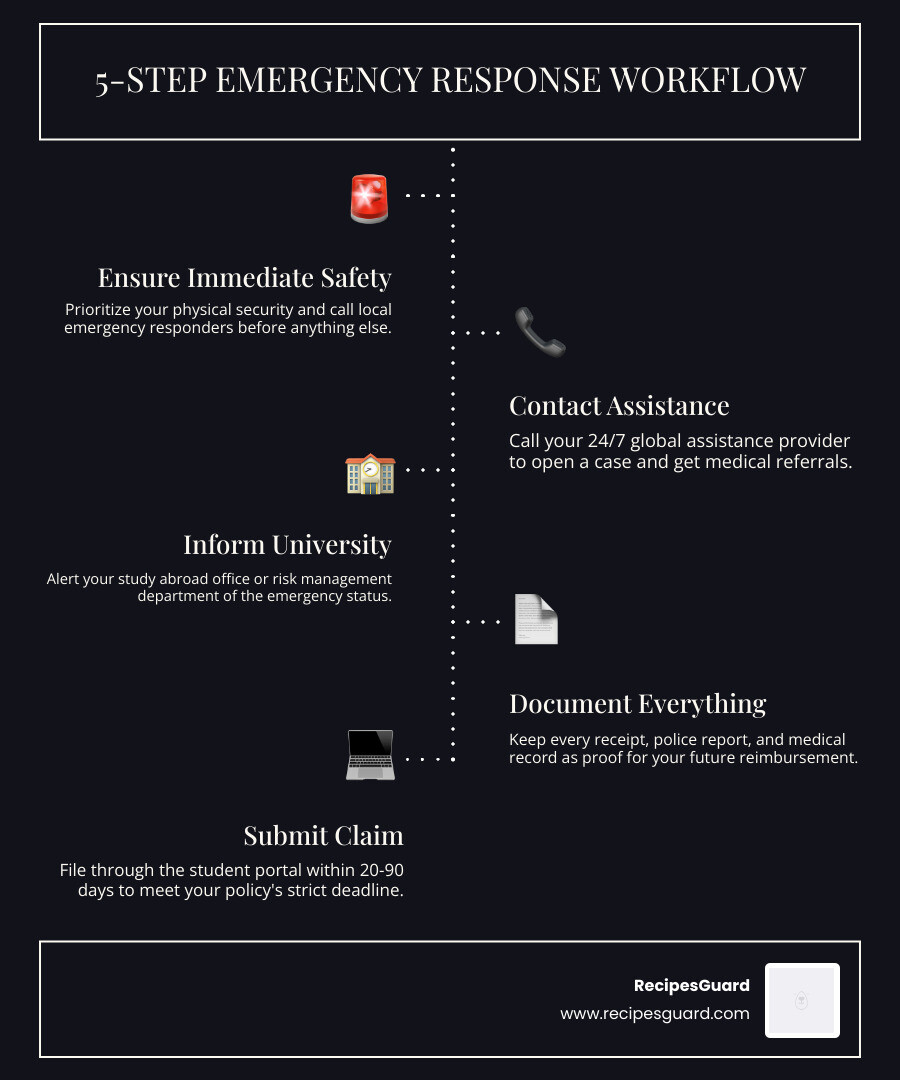
Here’s a quick overview of what to do:
- Ensure your immediate safety — call local emergency services first
- Contact your 24/7 assistance provider (e.g., On Call International, International SOS, or Chubb-AXA) by phone, app, or chat
- Notify your university’s travel office as soon as it is safe to do so
- Document everything — save all receipts, medical records, and police reports
- File your claim within your policy’s deadline (typically 20–90 days), through your insurer’s online portal or student claims portal
Studying abroad is exciting. But emergencies happen — a sudden illness, a stolen passport, a natural disaster. When they do, most students have no idea what to do next, especially when it comes to getting their money back.
The good news? Many universities automatically enroll students in travel insurance for sponsored trips. The tricky part is knowing how to actually use it.
Many countries require upfront payment for medical care and won’t accept a US health plan ID card. That means without the right steps, you could end up paying thousands out of pocket and struggling to get reimbursed later.
This guide walks you through exactly what to do, step by step.
Understanding Student Travel Insurance and Coverage
Before we dive into the student travel emergency claim steps, we need to understand what this insurance actually does. Student travel insurance is a specialized type of coverage designed for the unique risks of studying abroad. It isn’t just a standard health plan; it’s a safety net that covers everything from medical bills to emergency evacuations.
What is Typically Covered?
Most university-sponsored policies in May 2026 provide comprehensive coverage for:
- Emergency Medical Expenses: This includes hospital stays, surgery, and prescriptions.
- Security Evacuation: If there is political unrest or a natural disaster, the insurer helps get you to a “safe haven.”
- Trip Interruption: If a family emergency requires you to fly home early.
- Mental Health Support: Many modern plans now include 24/7 tele-counseling.
For a deeper dive into the nuances of these policies, check out The Ultimate Student Guide To Navigating Insurance Claims.
University-Sponsored Trips vs. Personal Deviation
If you are on a trip officially sanctioned by your Australian university, you are likely automatically enrolled. However, there is a concept called “personal deviation.” This refers to the days you spend traveling for leisure before or after your program. Many university policies allow for a 14-day grace period of personal travel, but if you’re backpacking for a month after your semester ends, you’ll need to purchase a separate personal policy.
Common Exclusions and Limitations
We always tell students to read the “fine print.” Standard policies often exclude:
- High-Risk Activities: Skydiving, SCUBA diving (without certification), and professional sports.
- Pre-existing Conditions: While some plans cover the acute onset of a pre-existing condition, they won’t cover routine maintenance for a chronic illness unless specified.
- War Zones: Traveling to regions with active “Do Not Travel” advisories from the Department of Foreign Affairs and Trade (DFAT) may void your coverage.
Immediate Student Travel Emergency Claim Steps Abroad
When an emergency happens, your brain might go into “panic mode.” To stay calm, your first priority is your physical safety, followed immediately by administrative compliance.
1. Safety First and Local Response
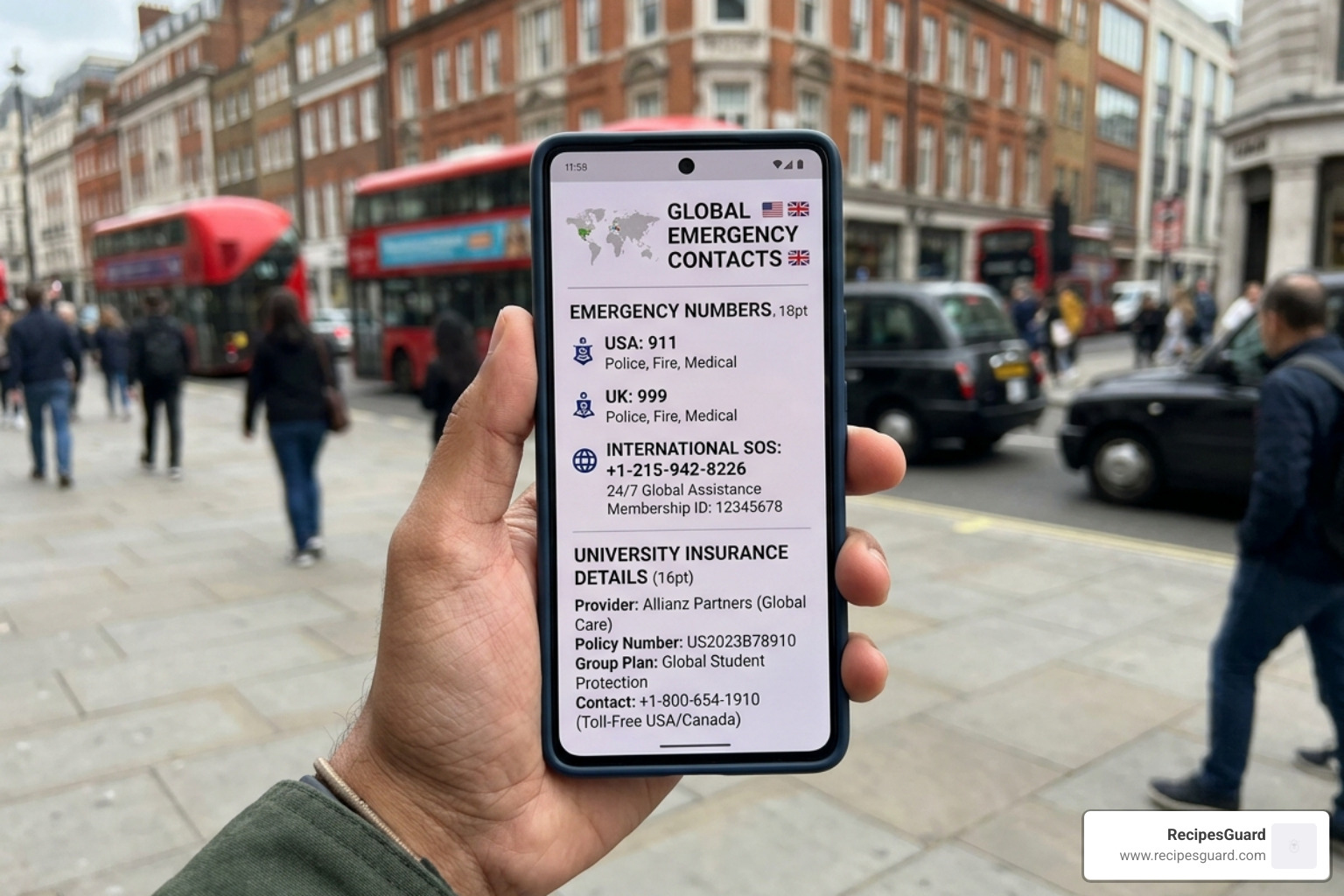
Before you worry about paperwork, call the local emergency number (like 000 in Australia or 112 in Europe). If you are in immediate danger, your insurance company cannot help you as fast as a local paramedic or police officer. For more on handling these high-stress moments, see The Ultimate Survival Guide For Medical Emergencies Abroad.
2. Contact Your 24/7 Global Response Center
Once you are stable, you must notify your assistance provider. Companies like International SOS or On Call International act as your “concierge” in a crisis. You should have their contact info saved on your phone or on a physical emergency card.
What to tell them:
- Your name and current location.
- Your policy or group number.
- A description of the emergency.
- The name and phone number of the hospital or police station where you are located.
3. Request a Guarantee of Payment (GOP)
This is one of the most critical student travel emergency claim steps. In many countries, hospitals will not treat you—or will not release you—until the bill is paid. Instead of using your own credit card, ask your assistance provider to issue a “Guarantee of Payment.” This confirms to the hospital that the insurer will pay the bill directly, saving you from a massive out-of-pocket expense.
4. Open a Case Number
The moment you call, the provider will assign you a case number. Write this down! You will need it for every follow-up call and for your final claim submission. For more details on managing these initial contacts, refer to The International Student Guide To Emergency Claims And Evacuations.
Required Documents for Student Travel Emergency Claim Steps
You cannot get reimbursed without proof. We recommend using your phone to scan every piece of paper you receive.
- Itemized Bills: A receipt that just says “Medical Services – $2,000” isn’t enough. You need the breakdown of every aspirin and X-ray.
- Medical Records: A summary of the diagnosis and treatment from the attending physician.
- Police Reports: If property was stolen or you were in an accident, a police report must usually be filed within 24 to 48 hours.
- Proof of Loss: For baggage claims, you need the “Property Irregularity Report” from the airline.
- Travel Documents: Keep copies of your passport photo page, visa, and flight itineraries.
If you’re feeling overwhelmed by the paperwork, our guide on Mastering The Student Medical Claim Process In 5 Easy Steps can help simplify things.
Managing Repatriation and Student Travel Emergency Claim Steps
In severe cases, you may need a medical evacuation or security repatriation. This is not a decision you make on your own; it is coordinated between the insurance company’s medical team and the local doctors.
If you are hospitalized for more than 24–48 hours, many student policies will pay for a “Family Bedside Visit,” covering the airfare for a parent or guardian to fly to your side. Additionally, if you are evacuated, the “Return of Baggage” benefit may cover the costs of shipping your belongings back to Australia. To learn more about this specific process, see Everything You Need For A Student Medical Evacuation Claim.
How to File Your Claim via Student Portals
Once the emergency has passed and you’ve returned to your dorm or home, it’s time to finalize the paperwork. Most modern insurers utilize a “Student Zone” or online portal to streamline the process.
Step-by-Step Filing:
- Log In: Access your insurer’s portal (e.g., WorldTrips Student Zone or the Chubb portal).
- Select Claim Type: Choose from Medical, Property, or Trip Cancellation.
- Complete the Form: Fill out every field. Missing information is the #1 reason for delays.
- Upload Documents: Attach those scans you took during the emergency.
- University Validation: For university-sponsored trips, you may need a staff member from your International Office to “countersign” the claim to prove the trip was official.
- Submit: Most claims are now submitted electronically, and payments are often made via BACS (direct bank transfer).
For a visual walkthrough, visit The Simple Student Tutorial For Filing Any Insurance Claim or Mastering The Emergency Medical Student Claim Process.
Navigating Complex Scenarios and Denials
Not every claim is straightforward. Sometimes you have multiple layers of insurance, or the situation is a “grey area.”

Primary vs. Secondary Coverage
It is vital to know which insurance pays first.
- Primary Coverage: The travel insurer pays your bills immediately without asking about your other health plans.
- Secondary Coverage: You must first file a claim with your regular health insurance. Once they pay their portion (or deny it), the travel insurer covers the remaining balance.
| Feature | Primary Insurance | Secondary Insurance |
|---|---|---|
| Payment Speed | Faster; pays first | Slower; requires “Explanation of Benefits” (EOB) |
| Out-of-Pocket | Minimal | May require paying upfront and waiting |
| Complexity | Low | High (requires filing two claims) |
To avoid the headaches associated with these distinctions, read How To File A Study Abroad Medical Claim Without The Headache.
COVID-19 and Quarantine
As of May 2026, many policies still include specific protocols for infectious diseases. If you test positive and are forced to quarantine, you usually need an official PCR or antigen test result from a recognized clinic—self-administered home tests are rarely accepted for claims. You can find more on this in Your Overseas Student Guide For Stress Free Travel.
Claim Processing Timelines
Typically, it takes about 30 days to process a student travel claim. If your claim is denied, don’t give up! Review the denial letter, gather the missing documentation, and file an appeal. Most denials are due to simple administrative errors rather than a lack of coverage.
Avoiding Rejection During Student Travel Emergency Claim Steps
To ensure your claim is successful, follow these “Golden Rules”:
- Respect the Deadlines: Most policies require notification within 20 days and full proof of loss within 90 days.
- Report Theft Early: If you don’t have a police report filed within 48 hours of a theft, your claim for a stolen laptop will likely be rejected.
- Keep Originals: Even if you submit scans, keep the original physical receipts until the money is in your bank account.
- Use Authorized Providers: If it’s not an emergency, call your assistance provider before going to a doctor to ensure they are “in-network.”
For a comprehensive checklist, check The Ultimate Student Guide To Insurance Claim Steps.
Frequently Asked Questions about Student Travel Emergencies
What is the difference between primary and secondary student coverage?
Primary coverage pays your medical or travel expenses first, regardless of any other insurance you have. Secondary coverage requires you to file with your “home” health insurance first, and the travel policy covers the “gap” or any remaining costs.
How long does it take to process a student travel insurance claim in 2026?
Most insurers aim to settle claims within 30 business days of receiving all required documentation. Using an online student portal can often shave a week off this timeline compared to email or mail submissions.
What should I do if my claim is denied by the insurer?
First, read the “Reason for Denial” carefully. If it’s due to missing documents, simply provide them. If you disagree with the decision, you have the right to an appeal. Contact your university’s insurance or risk management office; they can often advocate on your behalf with the insurance company.
Conclusion
Navigating an emergency while studying abroad is a rite of passage for many, but it doesn’t have to be a financial disaster. By following the correct student travel emergency claim steps—contacting assistance early, documenting everything, and using your university’s resources—you can focus on your recovery and your studies instead of your bank balance.
At RecipesGuard, we are dedicated to making sure Australian students have the tools they need to travel safely. The best time to prepare for an emergency is before you leave the tarmac. Keep your policy details handy, save those emergency numbers, and always keep your receipts!

My name is Bianca, and my journey into the world of fermentation and food safety began with a costly mistake. I once lost an entire season’s harvest of chili peppers because I relied on guesswork instead of science. That failure was my turning point.
