
Why Trip Insurance for Study Abroad Can Make or Break Your Semester
Trip insurance for study abroad is a type of specialized travel coverage that protects students against medical emergencies, trip cancellations, lost baggage, and other unexpected costs while studying outside their home country.
Here are the best student travel insurance options to compare in 2026:
| Plan Category | Best For | Medical Coverage | Starting Cost |
|---|---|---|---|
| Visa-Compliant | Visa compliance (F-1, J-1) | Up to $5,000,000 | ~$0.85/day |
| Semester/Gap Year | Extended study abroad | Up to $1,000,000 | Varies by plan |
| Budget Student | Students on a budget | Up to $500,000 | ~$34/month |
| Deluxe Extended | High limits + add-ons | High limits | 5–7% of trip cost |
| Academic Explorer | Tuition & academic risks | Financial protection | Varies |
| Short-Term | Class trips & seminars | Emergency medical | From $18 |
You’ve got your visa sorted, your classes scheduled, and your bags packed. Then your luggage doesn’t arrive. Or you end up in a foreign clinic with no idea who to call or how to pay.
This is the reality many students face abroad — and it’s more common than you’d think.
Most standard domestic health insurance plans don’t cover international medical expenses. A medical evacuation alone can cost tens of thousands of dollars out of pocket. And in some cases — like J-1 or Schengen visa holders — carrying qualifying insurance isn’t optional. It’s a legal requirement.
On average, travel insurance costs between 5% and 7% of your total trip cost. For most students, that’s a small price compared to the financial risk of a single emergency abroad.
This guide compares the top student travel insurance plans for 2026 — so you can find the right coverage for your semester, gap year, or class trip without the guesswork.
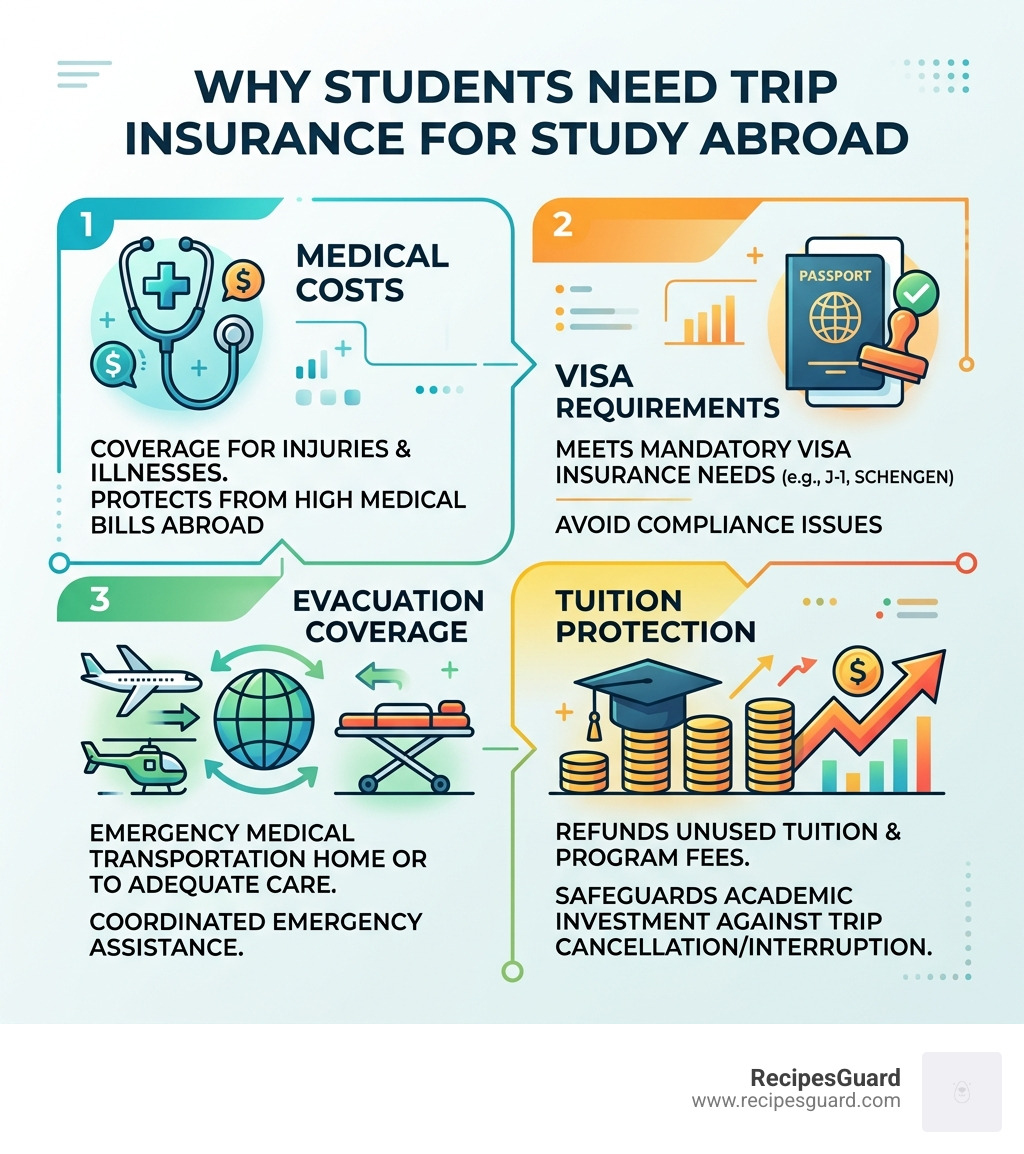
Common trip insurance for study vocab:
- student trip insurance process
- student travel claim process
- study abroad claim process
Understanding Trip Insurance for Study Abroad Programs
When we talk about trip insurance for study, we aren’t just talking about a standard holiday policy. Student-specific plans are designed for the “long haul.” Whether you are an Australian student heading to Europe for a semester or an international student arriving in Sydney, your needs are different from a two-week tourist.
Traditional travel insurance often caps trips at 30 or 90 days. Student policies, however, can cover you for a full academic year (up to 364 or 365 days). They also account for “academic risks” that a regular tourist wouldn’t face. Imagine your university cancels your program due to a campus-wide emergency, or you have to miss a final exam because you were hospitalized. These are the specific gaps that student travel insurance fills.
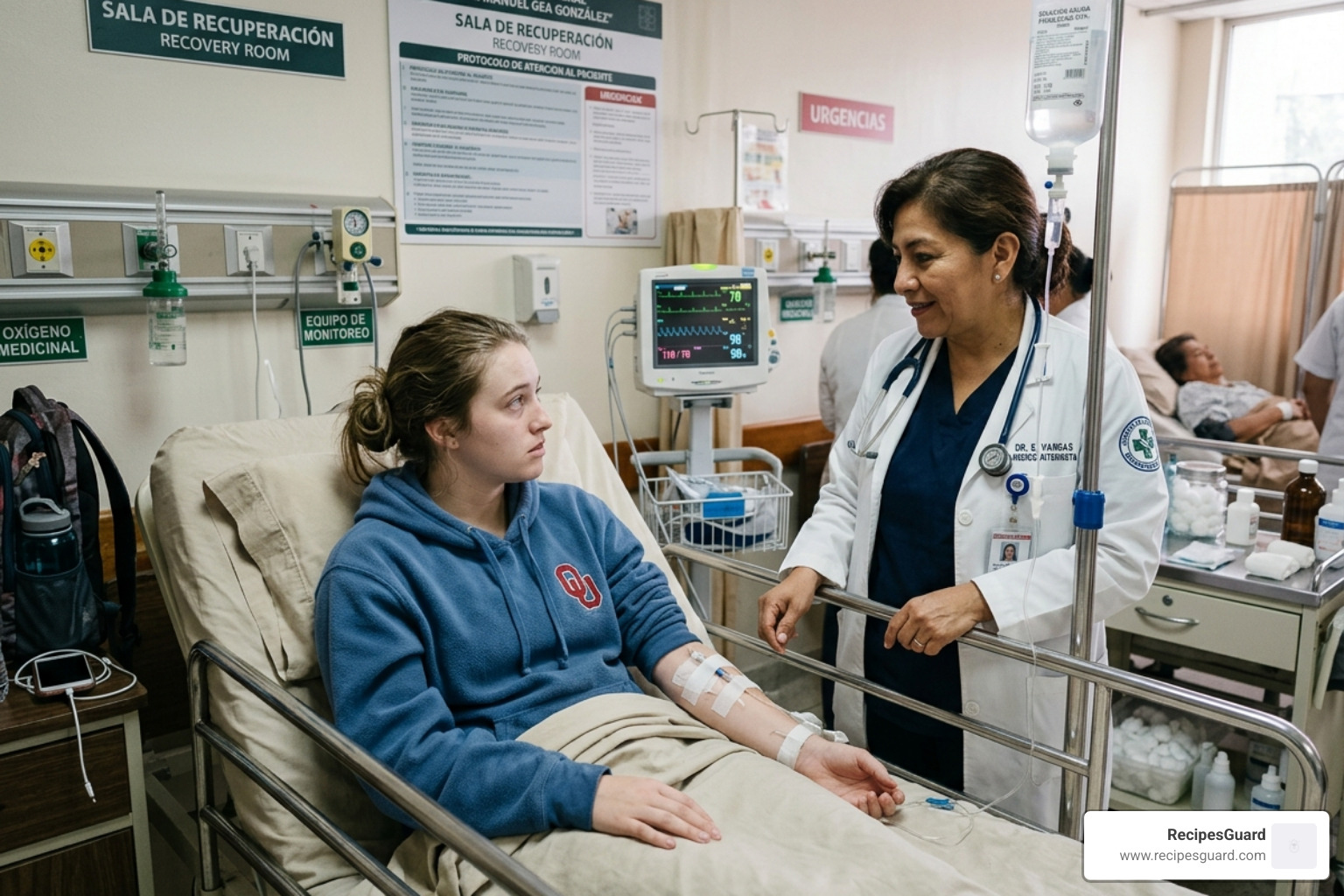
Medical emergencies are the number one concern. In 2026, healthcare costs globally continue to rise. Without a plan, a simple appendectomy in a foreign country could cost more than your entire tuition. Furthermore, many students overlook “Tuition Protection.” This feature can reimburse your non-refundable tuition and housing fees if you are forced to withdraw from your semester due to a covered illness or injury.
For a deep dive into the basics, check out Everything You Need To Know About Student Study Abroad Insurance. If you’re feeling overwhelmed by the options, our guide on How To Secure Student Trip Insurance Without The Headache can help simplify the process.
Key Coverages in Trip Insurance for Study
What exactly are you paying for? A robust policy for 2026 should include several non-negotiables:
- Emergency Medical Evacuation: This is critical. If you are studying in a remote area or a country where local facilities aren’t equipped to handle your condition, this coverage pays for a medically supervised flight to the nearest adequate hospital. Specialized evacuation plans provide up to $50,000 for evacuation and $25,000 for repatriation.
- Mental Health Coverage: Studying abroad is stressful. We’ve seen a massive shift in 2026 toward better mental health support. Top-tier plans now offer up to 40 visits for physician office care (on Elite plans) or 30 visits on budget-friendly options.
- COVID-19 and Pandemic Expenses: Most modern plans now treat COVID-19 like any other illness, covering medical expenses and sometimes quarantine costs, provided the policy was purchased after the initial pandemic peak.
- Emergency Dental Care: Usually limited to “pain-relieving” treatment, this covers you if you chip a tooth or develop an acute infection. Limits often hover around $500 per case.
- Acts of Terrorism: Coverage for medical expenses resulting from an act of terrorism is a standard inclusion in many international student plans today.
For more details on handling the worst-case scenarios, see The International Student Guide To Emergency Claims And Evacuations.
Travel Medical vs. Comprehensive Protection
It is important to distinguish between “Travel Medical Insurance” and “Comprehensive Trip Protection.”
- Travel Medical Insurance: This is your health safety net. It focuses on doctor visits, hospital stays, and prescriptions. Comprehensive medical plans offer up to $1,000,000 in medical expense coverage. It is often the choice for students who already have their flights and tuition covered by a scholarship but need to meet visa health requirements.
- Comprehensive Protection: This covers the “trip” as a financial investment. It includes medical coverage but adds trip cancellation, trip interruption, and baggage loss. If your laptop (essential for study!) is stolen or your flight is delayed by 6+ hours, this is the plan that pays out.
Understanding these differences is vital before you fly. You can read more about why this matters at International Student Travel Why You Need Insurance Before You Fly.
Comparing Costs and Visa Requirements for 2026
If you are an Australian student heading to the USA, you must meet strict F-1 or J-1 visa requirements. Conversely, international students coming to Australia must hold Overseas Student Health Cover (OSHC). These aren’t just suggestions; they are mandatory for your visa to remain valid.
| Feature | Basic Student Plan | Comprehensive Student Plan |
|---|---|---|
| Medical Limit | $50,000 – $100,000 | $500,000 – $5,000,000 |
| Deductible | $50 – $100 per incident | $0 options available |
| Trip Cancellation | Not included | Up to 100% of trip cost |
| Mental Health | Limited (e.g., 30 visits) | Expanded (e.g., 40 visits) |
| Visa Letter | Standard | Instant/Priority |
For students heading to Europe, a “Schengen Visa Letter” is often required. This is a document from your insurer proving you have at least €30,000 in medical coverage, including repatriation. Most international insurance providers allow you to download this letter instantly after purchase.
Schools and parents should also look into group policies. If a university is sending 20 students on a short-term program, group rates can often reduce the cost per student by 10-15% while ensuring everyone has identical coverage.
For a breakdown of costs specifically for the US market, check out Your Guide To Finding Affordable International Student Insurance Usa.
Factors Affecting the Price of Trip Insurance for Study
Why does your friend’s policy cost $40 a month while yours is $80? Several factors influence the premium:
- Trip Duration: Shorter trips are cheaper daily, but long-term semester plans often have lower “per day” rates.
- Destination: Healthcare in the USA is significantly more expensive than in Southeast Asia, so premiums for US-bound students are higher.
- Deductible Levels: Choosing a higher deductible (the amount you pay out of pocket before insurance kicks in) will lower your monthly premium.
- Age: While most students fall into the 18-24 bracket, older PhD candidates or faculty members will see higher rates.
For a deeper dive into these costs, we recommend reading about Understanding Your Student Travel Insurance Policy and Costs.
Choosing the Right Plan for Your Academic Journey
Not all study trips are created equal. A “Gap Year” spent backpacking through South America requires different coverage than a “Semester Abroad” in London.

If you are an athlete, pay close attention. Most standard travel insurance policies exclude “organized sports.” However, specialized student plans like premium elite coverage offer up to $5,000 for medical expenses resulting from intercollegiate, intramural, or club sports injuries. If you’re playing for your university’s soccer or rugby team, this is a non-negotiable add-on.
For those who want maximum flexibility, Cancel For Any Reason (CFAR) is the gold standard. While it adds about 40-50% to your premium, it allows you to cancel your trip for any reason—even if you just decide you’re not ready to leave—and get back up to 75% of your non-refundable costs. CFAR usually must be purchased within 14-21 days of your initial trip deposit.
Check out our top picks in The Best Student Insurance For Your Semester Abroad to see which fits your specific itinerary.
Pre-existing Conditions and Optional Add-ons
A common question we get at RecipesGuard is: “Will my asthma/diabetes/anxiety be covered?”
Most student plans have a “look-back period” (usually 6 to 12 months). If you’ve sought treatment for a condition within that window, it’s considered pre-existing. To get coverage, you often need to purchase your policy shortly after your first trip payment to qualify for a “Pre-existing Condition Waiver.”
Other add-ons to consider:
- Adventure Sports: If you plan on scuba diving in the Great Barrier Reef or skiing in the Alps, you’ll likely need an “Adventure Sports Rider.”
- Security Evacuation: This covers you if there is political unrest or a natural disaster in your host country and you need to be moved to safety.
Choosing between these can be tricky, so we’ve simplified it in How To Choose The Best Insurance For Your Overseas Adventure.
How to Navigate Claims and Policy Exclusions
This is where we at RecipesGuard specialize. Buying the insurance is the easy part; getting paid when things go wrong is where the “headache” usually starts.
To file a successful claim, you need a paper trail. We always tell students: Keep every receipt. From the $10 taxi to the clinic to the itemized hospital bill.
- Report early: Most insurers require you to report a claim within 30 days of the incident.
- Submit proof of loss: This includes your medical records, proof of payment, and a copy of your visa (to prove you were eligible for student insurance).
- Use Digital Portals: In 2026, most providers offer apps (like dedicated digital claim portals) that allow you to upload photos of your documents instantly.
Common Exclusions to Watch Out For:
- Alcohol and Drugs: If you are injured while intoxicated, your claim will almost certainly be denied. This is the #1 reason student claims are rejected.
- Routine Care: Standard student travel insurance is for emergencies. It typically does not cover routine check-ups, vaccinations, or elective surgeries.
- Unattended Baggage: If you leave your backpack on a park bench and it’s stolen, insurance won’t cover it. It must be stolen from a locked room or while in the care of a common carrier (like an airline).
For a step-by-step guide on getting your money back, see Study Abroad Claims How To Get Your Credits And Cash Back.
Frequently Asked Questions about Student Travel Protection
Do I need travel insurance for domestic study trips?
While your regular health insurance might cover medical costs within your home country (like an Australian student traveling from Perth to Sydney), it won’t cover trip cancellation, lost luggage, or tuition protection. If you’ve prepaid thousands for a domestic flight and housing, a “Trip Protection” plan is still a smart move.
Does student insurance cover pre-existing conditions?
Generally, no, unless you meet specific requirements like purchasing the plan within a few days of your initial trip deposit and being medically fit to travel at the time of purchase. Always read the “Pre-existing Condition” clause in your PDS (Product Disclosure Statement).
How do I file a claim for missed flights or delays?
If your flight is delayed by a covered reason (like weather or mechanical breakdown), you can claim for “reasonable” expenses like meals and a hotel. You will need a written statement from the airline confirming the reason for the delay. For more, read Flight Missed Claim Student Policy Your Ticket To Reimbursement.
Conclusion
Studying abroad is one of the most exciting chapters of your life. Don’t let a single medical bill or a lost suitcase turn it into a financial nightmare. By choosing the right trip insurance for study, you’re not just buying a piece of paper—you’re buying the freedom to focus on your education and your adventure.
At RecipesGuard, we are dedicated to making sure you aren’t left in the dark when it’s time to use your policy. Our step-by-step claim filing tutorials are designed specifically for students who need results, not red tape.
Ready to secure your semester? Start by reviewing How To Secure Student Trip Insurance Without The Headache and ensure your academic success is protected from day one. Safe travels!

My name is Bianca, and my journey into the world of fermentation and food safety began with a costly mistake. I once lost an entire season’s harvest of chili peppers because I relied on guesswork instead of science. That failure was my turning point.
