
How to Choose the Best Insurance for Your Overseas Adventure
What Is Travel Insurance for Students Studying Abroad?
Travel insurance for students studying abroad is a specialized type of coverage that protects you from financial losses caused by medical emergencies, trip disruptions, lost baggage, and other unexpected events while you’re studying in a foreign country.
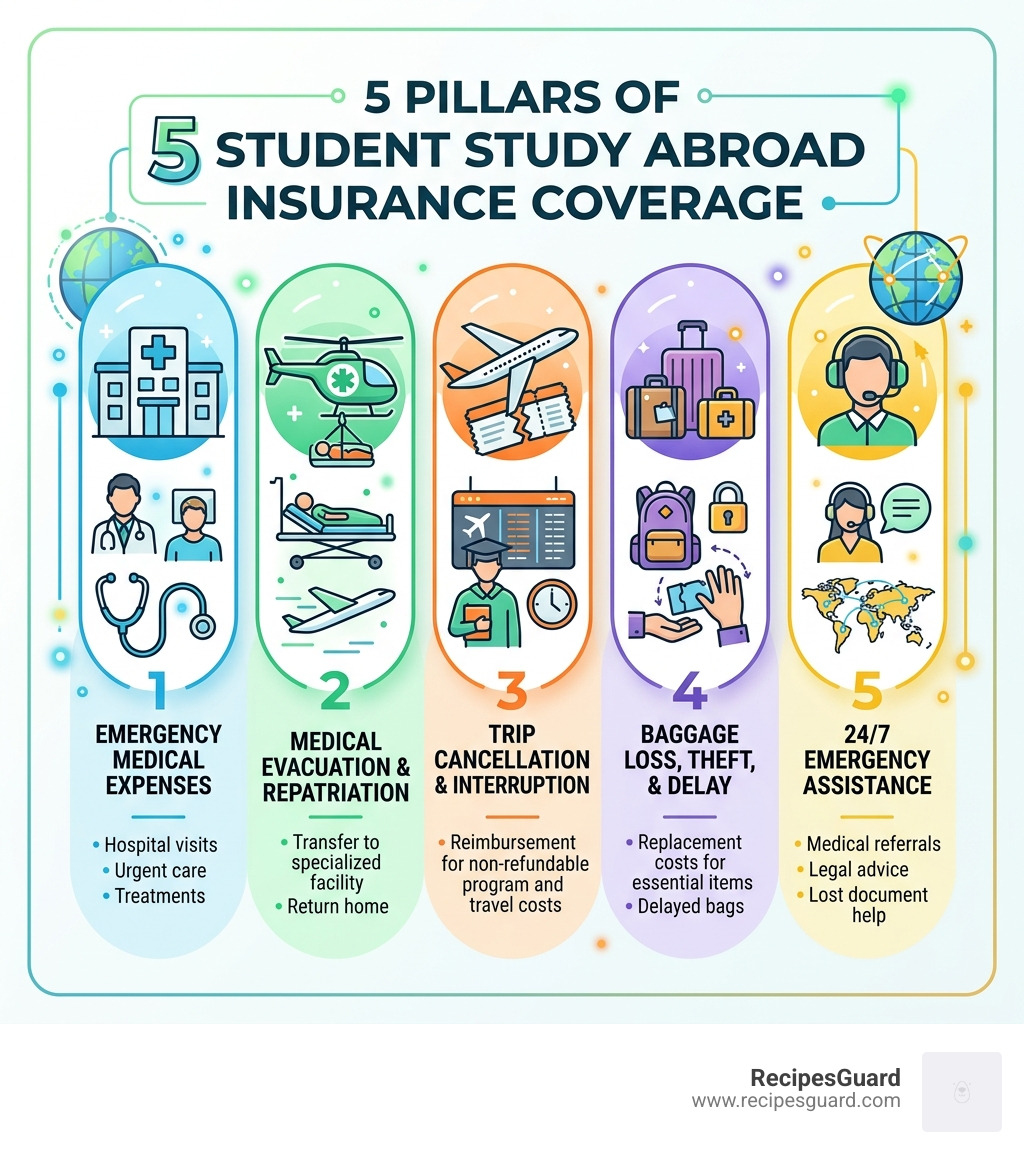
Here’s a quick look at what it typically covers:
- Emergency medical expenses — hospital visits, surgery, and urgent care abroad
- Medical evacuation — transport to an adequate facility if local care isn’t enough
- Trip cancellation or interruption — reimbursement for non-refundable costs if your program is cut short
- Baggage loss or delay — replacement costs for luggage or essential items
- 24/7 emergency assistance — help with medical referrals, lost documents, and more
Most standard U.S. health insurance plans don’t cover you overseas. That means one hospital visit abroad could mean thousands of dollars out of pocket — or worse, delayed treatment because a facility needs a payment guarantee upfront.
Travel insurance fills that gap. And for students on F-1 or J-1 visas, many programs actually require it.
Plans can start as low as $34/month, and typical travel insurance costs between 5–7% of your total trip cost — a small price compared to the risk of an uninsured medical emergency or cancelled semester.
Whether you’re heading to Europe for a semester, doing a gap year in Southeast Asia, or completing an exchange program in Latin America, the right plan keeps you protected, compliant, and focused on learning.
Travel insurance for students studying abroad helpful reading:
- Emergency Claim Student Policy
- International Student Emergency Claim
- Flight Cancellation Claim Process
Why Travel Insurance for Students Studying Abroad is Essential
As we look toward the 2026 academic year, the world has become more interconnected, yet the financial risks of international education remain high. If you are planning an educational journey, understanding the importance of travel insurance for students studying overseas is the first step in your preparation.
Visa Compliance and University Requirements
For many, insurance isn’t just a “nice to have”—it’s a legal mandate. If you are an international student heading to the United States or an American student heading to Australia, specific visa categories like the F-1, M-1, or J-1 often come with strict insurance requirements. These regulations ensure that you won’t become a financial burden on the host country’s healthcare system. We often see students scrambling at the last minute because their standard home-country plan doesn’t meet the “minimum essential coverage” required for their visa. To avoid these hurdles, check out our guide on international student visa and travel insurance requirements.
Managing Medical Emergency Costs
Healthcare costs vary wildly across the globe. In some countries, a simple broken arm can cost thousands of dollars, while a major surgery can reach six figures. Most domestic health plans, including Medicare in the U.S., provide zero coverage once you cross the border. Furthermore, many international hospitals require a “guarantee of payment” before they will even admit or discharge a patient. Specialized travel insurance for students studying abroad provides these guarantees, ensuring you receive care without needing to produce $50,000 from your savings account on the spot.
Emergency Evacuation: The $100,000 Risk
Perhaps the most critical reason for coverage is emergency medical evacuation. If you are studying in a remote area or a country where the local facilities cannot treat your specific condition, you may need to be flown to another city or even back to your home country via a medically equipped aircraft. These flights can easily cost $100,000 or more. Without insurance, the logistical and financial burden of such an event is often insurmountable for a student budget.
Peace of Mind for Parents and Students
Studying abroad is a time for growth, exploration, and maybe a little bit of stress over exams—but it shouldn’t be a time for worrying about “what ifs.” Having 24/7 assistance services means you have a multilingual team ready to help you find a local doctor, replace a lost passport, or provide legal referrals at 3:00 AM. It’s about more than just money; it’s about having a safety net in a foreign land.

Key Features of a Comprehensive Study Abroad Plan
When we help students compare plans, we look for specific “must-have” features that differentiate a high-quality policy from a “budget” plan that might leave you stranded.
| Feature | Basic Plan | Comprehensive Plan |
|---|---|---|
| Medical Maximum | $50,000 – $100,000 | $250,000 – $1,000,000+ |
| Deductible | $100 – $500 | $0 – $50 |
| Medical Evacuation | Limited (e.g., $50,000) | High (e.g., $300,000 – $1,000,000) |
| Mental Health | Often Excluded | Included (Outpatient/Inpatient) |
| Trip Interruption | Minimal coverage | Up to 100% of trip cost |
| Pre-existing Conditions | Usually Excluded | Covered (with waiver/waiting period) |
A truly robust plan should include essential travel insurance features for students abroad, such as personal liability (in case you accidentally damage property) and compassionate visit benefits, which pay for a parent to fly to your bedside if you are hospitalized for an extended period.
Understanding Medical and Evacuation Limits in Travel Insurance for Students Studying Abroad
Don’t be fooled by low premiums that offer low benefit maximums. For a long-term stay, we generally recommend a medical limit of at least $250,000 to $500,000. In 2026, medical inflation has made $50,000 limits look increasingly inadequate.
Look for plans that offer:
- Cashless Billing: The insurer pays the hospital directly so you don’t have to “pay and claim.”
- Repatriation of Remains: While a somber topic, this ensures your family isn’t left with the massive cost of bringing you home in the event of a tragedy.
- Multilingual Support: Access to translators who can speak with doctors in your host country.
Coverage for Trip Cancellation and CFAR in Travel Insurance for Students Studying Abroad
What happens if you get sick a week before your flight, or your university cancels the program due to unforeseen circumstances? This is where Trip Cancellation and Interruption coverage come in.
A popular add-on is Cancel For Any Reason (CFAR) coverage. Standard cancellation only covers specific reasons (like death in the family or serious illness). CFAR allows you to cancel for any reason—even if you just decide you’re not ready to go—and typically reimburses up to 75% of your non-refundable costs. However, you must usually purchase CFAR within 14–21 days of making your first trip deposit.
Understanding do study abroad programs require travel insurance for students is vital here, as some programs provide medical coverage but not trip protection. If you’ve paid $20,000 in tuition and housing, you want that money protected if the program is interrupted.
Navigating Costs and Common Exclusions
One of the biggest questions we get is: “How much is this going to cost me?”
As a general rule of thumb, expect to pay between 5% and 7% of your total trip cost. For a semester-long medical-only plan, we see prices starting at roughly $34 to $60 per month, depending on your age and destination.
Factors That Influence Your Premium
- Destination: Countries with high healthcare costs (like the U.S.) will have higher premiums.
- Duration: A 10-month gap year will cost significantly more than a 3-week summer intensive.
- Age: Younger students usually pay less, while graduate students or faculty members may see slightly higher rates.
- Coverage Limits: Choosing a $1,000,000 medical limit instead of $100,000 will increase the price.
If you are on a tight budget, there are ways to find cheap travel insurance for students without sacrificing essential safety. We recommend comparing tiers—sometimes the “Budget” tier of a top-rated provider is better than the “Elite” tier of a cut-rate company. You can also learn how to save money on student travel insurance by opting for a higher deductible if you are generally healthy.
Common Exclusions: What Is NOT Covered?
It is a common mistake students make with travel insurance to assume everything is covered. Most policies have “standard exclusions”:
- Substance-Related Incidents: If you are injured while under the influence of alcohol or non-prescription drugs, your claim will likely be denied.
- Routine Wellness Care: Most travel plans do not cover routine physicals, vaccinations, or standard dental cleanings.
- High-Risk Sports: Activities like skydiving, bungee jumping, or organized intercollegiate sports often require an “Adventure Sports” rider.
- Pre-existing Conditions: Unless you have a specific waiver, conditions you were treated for in the months leading up to your trip may be excluded.
Frequently Asked Questions about Student Coverage
How does student insurance differ from regular health insurance?
Standard health insurance is designed for your life at home—routine checkups, local networks, and long-term care. Student travel insurance is designed for global mobility. It includes benefits your home plan lacks, such as medical evacuation, repatriation, and trip interruption. It also focuses on “acute” care (emergencies) rather than preventative care. To learn more about these distinctions, read our guide on how to choose the right coverage for student travelers.
What should I do during a medical emergency abroad?
If you find yourself in a hospital abroad, follow these steps:
- Call the Assistance Hotline: This number is on your ID card. They can help with doctor referrals and “guarantee of payment.”
- Seek Treatment: Don’t delay care for a true emergency.
- Document Everything: Keep every receipt, medical report, and discharge summary.
- Contact Us: At RecipesGuard, we provide step-by-step claim filing tutorials to help you get reimbursed quickly.
For more detailed advice, check out our helpful student insurance tips for long term study abroad.
Are adventure activities like skydiving covered?
Most “leisure” activities like hiking or swimming are covered. However, “extreme” sports usually are not. If you plan on joining a local soccer team or going ziplining, check your policy’s sports section. You may need to purchase an optional rider to ensure you are protected during these activities.
Conclusion
Choosing the right travel insurance for students studying abroad is one of the most important decisions you’ll make in your pre-departure checklist. It is the difference between a minor hiccup and a life-altering financial disaster.
At RecipesGuard, we are dedicated to helping students navigate the complex world of insurance. Whether you are looking for the best international student insurance providers 2025 or need help with a top rated international student insurance providers for 2025 comparison, we have the resources you need.
Don’t let a paperwork error or an uninsured injury derail your dreams. Take the time to read the fine print, compare your options, and secure your future.
Ready to start your journey?
- Why Every Student Should Consider Travel Insurance
- Travel Insurance For College Students Studying Abroad
- Common Mistakes Students Make When Selecting Travel Insurance
- Affordable Travel Insurance For International Students
- Navigating Travel Insurance For Study Abroad Programs
- Affordable Travel Insurance For Graduate Students
- Best Budget Travel Insurance For Students Studying Abroad
- Everything You Need To Know About Student Study Abroad Insurance
Visit us at RecipesGuard for more expert advice and step-by-step tutorials on making your study abroad experience safe and successful!

My name is Bianca, and my journey into the world of fermentation and food safety began with a costly mistake. I once lost an entire season’s harvest of chili peppers because I relied on guesswork instead of science. That failure was my turning point.
