
Flight Cancellation Secrets: Will Your Insurance Actually Pay Out?
What Travel Insurance Actually Covers When You Cancel a Flight
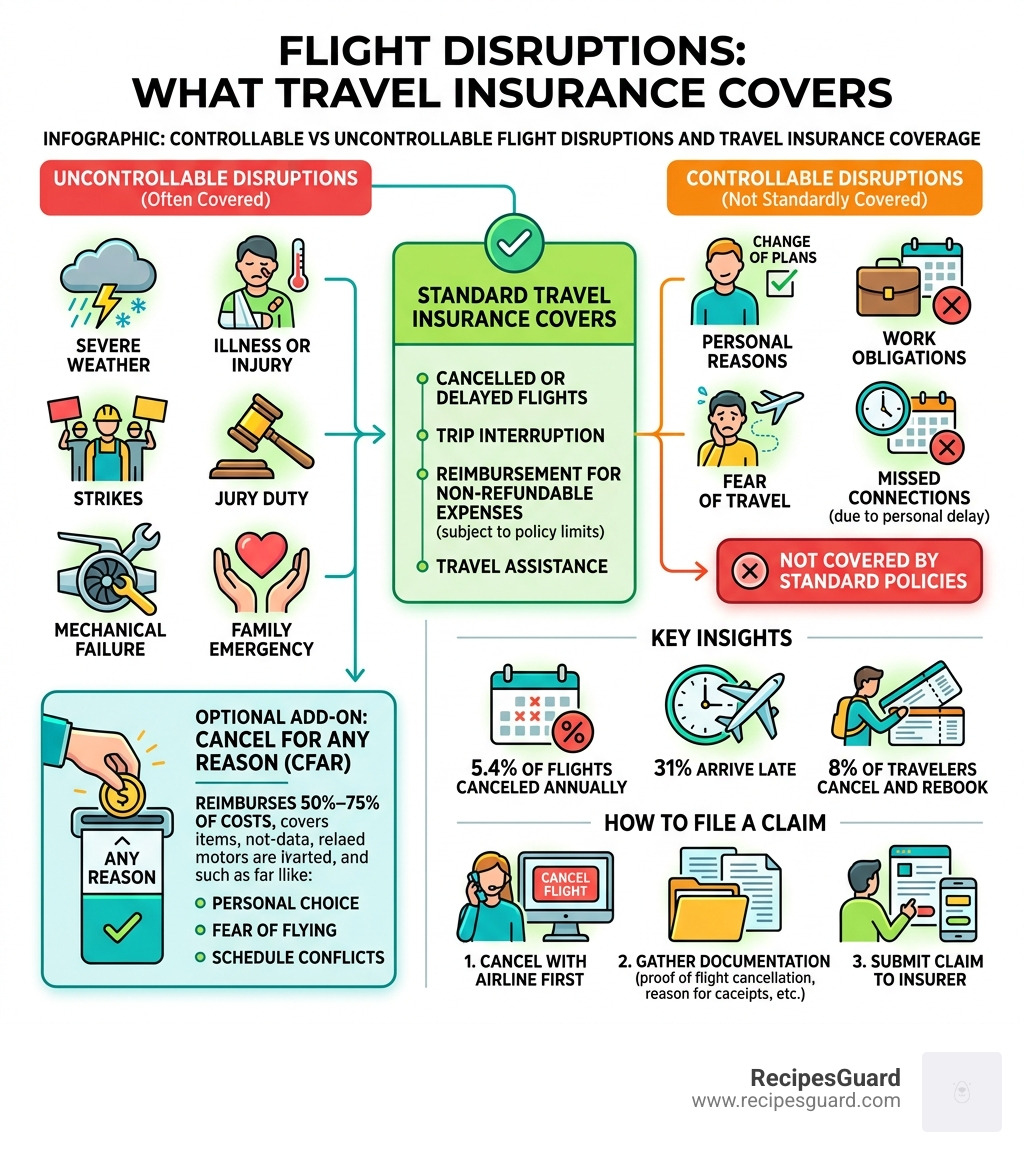
If you have travel insurance can you cancel a flight — yes, but only under specific conditions. Here’s the quick answer:
- Covered cancellations: Illness, injury, jury duty, severe weather, airline strikes, and other uncontrollable events
- Not covered by standard policies: Personal reasons like fear of flying, change of plans, or schedule conflicts
- Cancel For Any Reason (CFAR): An optional add-on that covers any reason, but only reimburses 50–75% of costs
- Key rule: You must cancel with the airline first, then file a claim with your insurer
The numbers tell the real story. About 5.4% of flights are canceled every year, and 31% arrive late. Even careful planners get caught out. According to industry statistics, with 8% of travelers canceling and rebooking after their initial booking, knowing your insurance rights matters more than most people realize.
Travel insurance doesn’t give you a free pass to cancel whenever you feel like it. What it does do is protect you financially when life gets in the way — a sudden illness, a family emergency, or a flight that never leaves the ground. The tricky part is knowing exactly what “covered” means before you need to make a claim.
If you have travel insurance can you cancel a flight glossary:
- cancel for any reason plan
- holiday insurance cancellation due to illness
- student travel claim process
If You Have Travel Insurance Can You Cancel a Flight?
When we look at our travel plans in April 2026, the question of whether we can simply walk away from a booking is common. The reality is that travel insurance is designed to protect us against “unforeseen” events. If you wake up and decide you’d rather stay home and watch movies, a standard policy won’t help you. However, if an uncontrollable reason arises—such as a sudden medical emergency or a natural disaster at your destination—your insurance becomes your financial safety net.
Uncontrollable vs. Controllable Reasons
In insurance, reasons for cancellation are split into two camps. Uncontrollable reasons include things like severe weather, airline strikes, or being called for jury duty. These are generally covered. Controllable reasons are things within your power, like changing your mind, realizing you have a student exam you forgot about, or simply feeling a bit of “fear of flying.” Standard policies almost never cover these.
The 15-Day Review Period
One of the best-kept secrets in the industry is the “Review Period.” Most Australian policies offer a window—often 15 days from the date of purchase—where you can cancel the insurance policy itself for a full refund, provided you haven’t started your trip or filed a claim. This is great if you realize the policy doesn’t actually cover the specific risks you’re worried about.
Policy Exclusions
Even the best policies have “no-go” zones. Common exclusions include pre-existing medical conditions that weren’t declared, or “known events” (like a storm that was already named on the news before you bought the policy). For students, check if your policy excludes certain high-risk activities or if it covers academic-related cancellations.

For a deeper dive into what is and isn’t included, check out our Understanding Cancellation Cover – RecipesGuard Guide.
Covered vs. Non-Covered Reasons
To make it simple, let’s break down the most common scenarios we see at RecipesGuard:
- Medical Emergencies: This is the big one. If you, a travel companion, or a close family member falls seriously ill or gets injured, you are typically covered. You’ll need a doctor’s note saying you are unfit to travel.
- Jury Duty or Subpoenas: If the government demands your presence in court, insurance usually has your back.
- Personal Convenience: Wanting to attend a friend’s last-minute party instead of flying? Not covered.
- Fear of Flying: Unless you have a Cancel For Any Reason (CFAR) add-on, general anxiety about flying or “bad vibes” about a destination won’t result in a payout.
The Impact of Timing
Timing is everything. You can’t buy insurance after a hurricane is announced and expect it to cover your flight cancellation. Most policies require you to purchase coverage within a specific window (often 10 to 21 days) of making your initial trip deposit to be eligible for certain benefits like CFAR or pre-existing condition waivers.
Standard Trip Cancellation vs. Cancel For Any Reason (CFAR)
Understanding the difference between these two is the difference between getting all your money back or getting nothing. Standard Trip Cancellation is included in most comprehensive plans and covers 100% of your non-refundable costs—but only for those specific “covered reasons” mentioned earlier.
Cancel For Any Reason (CFAR) is the “superpower” of travel insurance. It is an optional add-on that allows you to cancel for literally any reason—even if you just don’t feel like going anymore. However, this freedom comes with a price: it usually only reimburses 50% to 75% of your costs, and the premium is significantly higher.
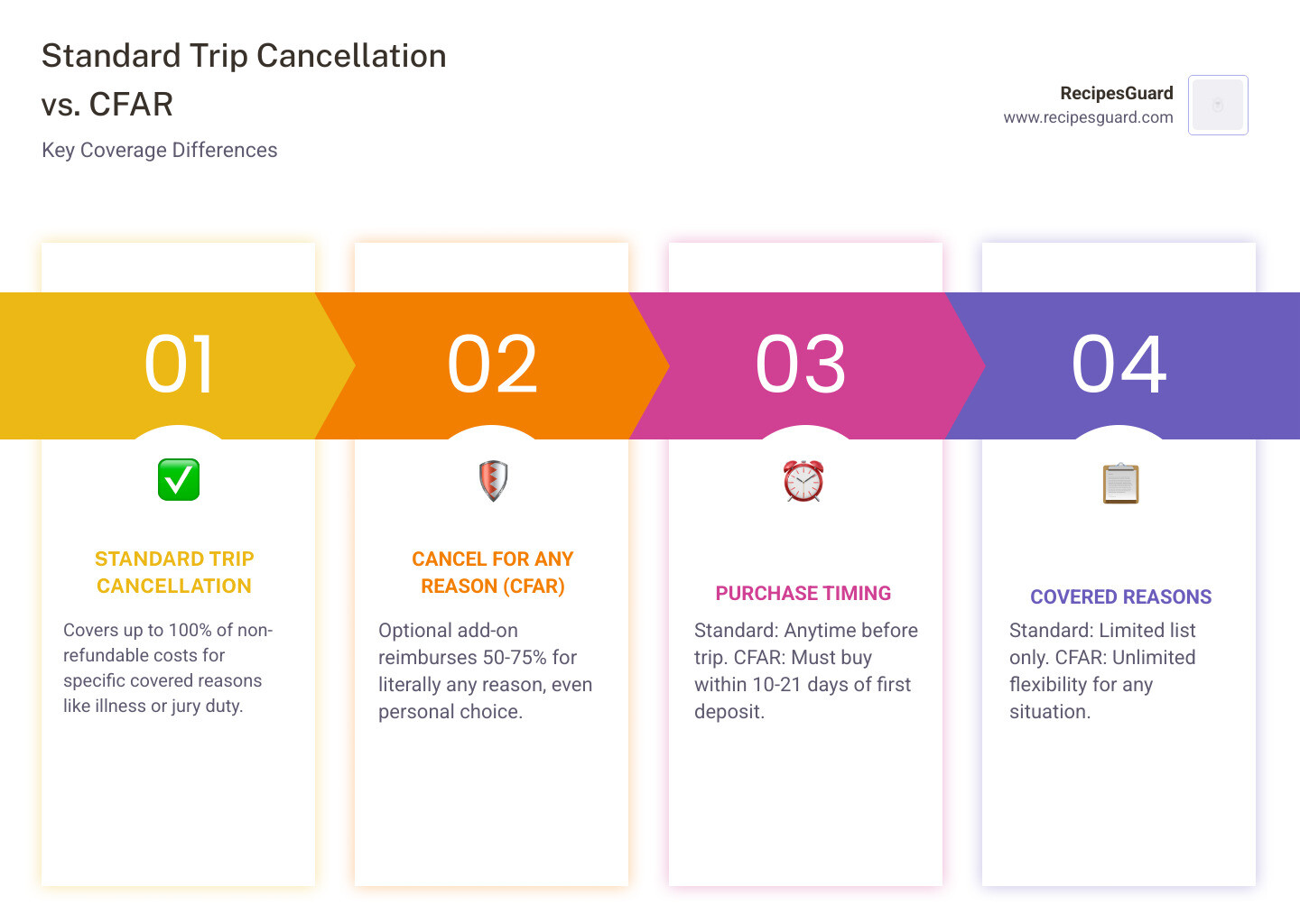
| Feature | Standard Trip Cancellation | Cancel For Any Reason (CFAR) |
|---|---|---|
| Reimbursement | Up to 100% | 50% – 75% |
| Covered Reasons | Specific list only (Illness, etc.) | Any reason at all |
| Purchase Timing | Anytime before trip (usually) | Within 10-21 days of first deposit |
| Cancellation Window | Up to time of departure | At least 48-72 hours before |
To see how this works in practice, read our guide on How Travel Insurance for Flight Cancellation Works.
Eligibility for CFAR
If you’re a student planning a big gap year trip, CFAR can be a lifesaver, but you must follow the rules. You generally have to insure 100% of your non-refundable trip costs. If you only insure half the trip, you might find your CFAR benefit is void. Also, remember the 48-hour notice rule; you can’t cancel three hours before the flight and claim CFAR; you usually need to notify the provider at least two days in advance.
Standard Policy Limitations
Standard policies often have “named perils.” This means if the reason for your cancellation isn’t specifically written in the policy document, it’s not covered. This often includes mechanical breakdowns of the airline’s equipment or specific weather events. If the airline cancels the flight because they didn’t sell enough tickets, that is an airline issue, not an insurance issue (though insurance may help with the resulting delays).
How to Cancel and File a Claim: A Step-by-Step Guide
So, you’ve decided you need to cancel. Don’t panic! At RecipesGuard, we specialize in helping students navigate this exact process. It’s not just about saying “I cancel”; it’s about the paper trail.

Step 1: Contact the Airline
Your first move is always with the travel supplier. If you have travel insurance can you cancel a flight without talking to the airline? No. You must officially cancel your seat. Ask the airline for a refund first. Even “non-refundable” tickets might have taxes that can be refunded. If they offer a travel voucher, keep the documentation of that offer, as your insurance company will need to know how much of the “loss” the airline already covered.
Check out our Step-by-Step: How to Cancel a Flight with Insurance for more details.
Step 2: Gather Supporting Documentation
This is where most claims fail. You need proof. If you’re canceling for medical reasons, you need a medical certificate from a doctor. If it’s a death in the family, a death certificate is required.
- Receipts: Every single one.
- Original Itinerary: Showing what you paid and when.
- Cancellation Confirmation: A PDF or email from the airline showing the flight was canceled and what refund (if any) was provided.
We have a handy Documentation Checklist for Cancellations to help you keep track.
Step 3: Submit the Insurance Claim
Most Australian insurers now use online portals. You’ll upload your documents and fill out a claim form. Most policies require you to file within 30 days of the cancellation. Once submitted, don’t just wait—follow up every week. Insurance companies are busy, and sometimes a quick phone call can move your file to the top of the pile.
Frequently Asked Questions
If you have travel insurance can you cancel a flight for a medical emergency?
Yes, this is the most common reason for a successful claim. However, it must be a “serious” medical issue. A mild cold usually won’t cut it. The person who is ill must be examined by a doctor, and that doctor must explicitly advise against travel. This applies to you, your traveling companion, or even a non-traveling family member whose health crisis requires you to stay home. For more specifics, see our Medical Emergency Coverage Details.
If you have travel insurance can you cancel a flight due to airline strikes?
Yes, but only if the strike was not “known” when you bought the policy. If the baggage handlers at Sydney airport announce a strike for next week and you buy insurance today, you aren’t covered. If the strike is unannounced and causes you to miss more than 50% of your trip, many policies allow you to cancel the entire trip and claim the costs.
What happens if the airline cancels the flight first?
This is a different scenario. If the airline cancels, they are legally required (under various international aviation regulations) to either rebook you or give you a full cash refund. Travel insurance usually steps in for the “extra” costs—like the hotel you booked that you can’t get to, or the pre-paid tour you’re going to miss. Some modern policies even offer “SmartBenefits,” which provide fixed cash payments for delays of 6+ hours without needing to submit piles of receipts.
Learn more at What to Do If Your Flight Is Canceled by the Carrier.
Conclusion
Navigating travel insurance can feel like trying to read a textbook in a foreign language. But at RecipesGuard, we believe that every student deserves to travel with confidence. Whether you’re heading off on a semester abroad or a quick break between exams, knowing the answer to “if you have travel insurance can you cancel a flight” is your best defense against losing your hard-earned savings.
Remember:
- Read your policy before you fly.
- Act fast if you need to cancel.
- Document everything.
Life happens, and sometimes the best-laid plans go sideways. With the right insurance and a clear understanding of the rules, a canceled flight doesn’t have to mean a canceled bank account.
Ready to protect your next adventure? Start your student travel insurance claim guide here.

My name is Bianca, and my journey into the world of fermentation and food safety began with a costly mistake. I once lost an entire season’s harvest of chili peppers because I relied on guesswork instead of science. That failure was my turning point.
