
Don’t Let Your Adrenaline Junkie Habits Void Your Policy
Your Adrenaline Hobby Could Cost Your Family Everything — Here’s Why
A high risk activity exclusion is a clause in insurance policies that removes or limits your coverage if you’re injured or killed while doing activities the insurer considers dangerous — things like skydiving, bungee jumping, scuba diving, or rock climbing.
Here’s what you need to know right away:
- Many standard travel and life insurance policies include this exclusion
- It can result in a complete denial of your claim — even if you paid every premium on time
- The exclusion may apply to training and practice, not just the activity itself
- Some policies use broad, vague language that gives insurers wide room to deny claims
- You can get covered — but usually only through special riders or dedicated adventure sports policies
Think about Mark, a 38-year-old who loved rock climbing. He had a life insurance policy, but never read the fine print. When he died in a climbing accident, his family’s claim was denied — because his policy included a hazardous activity exclusion. His family got nothing.
That kind of outcome isn’t rare. Estimates suggest that 10–20% of life insurance claims face an initial rejection or delay. And for students studying abroad who try an adventure sport on the weekend? The risk of a denied claim is very real.
The good news: knowing how these exclusions work before you need to file a claim puts you in a completely different position. Whether you’re planning to go bungee jumping in New Zealand or take a scuba course in Thailand, understanding your policy’s limits could be the most important thing you do before you jump.
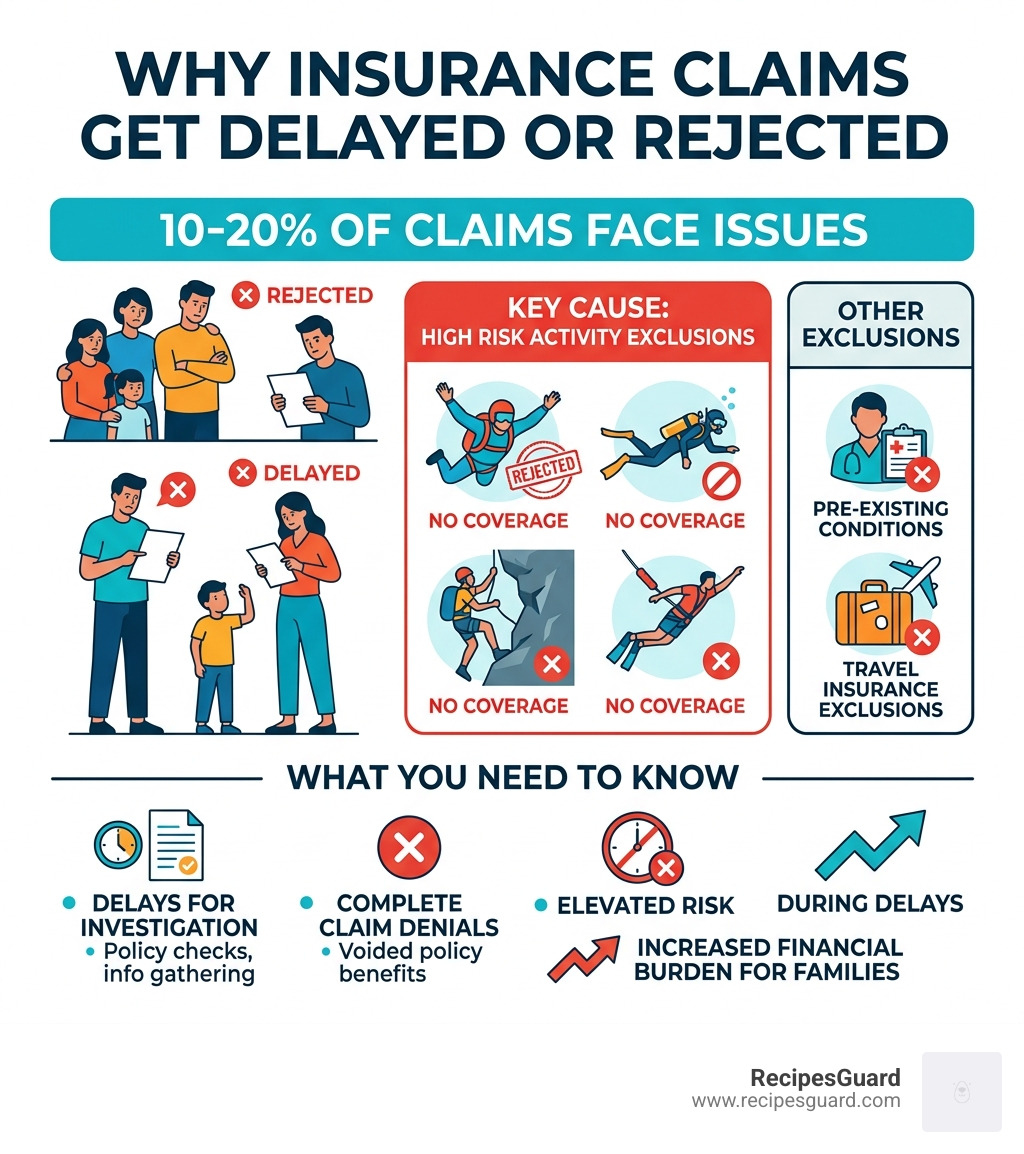
High risk activity exclusion terms simplified:
- pre existing condition exclusion
- travel insurance exclusion
Understanding the High Risk Activity Exclusion in Modern Policies
When we talk about insurance, we often focus on what is covered. However, in risk management, what isn’t covered is just as important. A high risk activity exclusion (or hazardous activity exclusion) is a contractual limit designed to protect the insurer from extreme financial loss.
Insurance is built on the idea of risk pooling—everyone pays a little bit so that the few who suffer a loss are taken care of. But this system only works if the risks are predictable. If someone engages in an activity that has a significantly higher chance of resulting in a claim, it throws the whole balance off.
Why insurers use a high risk activity exclusion
Insurers use actuarial models to determine how much to charge you for your premium. These models look at your age, health, and lifestyle in Australia to predict how long you’ll live or how likely you are to get injured. When you add hazardous activity into the mix, those models break down.
By excluding these risks, insurers can:
- Keep Premiums Fair: It wouldn’t be fair for a student who spends their weekends in the library to pay the same premium as a student who spends their weekends BASE jumping.
- Prevent Fraud: Exclusions prevent people from buying a policy specifically because they plan to do something dangerous and want a guaranteed payout.
- Manage Loss Prevention: It encourages policyholders to think twice before engaging in life-threatening pursuits without proper coverage.
The difference between “hazardous” and “ordinary” life
One of the biggest points of confusion we see at RecipesGuard is where “ordinary life” ends and “hazardous activity” begins. Most policies distinguish between the two based on intrinsic danger.
Ordinary life includes things like your daily commute, recreational exercise like jogging or swimming at a patrolled beach, and standard domestic chores. These carry a baseline level of risk that the insurer accepts.
In contrast, a hazardous activity is something that involves an exceptional degree of risk, often involving high speeds, great heights, or remote environments where medical help is hard to reach.

Common Activities That Trigger a High Risk Activity Exclusion
If you are a student traveler or an adrenaline seeker, you need to know which activities are likely to set off alarm bells for your insurer. While every company has its own list, certain “extrahazardous risks” are almost universally excluded from standard policies.
According to the Underwriting Manual for Extrahazardous Risks, insurers look for activities that deviate from typical forms of coverage. Common examples include:
- Aviation: Piloting a private plane, paragliding, or hang gliding.
- Water Sports: Scuba diving (often excluded if you go below a certain depth or aren’t certified), white-water rafting, and offshore fishing.
- Mountain Sports: Rock climbing, mountaineering, and backcountry skiing.
- Extreme Thrills: Bungee jumping, skydiving, and BASE jumping.
- Motor Sports: Car racing, motorcycle racing, or even off-roading.
It’s also worth noting that many exclusions apply to “training and practice” for these events, not just the events themselves. If you’re injured during a skydiving lesson, you might still be facing a high risk activity exclusion denial.
High-risk occupations vs. hobbies
It isn’t just what you do for fun; it’s also what you do for work. If you’re a student taking a gap year to work in a high-risk industry, your standard travel insurance might not cut it. Professions often categorized as extrahazardous include:
- Logging and forestry
- Offshore oil rig work or underwater welding
- Structural steelwork (working on skyscrapers)
- Underground mining
If you’re looking for preserving basics for long-term security, you need to ensure your income protection or life insurance covers your specific job duties.
Geographic and travel-related exclusions
Sometimes, it isn’t what you are doing, but where you are doing it. Many Australian insurers will void coverage if you travel to “restricted countries” or zones experiencing civil unrest, revolutions, or active war. If you die or are injured in a conflict zone, the insurer may argue that the environment itself constituted a high-risk situation that was excluded from the policy.
| Risk Level | Activity Examples | Coverage Type Needed |
|---|---|---|
| Low (Ordinary) | Hiking, Swimming, Yoga | Standard Policy |
| Medium (Recreational) | Snorkeling, Surfing, Skiing | Standard or Sport Rider |
| High (Hazardous) | Skydiving, Scuba (>30m), Racing | Specialized Rider/Policy |
How to Secure Coverage Despite a High Risk Activity Exclusion
Does a high risk activity exclusion mean you have to stay on the couch? Absolutely not. It just means you need to be proactive about your protection.
At RecipesGuard, we help students navigate the “fine print” so they can enjoy their adventures without the looming threat of financial ruin. There are several ways to bridge the gap between a standard policy and your high-adrenaline lifestyle.
How to bypass a high risk activity exclusion with riders
The most common way to get covered is by purchasing an adventure rider or a “hazardous activity endorsement.” This is essentially an add-on to your policy. You pay an additional premium, and in exchange, the insurer agrees to waive the exclusion for specific activities.
For example, if you’re a certified scuba diver, some base plans might cover you, but for others, you’ll need a specific rider that mentions PADI or NAUI standards. This ensures that if something goes wrong, the insurer can’t use the high risk activity exclusion as a reason to deny the claim.
The importance of honesty during the application process
We cannot stress this enough: always be honest. When you apply for insurance, you have a legal duty to disclose any information that could be relevant to the insurer’s decision. In Australia, the Insurance Contracts Act 1984 reinforces this duty of disclosure.
If you enjoy rock climbing every weekend but tell the insurer your only hobby is reading, you are committing “material misrepresentation.” If you later die in a climbing accident, the insurer won’t just deny the claim because of the activity—they may void the entire policy because of fraud. This leaves your beneficiaries with nothing, not even a refund of the premiums you paid.

To protect your assets and your family, follow the principles of safety first. Disclose your hobbies, pay the slightly higher premium for a rider, and sleep easy knowing you’re actually covered.
What to Do if Your Claim is Denied Due to an Inherently Dangerous Activity
Receiving a claim denial letter is a gut-punch, especially when you’re already dealing with an injury or the loss of a loved one. Insurers often use the term “inherently dangerous” to justify these denials, but this isn’t always the final word.
Identifying vague or undefined exclusion language
Many policies use “strategic ambiguity.” They might exclude “hazardous activities” without actually listing what those activities are. This gives the insurer room to interpret the policy after a claim is filed.
As noted in this guide on challenging an inherently dangerous activity exclusion denial, insurers sometimes try to reframe ordinary behavior as extreme risk. For instance, if a policyholder dies in a car accident while going 10km/h over the speed limit, an insurer might try to label that as an “inherently dangerous activity.”
Courts generally frown on this. If the activity is routine and the insurer didn’t provide a clear definition of what was “dangerous” at the time the policy was signed, you may have a strong case for an appeal.
Steps to appeal a high risk activity exclusion denial
If your claim is denied, don’t just accept it. Follow these steps:
- Review the Denial Letter: Look for the specific clause the insurer is citing. Is the activity actually listed in the policy?
- Gather Documentation: Collect evidence of your training, certifications (like PADI for diving), and the safety measures you took.
- Check for Causation: Did the “dangerous” activity actually cause the death? If someone has a heart attack while hiking, the hiking didn’t necessarily cause the death.
- Seek Legal Help: Insurance law is complex. A specialist can help you determine if the exclusion language is too vague to be enforceable.
- Contact the Insurer: Sometimes a formal internal appeal with additional evidence is enough to get a denial overturned.
Frequently Asked Questions about High-Risk Exclusions
Does speeding or everyday driving count as a high risk activity exclusion?
Generally, no. While speeding is illegal, it is usually not considered “inherently dangerous” in the same category as BASE jumping unless it involves extreme circumstances (like street racing or fleeing from police). Most standard policies cover accidental death from car accidents. However, if your policy has a “criminal act” exclusion, a serious traffic violation could potentially lead to a denial.
Can I add a rider for extreme sports after my policy starts?
Yes, in many cases you can make “mid-term adjustments.” If you’ve decided to take up skydiving halfway through your policy year, contact your insurer. They will perform an underwriting review and likely increase your premium, but it’s much better than having a gap in coverage.
Do pre-existing conditions count as high-risk activities?
No, they are handled differently. A pre-existing condition is a health status, whereas a high-risk activity is a behavior. However, both can lead to exclusions or higher premiums. It is vital to disclose both your health history and your lifestyle habits to ensure your policy remains valid.
Conclusion
Life is meant to be lived, and for many of us, that involves a bit of adrenaline. Whether you’re a student exploring the rugged landscapes of Australia or an experienced adventurer, don’t let a high risk activity exclusion turn your dream trip into a financial nightmare.
Transparency is your best friend. Read your policy, ask your agent tough questions about adventure sports, and never hide your hobbies on an application. At RecipesGuard, we are dedicated to helping students understand the complexities of insurance so they can focus on what matters most: the journey.
Ready to secure your next adventure? Start your journey with RecipesGuard today and learn how to protect your future while living in the moment.

My name is Bianca, and my journey into the world of fermentation and food safety began with a costly mistake. I once lost an entire season’s harvest of chili peppers because I relied on guesswork instead of science. That failure was my turning point.
