
How to Secure Medical Aid When You Are Already Pregnant
Already Pregnant and Need Medical Aid? Here’s What You Need to Know First
Medical aid that covers pre existing pregnancy is not straightforward — and if you’re already pregnant, the reality can be a financial shock.
Here’s the quick answer most people need:
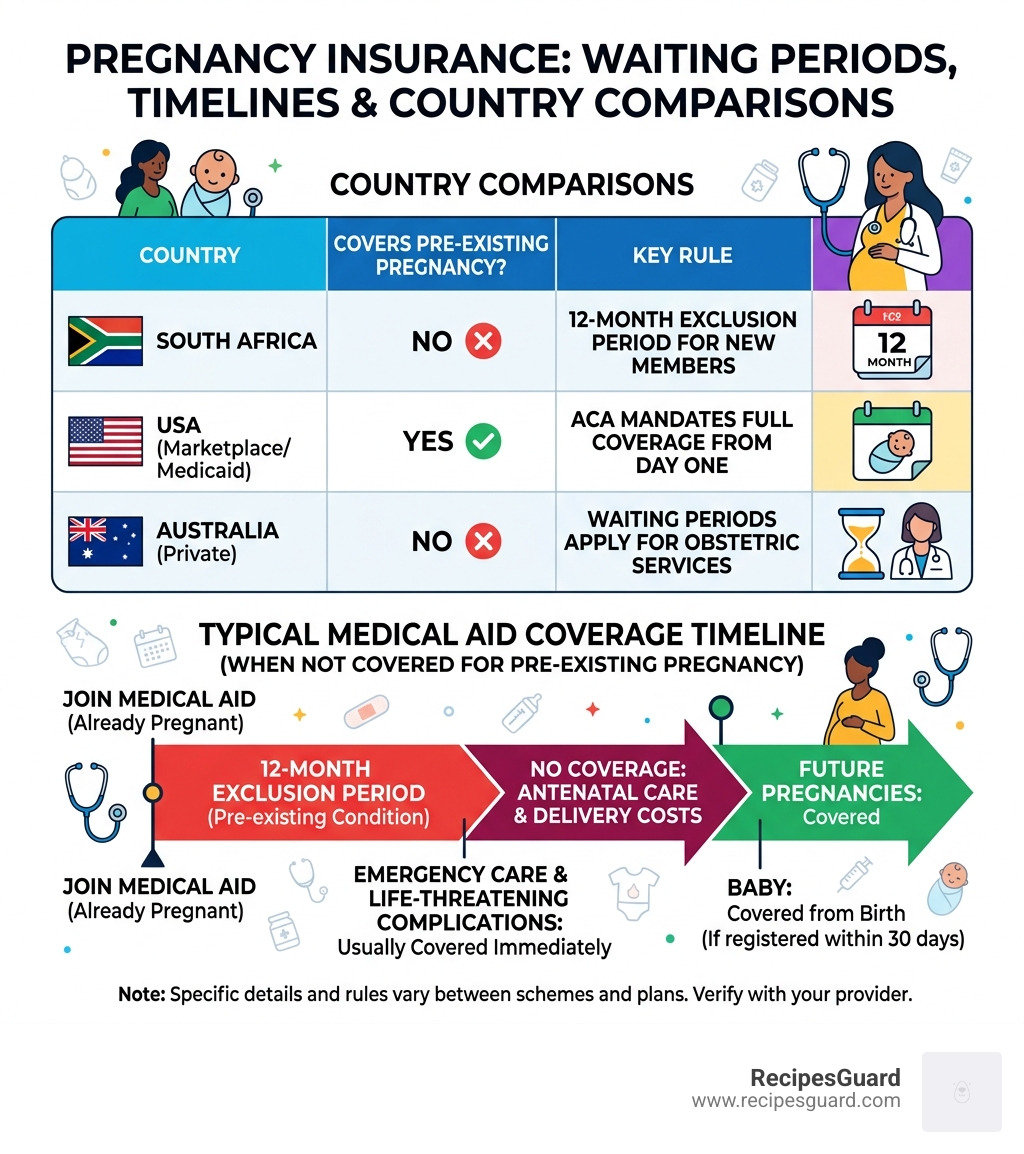
In most cases, medical aid schemes do not cover a pregnancy that existed before you joined. A 12-month exclusion period applies to pre-existing conditions, including pregnancy, in South Africa. In the US, it’s different — Marketplace plans must cover pregnancy even if it started before your coverage.
Quick overview by country:
| Country | Covers Pre-Existing Pregnancy? | Key Rule |
|---|---|---|
| South Africa | No (for new members) | 12-month exclusion period applies |
| USA (Marketplace/Medicaid) | Yes | ACA mandates full coverage from day one |
| Australia (Private) | No (typically) | Waiting periods apply for obstetric services |
What this means if you’re already pregnant:
- Your current pregnancy’s antenatal care and delivery costs are likely not covered
- Emergency care and life-threatening complications are usually covered immediately
- Your baby is typically covered from birth if registered within 30 days
- Future pregnancies will be covered after your waiting period ends
This gap in coverage can be costly. In South Africa, a normal private birth can cost R60,000 or more out of pocket. That’s a serious financial risk — especially for international students or anyone navigating an unfamiliar healthcare system.
Roughly 38% of women are unsure what their health plan actually covers for pregnancy. If you’re one of them, you’re not alone — and this guide will walk you through exactly what to expect and what to do next.
Medical aid that covers pre existing pregnancy word roundup:
- family health insurance pre existing condition
- holiday insurance for undiagnosed conditions
Understanding Medical Aid That Covers Pre Existing Pregnancy
When we talk about medical aid that covers pre existing pregnancy, we are venturing into a complex area of insurance law and risk management. For many of us, the realization that we need medical cover often comes right after that positive pregnancy test. However, from the perspective of an insurance provider, joining a scheme only when you know you will have high medical expenses is known as “anti-selection.”

In the medical aid industry, a pre-existing condition is generally defined as any ailment or physiological state for which you received medical advice, a diagnosis, or treatment within a certain period before joining. While pregnancy is a natural physiological state rather than a disease, South African medical schemes and many Australian private insurers treat it as a pre-existing condition if you are already “expecting” when you sign up.
The rationale behind this is “risk pooling.” Medical schemes work by pooling the contributions of many healthy members to pay for the few who are sick. If everyone waited until they were pregnant or ill to join, the pool would quickly run dry. To prevent this, legislation like the Medical Schemes Act allows providers to protect the fund’s sustainability by imposing waiting periods.
| Feature | Planned Pregnancy (Joined Before) | Unplanned Pregnancy (Joined After) |
|---|---|---|
| Waiting Period | None (Standard 3-month general wait) | 12-month condition-specific exclusion |
| Antenatal Scans | Covered according to plan limits | Out-of-pocket |
| Hospital Delivery | Fully covered (Private/Public) | Out-of-pocket |
| Newborn Coverage | Immediate | Immediate (if registered) |
It is essential to understand that Medical Aid Exclusions for Pre-Existing Conditions are a standard part of the industry. These rules ensure that long-term members who have been contributing for years aren’t disadvantaged by those who join only for a specific, expensive event.
Waiting Periods and Exclusions for New Members
If you are looking for medical aid that covers pre existing pregnancy as a new member, you will likely encounter two types of waiting periods. First is the 3-month general waiting period. During this time, you pay your premiums but cannot claim for anything except very specific emergencies.
The second, and more significant for expectant mothers, is the 12-month condition-specific exclusion. This means for the first year of your membership, the scheme will not pay a cent toward any costs related to your pregnancy. This includes:
- Routine antenatal check-ups and blood tests.
- 2D, 3D, or 4D ultrasounds.
- Obstetrician and gynecologist consultation fees.
- Hospitalization for the birth (whether natural or C-section).
As highlighted by Already Pregnant Women Who Need Medical Aid – MultiMed South Africa, this can feel like a major hurdle. However, the scheme cannot refuse your membership; they simply limit what they pay for during that first year.
Why most medical aid that covers pre existing pregnancy has a 12-month wait
You might wonder why the wait is 12 months when a pregnancy only lasts nine. This is a deliberate design to ensure that you cannot join while pregnant and have the birth covered. If the exclusion were only nine months, a woman in her first month could still get her delivery paid for.
By April 2026, regulatory updates have reinforced these protections for the “risk pool.” Schemes also use these periods to encourage membership loyalty. Furthermore, if you are over the age of 35 and have not had medical aid for a significant period, you might face a “late joiner penalty.” This is an extra percentage added to your monthly premium for life, which is why we always recommend students and young professionals secure cover as early as possible. For more on the nuances of these rules, check out Medical Aid If You’re Already Pregnant | Medical Aid Quotes.
How to check for in-network providers during the waiting period
Even if your current pregnancy isn’t covered, you should still use the waiting period to align yourself with the scheme’s network. Most medical aid that covers pre existing pregnancy for future events operates through “Designated Service Providers” (DSPs).
- Hospital Networks: Verify which private hospitals near you are part of the scheme’s network.
- OBGYN Availability: Check if the specialist you want to see is “network-listed” to avoid large co-payments in the future.
- Anesthesiologists and NICU: Inquire if the hospital’s anesthesiologists and the Neonatal Intensive Care Unit (NICU) are covered. This is vital because even if you pay for the birth yourself, the baby’s NICU stay might be covered by the scheme (more on that below).
What is Covered and Newborn Benefits
While the news about waiting periods can be discouraging, it’s not all bad. Even if you join while pregnant, you are still entitled to “Prescribed Minimum Benefits” (PMBs). In South Africa, the law requires schemes to cover the diagnosis, treatment, and care of a specific list of conditions, regardless of waiting periods.
Crucially, emergency care is always covered. If you experience a life-threatening complication during your pregnancy, the scheme is legally obligated to stabilize you. Furthermore, any medical issues unrelated to your pregnancy (like a broken arm or a severe bout of flu) will be covered after the initial 3-month general waiting period. You can find more details on these protections at Medical Aid for Pregnant Women and Pre-Existing Pregnancy | SA Medical Aid.

Immediate coverage for the baby under medical aid that covers pre existing pregnancy
This is the most important “silver lining” for expectant mothers. Even if your pregnancy is excluded, your newborn baby is typically covered from the moment of birth.
To ensure this coverage:
- You must register the baby with your medical aid within 30 days of birth.
- Most schemes will then backdate the coverage to the actual minute of birth.
- This is vital because neonatal care costs can be astronomical. If a baby is born prematurely or with a congenital condition, the medical aid will cover those costs even if they didn’t pay for the delivery itself.
According to Joining Medical Aid While Pregnant – What Mothers Need to Know, this protection provides massive peace of mind. It ensures that your child starts life with the best possible medical security, even if the timing of your own enrollment was late.
Support services beyond clinical care
Modern medical aids are shifting toward holistic support. About 1 in 5 women experience pregnancy-related mental health conditions, such as postpartum depression or anxiety. Many plans now include:
- Mental Health Support: Access to counselors or psychologists.
- Doula Access: Emotional and physical support during labor (though often subject to specific plan limits).
- Lactation Consultants: Help with breastfeeding after you leave the hospital.
- Maternity Programs: App-based tracking, weekly tips, and even “baby bags” filled with essentials.
Financial Implications and Global Coverage Differences
The financial implications of not having medical aid that covers pre existing pregnancy are significant. In a private facility, you aren’t just paying for the bed; you are paying for the obstetrician, the anesthetist, the theater fees, and the pediatric check-up.
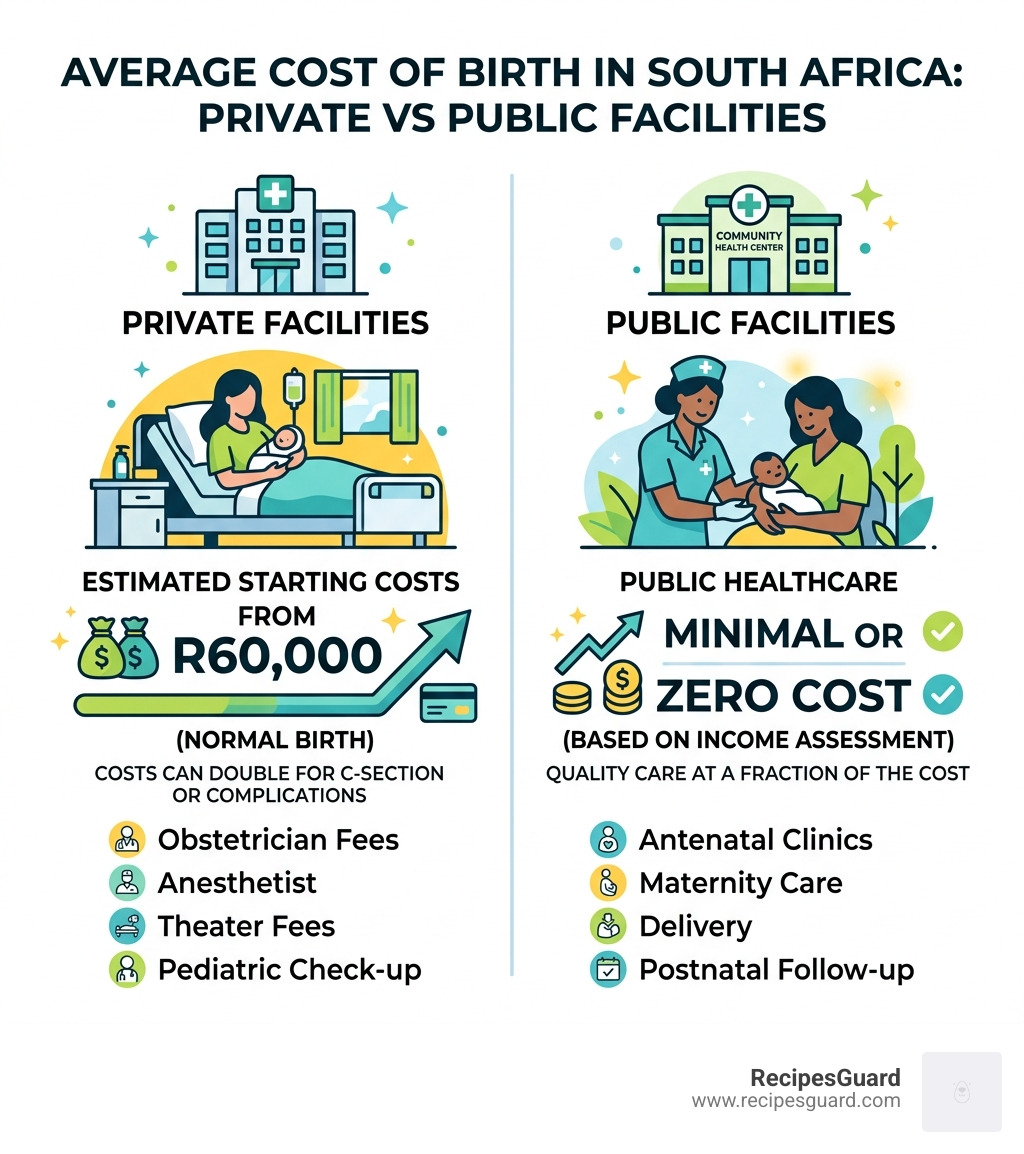
In South Africa, a normal birth estimate starts at R60,000, but a C-section or a stay with complications can easily double that. This is why “Gap Cover” is so popular — it covers the difference between what the doctor charges and what the medical aid pays. However, like medical aid, Gap Cover also has a 12-month waiting period for pre-existing pregnancies.
Steps for mothers without coverage:
- Budget Early: Start a dedicated savings account for the birth as soon as possible.
- Public Healthcare: Explore high-quality public academic hospitals which often provide excellent maternity care at a fraction of the cost.
- Payment Plans: Some private hospitals allow you to pay a “global fee” in installments if you don’t have medical aid.
Comparing South African schemes and US Marketplace plans
If you are an international student or an expat, it is important to know that rules vary wildly by country. In the USA, the Affordable Care Act (ACA) changed the game. Marketplace plans cannot deny you coverage or charge you more for a pre-existing pregnancy. Maternity and newborn care are considered “essential health benefits.”
In Australia, the system is a hybrid. While Medicare provides broad support, private health insurance (which many students are required to have) usually carries a 12-month waiting period for obstetric services. You can read more about the Australian context via Health insurance for pregnancy – Medibank and Medicare services for conceiving, pregnancy and birth.
Frequently Asked Questions
Can I switch plans to cover an existing pregnancy?
Switching plans is a common strategy, but it requires careful timing. If you move from one medical aid to another in South Africa, you may avoid the 12-month exclusion if you have been a member of your previous scheme for at least two years without a break of more than 90 days. This is known as “creditable coverage.” If you are just upgrading your plan within the same scheme, they might still apply a waiting period to the new benefits (like a private ward) while keeping your basic cover intact.
What happens if I don’t disclose my pregnancy?
We cannot stress this enough: Always be honest on your application. If you do not disclose that you are pregnant and the scheme finds out later (which they will, once claims start coming in), they can cancel your policy for non-disclosure. This is considered insurance fraud and can make it nearly impossible for you to get cover with any other provider in the future.
Are pregnancy complications covered as emergencies?
Yes. Under PMB regulations, life-threatening events are covered immediately. If you develop a condition like pre-eclampsia or require an emergency intervention to save the life of the mother or child, the scheme must provide cover for stabilization, regardless of your waiting period status.
Conclusion
Securing medical aid that covers pre existing pregnancy requires a proactive approach and a clear understanding of the “fine print.” While the 12-month waiting period is a reality for many, the immediate protection offered to your newborn baby makes joining a scheme worthwhile even if you are already expecting.
At RecipesGuard, we understand that navigating insurance as a student or a young family can be overwhelming. We specialize in providing student-focused, step-by-step guides to help you manage your health and travel insurance needs with confidence. Whether you are studying in Australia or planning your future back home, we are here to simplify the complex world of claims and coverage.
Don’t leave your family’s health to chance. Secure your medical cover today to ensure that your future pregnancies and your new bundle of joy are fully protected. For more advice on navigating insurance as a student, visit our About Us page.

My name is Bianca, and my journey into the world of fermentation and food safety began with a costly mistake. I once lost an entire season’s harvest of chili peppers because I relied on guesswork instead of science. That failure was my turning point.
