
International Student Travel: Why You Need Insurance Before You Fly
Why Every Student Traveler Needs Insurance Before They Fly
Travel insurance for student trips is a type of coverage that protects you from financial loss when things go wrong abroad — think medical emergencies, cancelled flights, lost luggage, or having to cut your trip short.
Here’s a quick look at what it typically covers and what it costs:
| Coverage Type | What It Protects | Typical Limit |
|---|---|---|
| Emergency Medical | Hospital, doctor, surgery costs abroad | Up to $500,000+ |
| Medical Evacuation | Transport to adequate care | Up to $300,000+ |
| Trip Cancellation | Non-refundable trip costs | Varies by plan |
| Baggage Loss/Delay | Stolen or delayed belongings | Up to $25,000 |
| 24/7 Assistance | Emergency support, translation, legal help | Included |
Average cost: 5–7% of your total trip cost.
Studying abroad is one of the most exciting things you can do as a student. New country, new culture, new people.
But it also puts you far from home — without your usual doctor, support network, or the health insurance that covers you back home. Most domestic health insurance plans are not accepted internationally. That means a single hospital visit abroad could leave you with a bill you simply can’t pay.
The risks are real. Your luggage might not arrive. A family emergency might force you to fly home early. You might break a bone on a hike or need urgent care with no idea who to call.
This guide walks you through everything you need to know about finding the right student travel insurance — from what it covers and what it costs, to how visa requirements work and how to actually file a claim when you need it most.
Why Travel Insurance for Student Trips is Essential in 2026
As we head into mid-2026, student travel is more vibrant than ever. Whether you’re heading to a university in the UK, embarking on a semester in Japan, or taking a gap year to explore Southeast Asia, the logistics remain complex. Travel insurance for student travelers isn’t just a “nice-to-have” anymore; it’s a fundamental part of your packing list, right next to your passport and laptop.

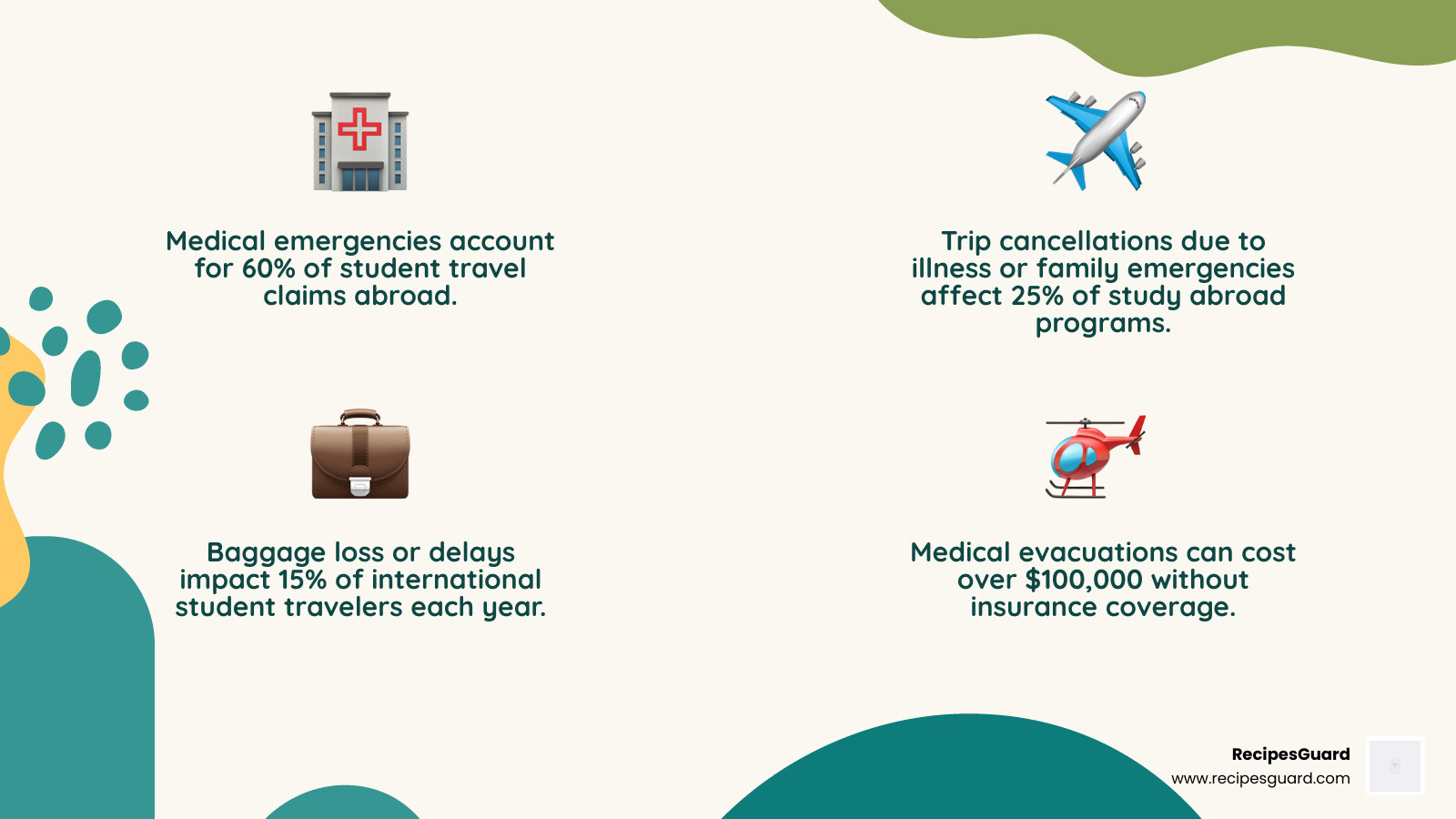
Medical emergencies are the most significant risk. Without a policy, you are responsible for 100% of your medical bills. In many countries, hospitals may even require proof of payment or insurance before they begin treatment. Beyond health, trip cancellations can happen for dozens of reasons—from a sudden illness to a family emergency back home. Having a plan ensures that the thousands of dollars you’ve spent on airfare and tuition don’t just vanish.
At RecipesGuard, we see many students who overlook the “assistance” portion of their policy. This is your 24/7 lifeline. If you lose your passport in a crowded market or need a translator to explain your symptoms to a doctor, these services are invaluable. Secure your journey with travel insurance for student travelers to ensure you have a safety net that never sleeps.
Choosing the Right Travel Insurance for Student Destinations
Not all destinations are created equal when it comes to risk. If you are heading to a country with high healthcare costs, you’ll want a plan with higher medical limits. Conversely, if you’re traveling to a remote area, “Medical Evacuation” coverage becomes your top priority.
When choosing a plan, consider:
- Trip Length: Are you gone for a 10-day spring break or a 12-month exchange? Some plans have a 30-day cap, while others, like the StudentSecure Elite, can cover you for up to 364 days.
- Budget: While it’s tempting to go for the cheapest option, ensure it meets your school’s minimum requirements.
- Local Laws: For example, students coming to Australia must often hold Overseas Student Health Cover (OSHC) as a visa condition.
Get a Fast Quote for Student Travel Protection to see how these factors influence your specific journey.
Managing Health and Safety Abroad
Health abroad isn’t just about the big stuff like surgery; it’s about navigating a foreign system. A good travel insurance for student plan often includes “Air Doctor” services, allowing you to book telehealth appointments or find local, vetted clinics so you don’t end up in an expensive emergency room for a simple ear infection.
Emergency dental is another “hidden” essential. Most plans cover up to $500 for acute pain or injury—enough to fix a chipped tooth from a basketball game or an unexpected infection. Furthermore, modern plans in 2026 are increasingly focusing on mental health, providing coverage for outpatient visits, which is vital for students dealing with the stress of culture shock or academic pressure.
What Does a Comprehensive Student Plan Cover and Cost?
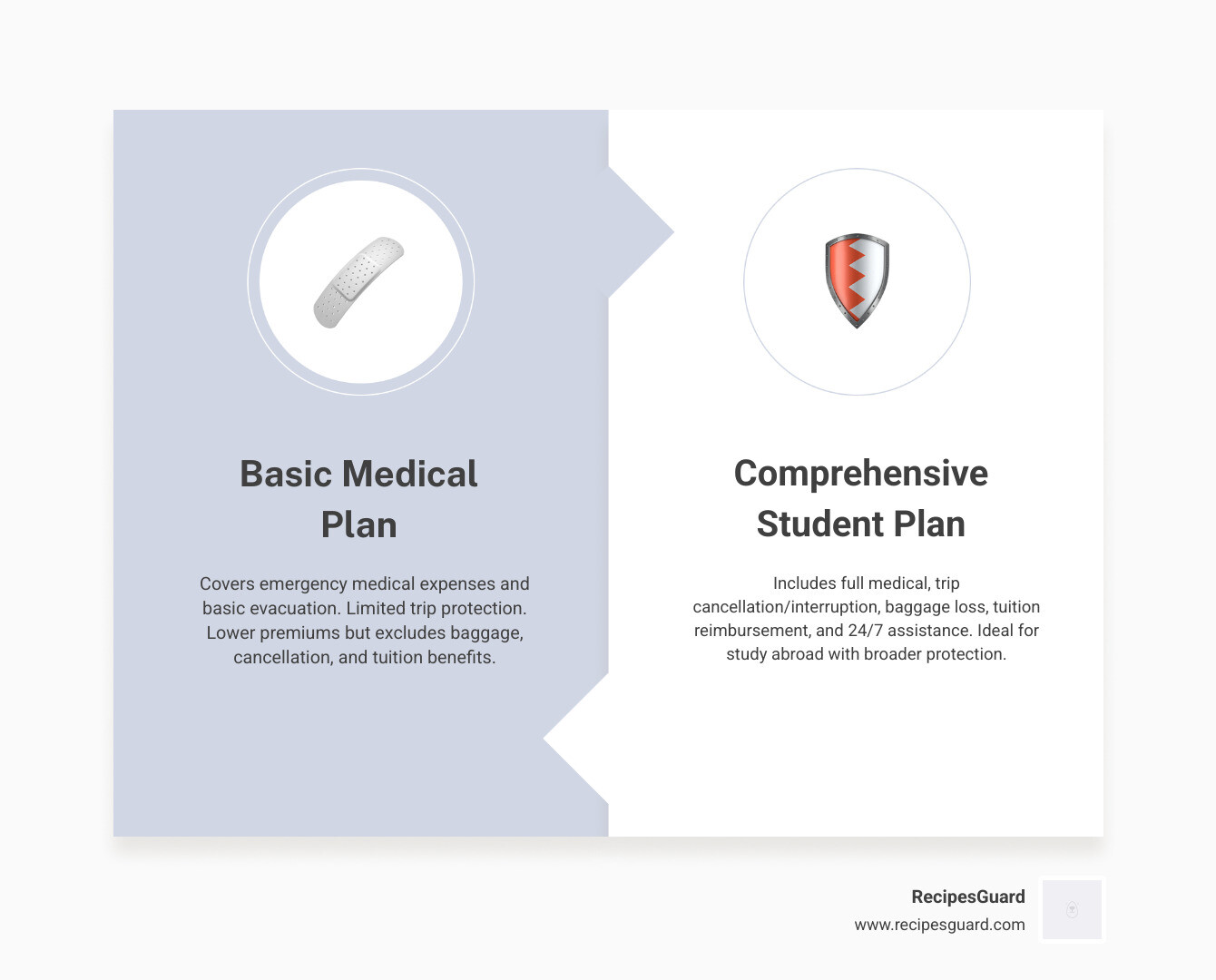
Understanding the “why” is easy; understanding the “what” and the “how much” takes a bit more digging. Most student-specific insurance policies are divided into “Medical Only” and “Comprehensive” plans.
Essential Benefits for Academic Travelers
Student-specific plans offer benefits you won’t find in a standard tourist policy. One of the most critical is Tuition Reimbursement. If you have to leave your program early due to a covered medical reason, this benefit can help recoup the thousands of dollars spent on classes you couldn’t finish.
Other key benefits include:
- Compassionate Visit: If you are hospitalized for more than a few days, many plans will pay for a family member to fly out and stay with you.
- Personal Property: This covers your laptop, phone, and textbooks. Given that 25% of students experience some form of baggage or tech loss during their travels, this is a huge relief.
- Trip Interruption: If a tragedy occurs at home and you need to fly back immediately, this covers the last-minute flight costs.
Explore Comprehensive Student Coverage Options to see a full breakdown of these academic-focused perks.
Understanding the Cost of Travel Insurance for Student Budgets
We know that every dollar counts when you’re living on ramen and student discounts. On average, travel insurance for student trips costs between 5% and 7% of your total trip cost. However, many student-specific medical plans are priced by the day or month rather than the trip total.
Factors that affect your price include:
- Age: Generally, students under 25 enjoy the lowest rates.
- Destination: Coverage that includes the USA is typically more expensive due to higher healthcare costs.
- Deductible: Choosing a higher deductible (the amount you pay out of pocket before insurance kicks in) will lower your monthly premium. Many student plans offer a $0 deductible option for maximum peace of mind.
For those on a tight budget, international student health insurance plans can start as low as $29 per month. Budget-Friendly International Student Protection Plans are available for those who need to meet visa requirements without breaking the bank.
Navigating Visa Requirements and Academic Program Coverage
If you are traveling on a specific visa, insurance isn’t just a recommendation—it’s a legal requirement. In the USA, J1 visa holders must have insurance that meets strict Department of State requirements, including at least $100,000 in medical coverage and $50,000 for repatriation of remains.
F1 students often find that their university has its own mandatory health plan. However, these campus plans often don’t cover you while you’re traveling outside the campus or during your flight to and from your home country. This is where “gap” coverage or a supplemental travel insurance for student plan becomes necessary.
Meeting International Student Visa Insurance Requirements is easier when you choose a plan specifically designed for F1, J1, and OPT statuses. Most of these providers will give you a “Visa Letter” immediately after purchase, which you can show to your embassy or school.
Travel Insurance for Student Gap Years and Study Abroad
Gap years often involve hopping between multiple countries. Standard insurance might only cover you in one region, but student-specific “Global” plans allow you to move from France to Italy to Thailand without needing a new policy for every border crossing.
If you are on a “Personal Deviation”—taking a two-week vacation after your study program ends—check if your policy allows for this. Many university-provided plans stop the moment your classes end, leaving you unprotected during your post-semester backpacking trip. Long-term Coverage for Study Abroad and Gap Years ensures you’re covered from the moment you leave your front door until the moment you return.
Integrating University-Provided Coverage
Some lucky students are covered by their university’s business travel policy. For example, some institutions cover students traveling more than 100 miles from campus on university-sponsored activities. However, these plans are often limited. They might cover emergency evacuation but not your stolen laptop or a trip to a local GP for a flu shot. Always read the “fine print” of your school’s policy to see where their coverage ends and where your personal policy needs to begin.
Common Exclusions and High-Risk Considerations
No insurance policy covers everything. It is a common mistake to assume that because you have “comprehensive” coverage, every incident is paid for.

Common exclusions include:
- Pre-existing Conditions: If you have a chronic illness, it may not be covered unless it has been “stable” for a certain period (usually 3 to 6 months).
- Alcohol and Drugs: If an accident happens while you are under the influence, your claim will almost certainly be denied.
- High-Risk Areas: Traveling to countries with active “Do Not Travel” advisories from the government often voids your coverage.
Understanding Policy Exclusions and Limitations is the best way to avoid a denied claim later.
Coverage for Adventure Activities and Sports
Are you planning to go skiing in the Alps or scuba diving in the Great Barrier Reef? Most standard travel insurance for student plans exclude “extreme” or “organized” sports.
If you’re playing for a university club team or planning to bungee jump, you usually need an “Adventure Sports” or “Organized Sports” add-on. For example, some plans cover “leisure” skiing but won’t cover you if you’re in a timed race. Always check the list of covered activities before you zip up your ski jacket.
The Benefits of Cancel For Any Reason (CFAR)
Sometimes, you just change your mind. Maybe you’re stressed about exams, or you’ve decided to take a summer internship instead of your planned trip. Standard “Trip Cancellation” only covers specific reasons like illness or death in the family.
Cancel For Any Reason (CFAR) is an optional upgrade that gives you total flexibility. It typically reimburses 50% to 75% of your non-refundable costs regardless of why you cancel. The catch? You usually have to buy it within 14–21 days of making your first trip deposit.
How to File a Claim and Get Emergency Assistance Abroad
This is where RecipesGuard excels. We know that the last thing you want to do when you’re sick or stressed is navigate a 50-page insurance document.
If an emergency happens, your first step should always be to call the 24/7 assistance number on your insurance card. They can help coordinate with the hospital, arrange for payment, and even provide medical monitoring to ensure you’re getting the right care.
Step-by-Step Claim Filing Process
If you need to file a claim for a smaller expense, like a doctor’s visit or a stolen bag, follow these steps:
- Keep Every Receipt: This is the #1 reason claims are delayed. From the pharmacy bill to the police report for a stolen phone, you need paper (or digital) proof.
- Get a Medical Report: If you see a doctor, ask for a “Note of Treatment” that includes your diagnosis.
- File Quickly: Most companies require you to start the claim within 30 to 90 days of the incident.
- Use the Portal: Most 2026 plans offer an app where you can snap a photo of your receipts and submit the claim in minutes.
At RecipesGuard, we provide detailed, step-by-step tutorials for filing claims with major providers to ensure you get your money back as fast as possible.
Accessing 24/7 Emergency Support
Emergency support isn’t just for medical issues. If you are caught in a natural disaster or political unrest, the assistance center can coordinate your evacuation. They can also provide legal referrals if you get into trouble or help you find a local embassy if your travel documents are stolen.
Frequently Asked Questions about Student Travel Insurance
Does student travel insurance cover pre-existing medical conditions?
Most plans have a “Look-Back Period” (usually 60 to 180 days). If you received treatment or changed medication for a condition during that time, it’s considered pre-existing. However, some “Elite” plans offer a waiver for pre-existing conditions if you purchase the policy immediately after booking your trip.
Can I buy travel insurance if I am already abroad?
Yes, but it’s trickier. Many plans require you to buy the policy before you leave your home country. If you’re already abroad, you may have to wait for a 48-to-72-hour “waiting period” before the coverage becomes active to prevent people from buying insurance only after they get sick.
What is the difference between travel insurance and international health insurance?
Travel insurance is focused on emergencies—trip cancellations, lost bags, and sudden injuries. International Health Insurance is more like the plan you have at home; it often covers routine check-ups, vaccinations, and long-term care, but it usually doesn’t cover things like flight delays.
Conclusion
Becoming a global citizen is an incredible journey, but it comes with responsibilities. Managing your risks through travel insurance for student plans ensures that a single stroke of bad luck doesn’t end your academic dreams or drain your savings.
By choosing a plan that fits your destination, covers your activities, and meets your visa requirements, you can focus on what really matters: your education and the adventure of a lifetime. For more tips on navigating student insurance and step-by-step guides on filing claims, More info about recipesguard services is always available to help you fly with confidence.

My name is Bianca, and my journey into the world of fermentation and food safety began with a costly mistake. I once lost an entire season’s harvest of chili peppers because I relied on guesswork instead of science. That failure was my turning point.
