
The International Student Guide to Filing Tax Claims
What Is Study Visa Clay Filing — and Do You Need to Do It?
Study visa claim filing is the process international students use to report their US income (or confirm their exempt status) to the IRS each tax year. Here is a quick answer to what most students need to know:
Who must file:
- All F-1, J-1, M-1, and Q visa holders present in the US during 2025 — even with zero income
- F-1 students with US wages, scholarships, OPT/CPT earnings, or other taxable income
Key forms:
- Form 8843 — required for every international student, even with no income
- Form 1040-NR — required if you earned any US-sourced income
2026 deadlines:
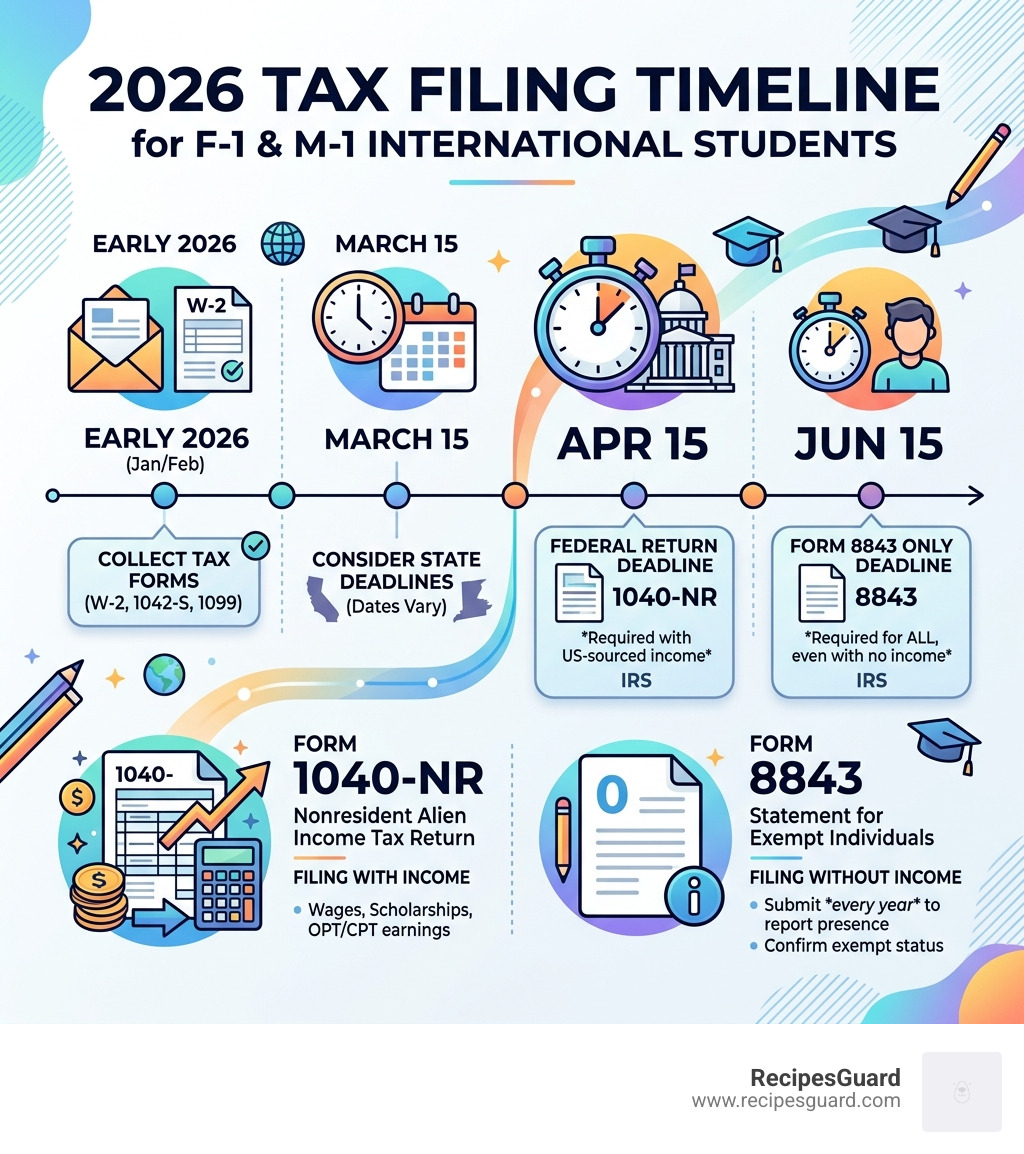
- April 15, 2026 — federal return deadline if you had US income
- June 15, 2026 — Form 8843 only deadline if you had no US wages
What happens if you skip it:
- IRS fines and penalties
- Risk of complications for future US visa or Green Card applications
Tax season is stressful for anyone. For international students, it is especially confusing — because the rules that apply to you are completely different from those for US citizens and residents.
Most students arrive in the US focused on their studies, not IRS paperwork. But filing correctly matters — a lot. It affects your visa compliance, your ability to claim refunds, and even your long-term immigration options.
The good news? Once you understand the basics, the process is straightforward. This guide walks you through everything: which forms to file, what documents you need, how to claim refunds, and what deadlines to hit in 2026.
Study visa claim filing terms to remember:
- delayed baggage claim process
- delayed visa claim process
Navigating the 2026 Study Visa Claim Filing Requirements
As we move through April 2026, many of us are realizing that the IRS has a very specific way of looking at international students. In the eyes of the US government, your immigration status (F-1 or M-1) is one thing, but your “tax residency” is another. Understanding where you sit in this system is the first step in successful study visa claim filing.
The Substantial Presence Test and the 5-Year Exemption
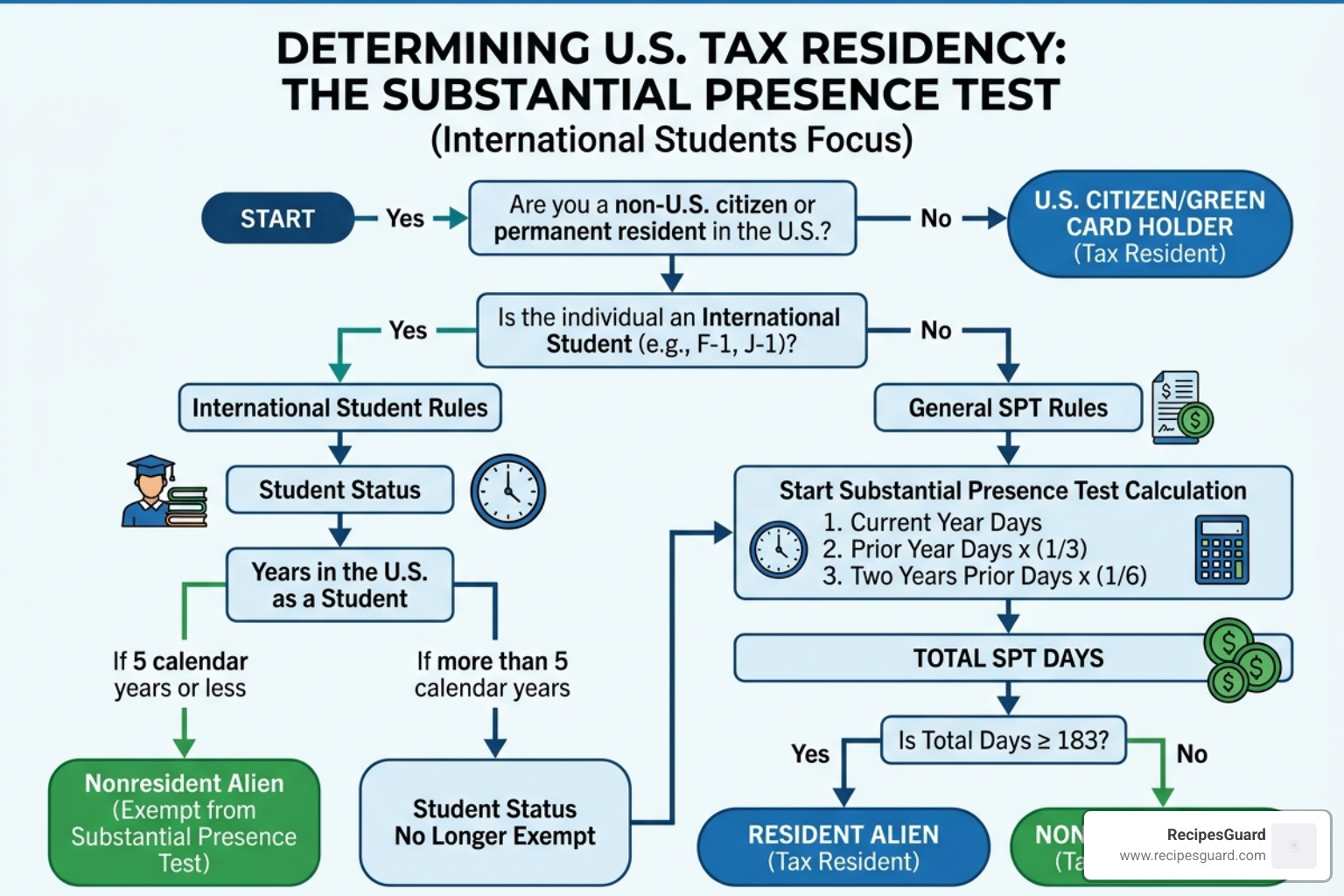
Most people in the US become “tax residents” if they spend enough time in the country. This is determined by the Substantial Presence Test (SPT). However, as an F-1 or M-1 student, you are considered an “exempt individual.”
This doesn’t mean you are exempt from paying taxes; it means you are exempt from counting your days in the US toward the SPT for your first five calendar years. During this five-year window, you are classified as a nonresident alien for tax purposes. This is actually a benefit! It means you are generally only taxed on income you earn from US sources, rather than your worldwide income.
Once you have been in the US for more than five calendar years (for example, if you arrived in 2020 and are still here in 2026), your status shifts to a resident alien for tax purposes. At this point, you’ll start filing Form 1040 just like a US citizen. For more information on navigating these transitions, you can check More info about our services.
It is also worth noting that while we focus on US rules here, international students often deal with complex cross-border regulations. For instance, those looking at North American options might encounter the Immigration and Refugee Protection Regulations when considering applications after entry into other jurisdictions like Canada.
Who is Required to Initiate a Study Visa Claim Filing?
We often hear students ask, “I didn’t work this year, do I still need to do anything?” The answer is a resounding yes.
- F-1 and M-1 Students with No Income: Even if you didn’t earn a single cent in the US, you are still required to file Form 8843. This form tells the IRS that you are an exempt individual and that your days in the US shouldn’t count toward the Substantial Presence Test.
- Students with Wages: If you worked on-campus, or participated in Curricular Practical Training (CPT) or Optional Practical Training (OPT), you must file a tax return.
- Scholarship Recipients: If you received a scholarship or fellowship that covered more than just your tuition and required books (like room and board), that portion is often taxable and must be reported.
- Dependents: If you have family members with you on F-2 or M-2 visas, they must also file Form 8843, regardless of their age or income level.
Essential Forms and Documentation for Nonresidents
Gathering your paperwork early is the best way to avoid a headache. Think of it like preparing for a final exam—you don’t want to be hunting for notes at the last minute!

The “Big Two” Forms
- Form 8843 (Statement for Exempt Individuals): As mentioned, everyone files this. It is a simple document that asks for your visa type, the number of days you were in the US, and information about your educational institution.
- Form 1040-NR (US Nonresident Alien Income Tax Return): This is the form you use to report your actual earnings. Unlike the standard 1040, the “NR” version is specifically designed for nonresidents.
Your Document Checklist
To complete your study visa claim filing accurately, you will need:
- Passport: For your entry and exit dates.
- Form I-20: To confirm your student status.
- Social Security Number (SSN) or Individual Taxpayer Identification Number (ITIN): If you are working, you likely have an SSN. If you aren’t eligible for an SSN but have a taxable scholarship or need to claim a treaty benefit, you will need to apply for an ITIN using Form W-7.
- W-2 (Wage and Tax Statement): Provided by your employer, showing how much you earned and how much tax was withheld.
- 1042-S: This form is common for students. It reports scholarships, fellowships, or wages that were exempt from tax due to a treaty.
- 1099-INT: If you earned interest from a US bank (though for most nonresidents, bank interest is actually non-taxable, it’s still good to have the record).
Software Solutions for Study Visa Claim Filing
We strongly advise against using “big name” tax software like TurboTax for your nonresident return. Why? Because those programs are built for US residents. If you use them, you will likely file the wrong form (a resident 1040), which can lead to IRS penalties and could even jeopardize your future visa applications.
Instead, look for specialized nonresident software like Sprintax. These tools are designed specifically for the F-1 and M-1 community. They help automate the process by:
- Checking over 65 different international tax treaties to see if you owe less.
- Generating both Form 1040-NR and Form 8843.
- Providing a “wizard” to help you through the tricky questions.
- Ensuring you don’t accidentally claim credits (like the Earned Income Tax Credit) that nonresidents aren’t allowed to take.
Maximizing Refunds: Treaties, FICA, and OPT/CPT
One of the most exciting parts of study visa claim filing is realizing you might actually get money back. Because many employers over-withhold taxes, or because you qualify for special exemptions, many students see a nice refund check in the mail.
The Power of Tax Treaties
The US has tax treaties with over 65 countries (including China, India, France, and many others). These treaties are designed to prevent “double taxation.” For example, a student from a treaty country might be able to earn up to $5,000 of US income completely tax-free. If your employer already took taxes out of that $5,000, you can claim it all back when you file your 1040-NR.
The FICA Exemption (The 7.65% Bonus)
This is one of the most common errors we see. Most F-1 and M-1 students who have been in the US for less than five calendar years are exempt from FICA taxes (Social Security and Medicare). This is about 7.65% of your paycheck.
If you look at your pay stub and see “SS” or “Med” taxes being taken out, your employer is likely making a mistake. You should first ask your employer for a refund. If they can’t or won’t help, you can file Form 843 with the IRS to claim that money back. It’s your money—don’t leave it on the table!
OPT and CPT: Yes, You Still Pay Taxes
Whether you are working a summer internship on CPT or a full-time job on OPT after graduation, you are still an F-1 student in the eyes of the IRS (as long as you haven’t hit that 5-year residency mark). You must report this income. However, the same FICA exemptions and treaty benefits often still apply, making your tax burden much lower than your US colleagues.
| Tax Type | F-1 Student (Nonresident) | H-1B Worker (Resident) |
|---|---|---|
| Federal Income Tax | Yes (on US income) | Yes (on worldwide income) |
| FICA (SS/Medicare) | Exempt (first 5 years) | Must Pay |
| Tax Treaties | Frequently Applicable | Rarely Applicable |
| Standard Deduction | No (except India) | Yes |
Deadlines, State Taxes, and Compliance Risks
In 2026, the calendar is your most important tool. Missing a deadline isn’t just a minor “oops”—it can have real legal consequences.
Important 2026 Dates
- April 15, 2026: The deadline to file your federal (1040-NR) and most state tax returns if you earned income.
- June 15, 2026: If you had no US wages and are only filing Form 8843, this is your deadline.
Don’t Forget the State!
Most US states have their own income tax. If you go to school in New York, California, or Massachusetts, you’ll likely need to file a state return in addition to your federal one. However, if you are lucky enough to study in a state like Texas, Florida, or Washington, there is no state income tax, so you’ll only have to worry about the IRS.
What’s at Stake?
Filing taxes is a condition of your visa. If you apply for a Green Card or a different visa (like an H-1B) in the future, the government may ask for copies of your past tax returns. If you haven’t filed, or if you filed incorrectly as a resident when you were a nonresident, it can cause major delays or even denials.
If you find yourself in a situation where you need to contest a decision or pay administrative fees related to your status, resources like Filing an Appeal or Motion – Pay Fees | Study in the States provide the official government steps for schools and students to manage those hurdles.
Frequently Asked Questions about Student Taxes
Can F-1 students use TurboTax or other resident software?
We get this question every week. The short answer is: No. TurboTax is excellent for US citizens, but it does not support Form 1040-NR. If you use it, the software will file you as a “resident alien.” This is technically a false statement to the IRS. It can result in you receiving credits you aren’t entitled to, which the IRS will eventually ask you to pay back with interest and penalties. Always use a nonresident-specific tool.
Can nonresident students claim the standard deduction or education credits?
Generally, no. Nonresident aliens are not eligible for the standard deduction that most Americans use to lower their taxable income. You must “itemize” your deductions instead.
- The India Exception: Under Article 21 of the US-India Tax Treaty, students from India can claim the standard deduction.
- Education Credits: Most nonresidents cannot claim the American Opportunity Tax Credit (AOTC) or the Lifetime Learning Credit. These are reserved for residents.
What happens if I missed the filing deadline or filed incorrectly?
Don’t panic! The IRS allows you to fix mistakes. If you realized you filed the wrong form last year, you can file Form 1040X (Amended US Individual Income Tax Return). You will need to attach the correct 1040-NR to it and mail it in. If you simply missed the deadline and owe money, file as soon as possible to stop the accumulation of late fees. If you are owed a refund, there is usually no penalty for filing late, but the sooner you file, the sooner you get your money!
Conclusion
At RecipesGuard, we know that being an international student is about more than just hitting the books—it’s about navigating a whole new world of responsibilities. While we specialize in providing guides on travel insurance claims and student-focused advisory, we believe that financial compliance is a huge part of your overall peace of mind.
Study visa claim filing doesn’t have to be a nightmare. By staying organized, using the right software, and respecting the deadlines of the 2026 tax season, you can protect your visa status and maybe even put a little extra money back in your pocket.
If you are looking for more step-by-step tutorials on managing your student life and protecting your journey, explore More info about our services. Safe travels and happy filing!

My name is Bianca, and my journey into the world of fermentation and food safety began with a costly mistake. I once lost an entire season’s harvest of chili peppers because I relied on guesswork instead of science. That failure was my turning point.
