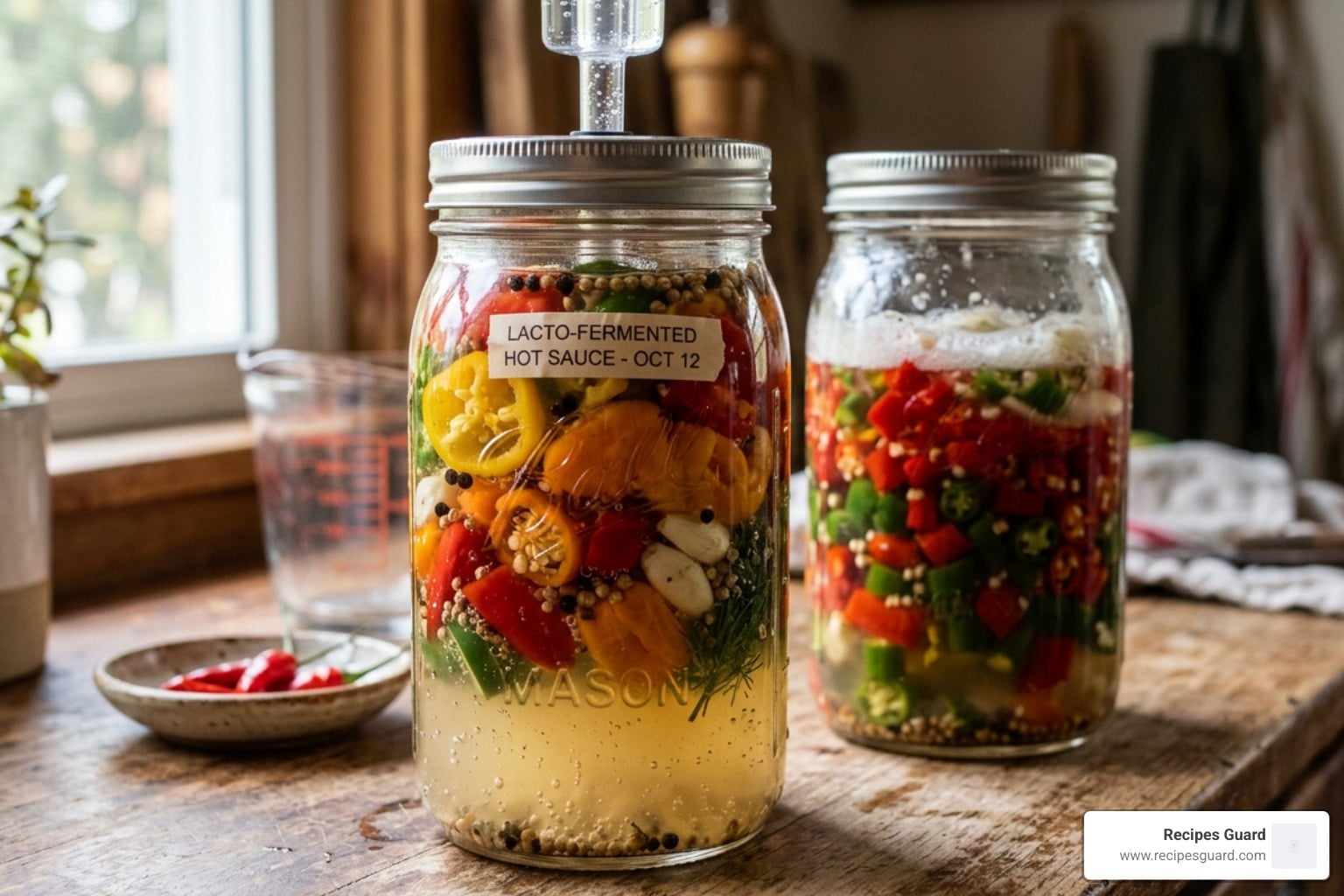
How to make fermented hot sauce that packs a punch
What Is Hot Sauce Lacto Ferment (and Why Should You Care)?
Hot sauce lacto ferment is one of the simplest and most rewarding things you can make at home. Here’s the quick version:
How to make lacto-fermented hot sauce:
- Chop fresh hot peppers and optional aromatics (garlic, onion)
- Make a brine using 3% salt by weight (3g salt per 100ml filtered water)
- Pack peppers into a clean glass jar and cover with brine
- Keep submerged, ferment at 65-75°F for 1-4 weeks
- Blend with reserved brine, bottle, and refrigerate
Chiles are one of the most straightforward foods to ferment. Salt water creates an environment where Lactobacillus bacteria — already living on the pepper skins — thrive and multiply. They convert the natural sugars in the peppers into lactic acid. That acid preserves the sauce and builds layers of flavor that a simple vinegar-based sauce simply can’t match.
The result? A hot sauce with real depth — tangy, complex, slightly funky, with heat that’s rich rather than sharp.
Commercial legends like Tabasco and Sriracha are fermented sauces. Tabasco is aged in white oak barrels for years. You don’t need years or barrels. A mason jar, some salt, and a week or two is enough to get started.
This guide covers everything: the science, the equipment, the brine math, the blending, and how to fix it when something goes wrong.
The Science of Hot Sauce Lacto Ferment
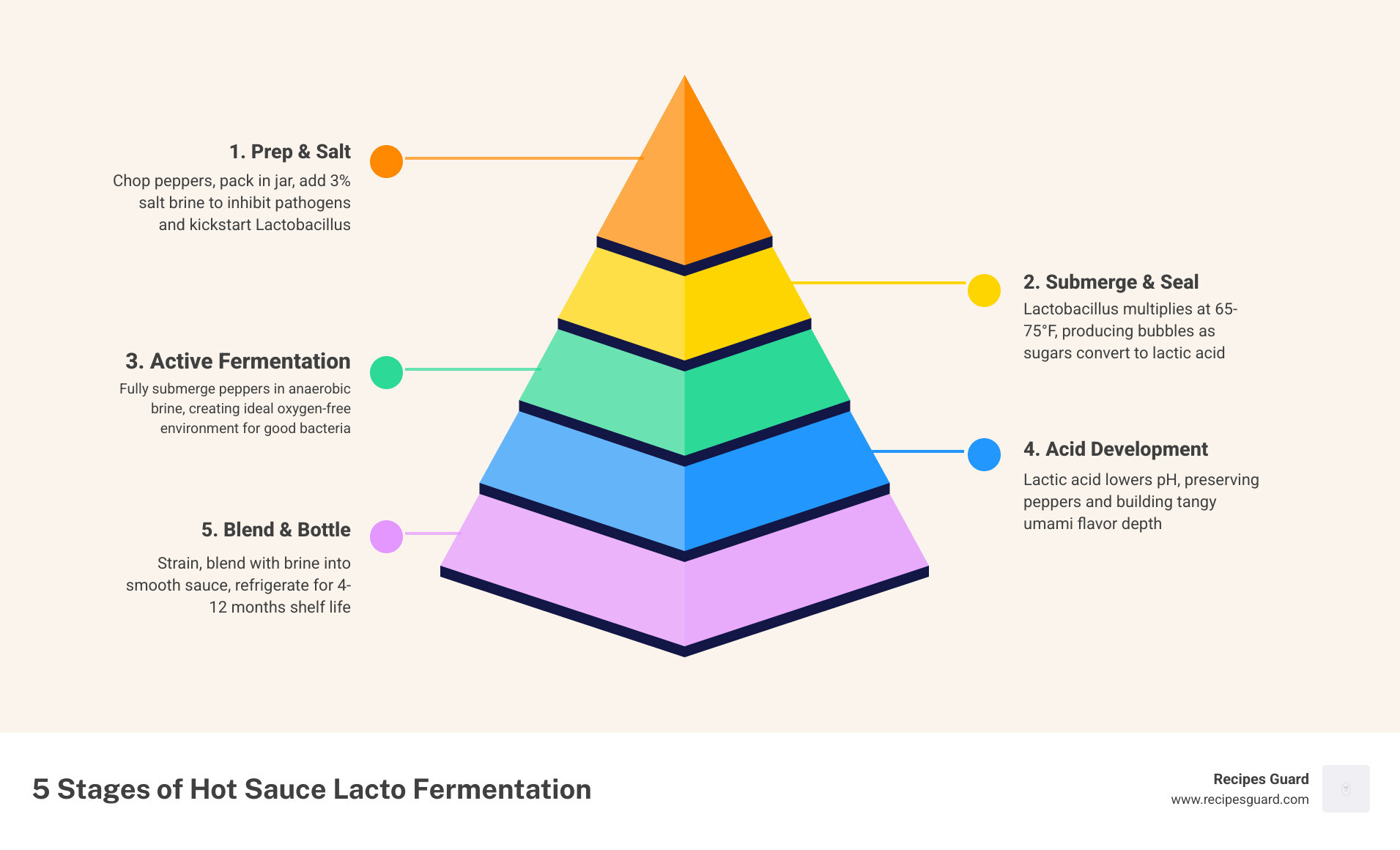
At its heart, a hot sauce lacto ferment is a biological transformation. We aren’t just rotting peppers in a jar; we are cultivating a specific type of beneficial bacteria called Lactobacillus. This is the same microscopic workhorse responsible for yogurt, sourdough, and kimchi.
When we place peppers in a salt brine, we create an anaerobic environment (oxygen-free). Most “bad” bacteria and molds cannot survive in salty, oxygen-depleted water. However, Lactobacillus loves it. These bacteria consume the natural sugars found in the peppers and produce lactic acid as a byproduct.
As the lactic acid builds up, the pH level of the liquid drops. According to the FDA, acidified foods should have a pH of 4.6 or lower to be considered safe, but for shelf stability at home, we often aim for a pH of 3.4 or even lower. This acidity acts as a natural preservative, preventing spoilage while adding that signature “tang” we crave. For more on the safety protocols of this process, check out Safety First A Guide To Preserving Fermented Foods.
Understanding the Role of Salt and Bacteria
Salt is the “gatekeeper” of fermentation. It’s not just there for flavor; it’s a safety mechanism. A salt concentration in the 2-5% range is the sweet spot. It is high enough to inhibit pathogens like Clostridium botulinum but low enough that the Lactobacillus can still do its job.
If you use too little salt, the peppers might turn to mush or grow harmful mold. If you use too much, you’ll kill the “good” bacteria and end up with a jar of very salty, raw peppers that never ferment. If you’ve ever made Quick And Easy Pickled Vegetables For Every Meal, you know how important that balance is, though fermentation takes it a step further than simple vinegar pickling.
Why Fermentation Beats Vinegar-Based Sauces
Most store-bought hot sauces are “fresh” sauces made by blending peppers with a heavy dose of vinegar. While tasty, vinegar can be a bit of a “sledgehammer” — it provides sharp acidity but can mask the subtle floral or fruity notes of the pepper.
A hot sauce lacto ferment, on the other hand, shows finesse. The process creates umami depth and complex esters that didn’t exist in the raw pepper. Furthermore, fermentation actually mellows the heat. The capsaicin (the stuff that makes peppers hot) is slightly mitigated by the organic acids produced during the ferment. You also get the added bonus of live probiotic enzymes, which are great for gut health, provided you don’t pasteurize the sauce afterward.
Essential Equipment and Ingredients for Success
You don’t need an industrial kitchen to master the hot sauce lacto ferment, but a few specific tools will make your life much easier and your sauce much safer.
- Glass Jars: Wide-mouth Mason jars are the gold standard. They are easy to clean and easy to pack.
- Fermentation Weights: These glass or ceramic discs sit inside the jar to keep the peppers submerged under the brine. Remember: If it’s under the brine, it’s fine. If it’s in the air, beware.
- Airlocks: These fit onto the lid and allow carbon dioxide (CO2) to escape without letting oxygen or “wild” yeasts in.
- Digital Scale: Fermentation is a game of ratios. Measuring salt by weight (grams) is far more accurate than using tablespoons.
- Nitrile Gloves: Trust us on this one. Handling pounds of habaneros without gloves is a mistake you only make once.
- Non-Iodized Sea Salt: Avoid table salt with iodine or anti-caking agents, as these can inhibit bacterial growth or turn your brine cloudy and gray.
- Filtered Water: Chlorine in tap water can kill the very bacteria we are trying to grow. Use filtered or distilled water.
Before you start your peppers, you might want to practice your technique with our Dont Be Afraid Of The Funk With This Easy Fermented Garlic Recipe.
Choosing the Best Peppers for Your Hot Sauce Lacto Ferment
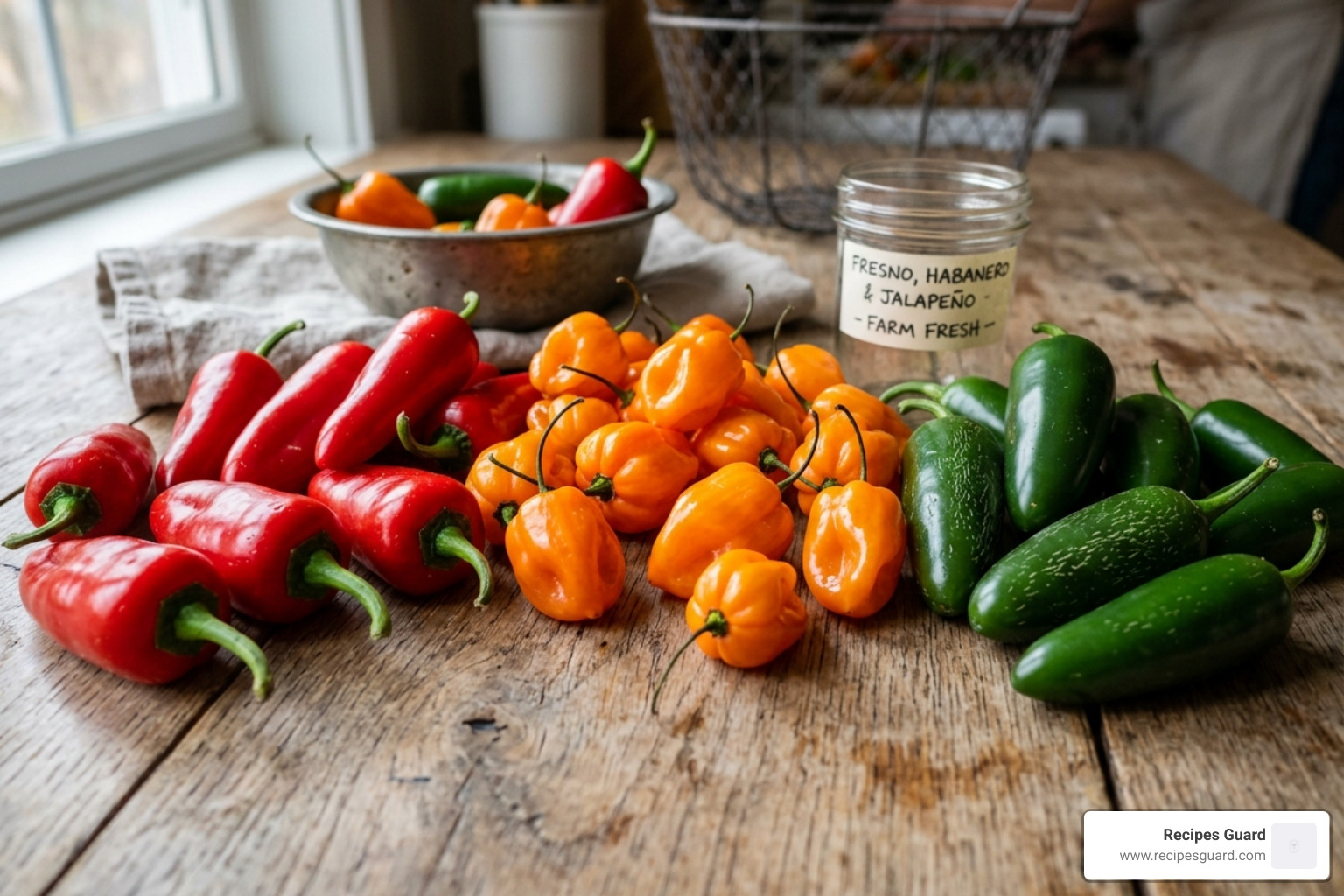
The type of pepper you choose dictates the soul of your sauce.
- Fresno Peppers: These look like red jalapeños but have thinner walls and a fruitier flavor. They make a fantastic “everyday” red sauce.
- Habaneros: These are for the heat-seekers. They offer a tropical, floral aroma but sit high on the Scoville scale.
- Jalapeños: Great for green sauces. They have thick walls, which provide plenty of pectin to help thicken your sauce naturally.
When selecting peppers, look for firm, shiny skins. Organic peppers are preferred because they haven’t been treated with waxes or pesticides that might kill the natural microbes on the skin.
Pro Tip: Removing the seeds and the white pith (membranes) will reduce the heat and prevent your sauce from having a gritty texture or bitter aftertaste.
Aromatics and Flavor Boosters
While peppers are the star, the supporting cast adds complexity. Garlic is a must-have—it ferments beautifully and adds a savory punch. White onions or shallots add sweetness, while cumin seeds or peppercorns add earthy notes. You can even add fruits like mango, pineapple, or berries to offset the heat with sweetness. For more inspiration on flavor combinations, browse our Category/Fermented Recipes.
Mastering the Brine and Mash Methods
There are three primary ways to approach your hot sauce lacto ferment.
| Method | Description | Pros | Cons |
|---|---|---|---|
| Brine Method | Whole or sliced peppers submerged in salt water. | Very easy; low risk of mold. | Dilutes flavor slightly with water. |
| Mash Method | Peppers are blended into a paste with salt (no water). | Intense, concentrated flavor. | Harder to keep submerged; higher mold risk. |
| Brine-Mash | Blended peppers with a small amount of brine. | Best of both worlds; great texture. | Requires careful headspace management. |
Most beginners should start with the Brine Method. It is the most “set it and forget it” approach. We generally recommend a 3% salt ratio for most pepper ferments. This means for every 100 grams of water, you add 3 grams of salt.
Step-by-Step Guide to Starting Your Hot Sauce Lacto Ferment
- Prep: Put on your gloves. Wash the peppers, remove the woody stems, and slice them in half or into rings.
- Pack: Place your peppers, garlic, and spices into a clean jar. Pack them tightly to minimize air pockets.
- Brine: Mix your salt and filtered water until dissolved. Pour the brine over the peppers until they are completely covered.
- Weight: Place your fermentation weight on top of the peppers to ensure they stay submerged.
- Seal: Fit your airlock lid. If you don’t have an airlock, you’ll need to “burp” the jar daily to release CO2.
For a deeper dive into the nuances of this process, see our guide on Mastering The Art Of Lacto Fermented Hot Sauce.
Calculating Your Salt Concentration
Don’t eyeball your salt. Use a scale! Here is the simple math for a 3% brine:
- Weigh your empty jar.
- Add your peppers and aromatics, then add water until everything is covered.
- Weigh the jar again to find the weight of the contents (Total weight minus empty jar weight).
- Multiply that weight by 0.03. That is the amount of salt you need in grams.
Example: If your peppers and water weigh 1000g, you need 30g of salt.
Monitoring, Blending, and Troubleshooting
The ideal fermentation temperature is between 65°F and 75°F. In this range, your hot sauce lacto ferment will take anywhere from one week to one month.
Within the first 48 hours, you should see tiny bubbles rising to the top. This is a sign of active fermentation! The brine will also become cloudy. This is perfectly normal and is a sign that the Lactobacillus is winning the war against bad bacteria. For more basics on what to look for, visit Category/Preserving Basics.
Blending and Adjusting Consistency
Once the sauce tastes tangy enough for your liking (usually after 14 days), it’s time to blend.
- Strain: Pour the contents through a sieve, but save the brine!
- Blend: Put the fermented solids into a high-speed blender. Add back the reserved brine a little at a time until you reach your desired thickness.
- Smooth: For a professional finish, add a tiny pinch (1/8 tsp) of xanthan gum. This prevents the sauce from separating in the bottle.
- Balance: Taste it. If it needs more “zip,” add a splash of apple cider vinegar. If it’s too spicy, a teaspoon of sugar can help balance it out.
- Bottle: Use “woozie” bottles (the standard 5oz hot sauce bottles) for easy pouring.
Identifying Kahm Yeast vs. Mold
This is where most people get nervous.
- Kahm Yeast: This is a white, flat, wavy film that grows on the surface. It is harmless but can make the sauce taste “yeasty.” You can simply scrape it off.
- Mold: This is fuzzy. It can be white, green, black, or pink. If you see fuzzy growth, throw the whole batch away. Do not try to save it.
If the sauce smells like rotten garbage or “socks,” it has failed. A good ferment should smell sour, bright, and vinegary.
Frequently Asked Questions about Fermented Hot Sauce
Why is my fermentation brine cloudy?
Cloudy brine is a classic hallmark of a successful hot sauce lacto ferment. It is caused by the massive population of lactic acid bacteria and the lactic acid they produce. It’s a sign that your “micro-army” is hard at work!
How do I prevent my hot sauce jars from exploding?
Fermentation produces CO2 gas. If that gas has nowhere to go, the pressure will build until the glass shatters. Using an airlock lid is the safest method as it vents gas automatically. If using a standard lid, you must “burp” it (open it slightly) once or twice a day.
How long does homemade fermented hot sauce last?
Because of the high acidity and salt, fermented hot sauce is incredibly stable. In the refrigerator, it will easily last 4 to 12 months. In fact, the flavor often improves after a few months in the cold, as the ingredients continue to meld and the heat mellows further.
Conclusion
Mastering the hot sauce lacto ferment is a gateway into a world of incredible flavor. By moving away from store-bought, vinegar-heavy sauces and embracing the ancient art of fermentation, you’re creating a condiment that is alive, healthy, and completely unique to your kitchen.
Whether you’re preserving a summer harvest of jalapeños or experimenting with a fiery habanero-mango blend, the key is patience and a little bit of science. We at Recipes Guard are here to help you every step of the way. Ready to try another project? Explore our Mastering the Art of Fermented Recipes for more inspiration.