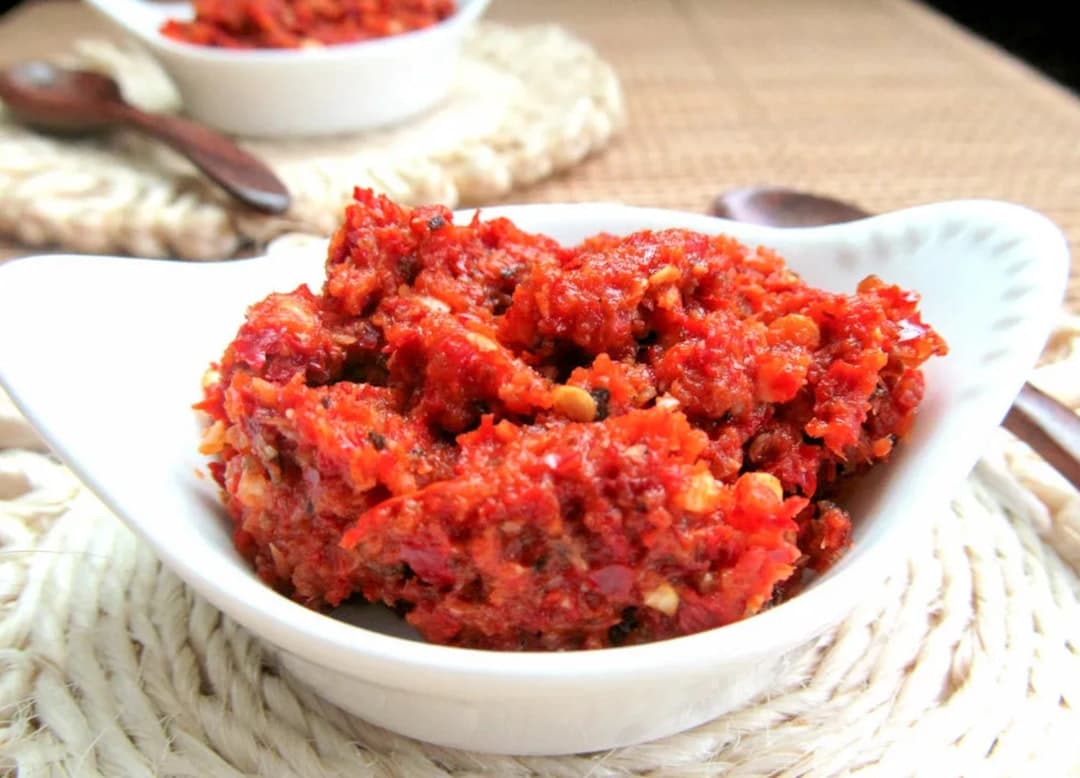
Spice Up Your Life with Homemade Fermented Sambal
What Is a Fermented Sambal Oelek Recipe (And Why You Should Make One)
The fermented sambal oelek recipe is a traditional Southeast Asian chili paste that uses lacto-fermentation to develop deep, complex flavor — far beyond what you get from a store-bought jar.
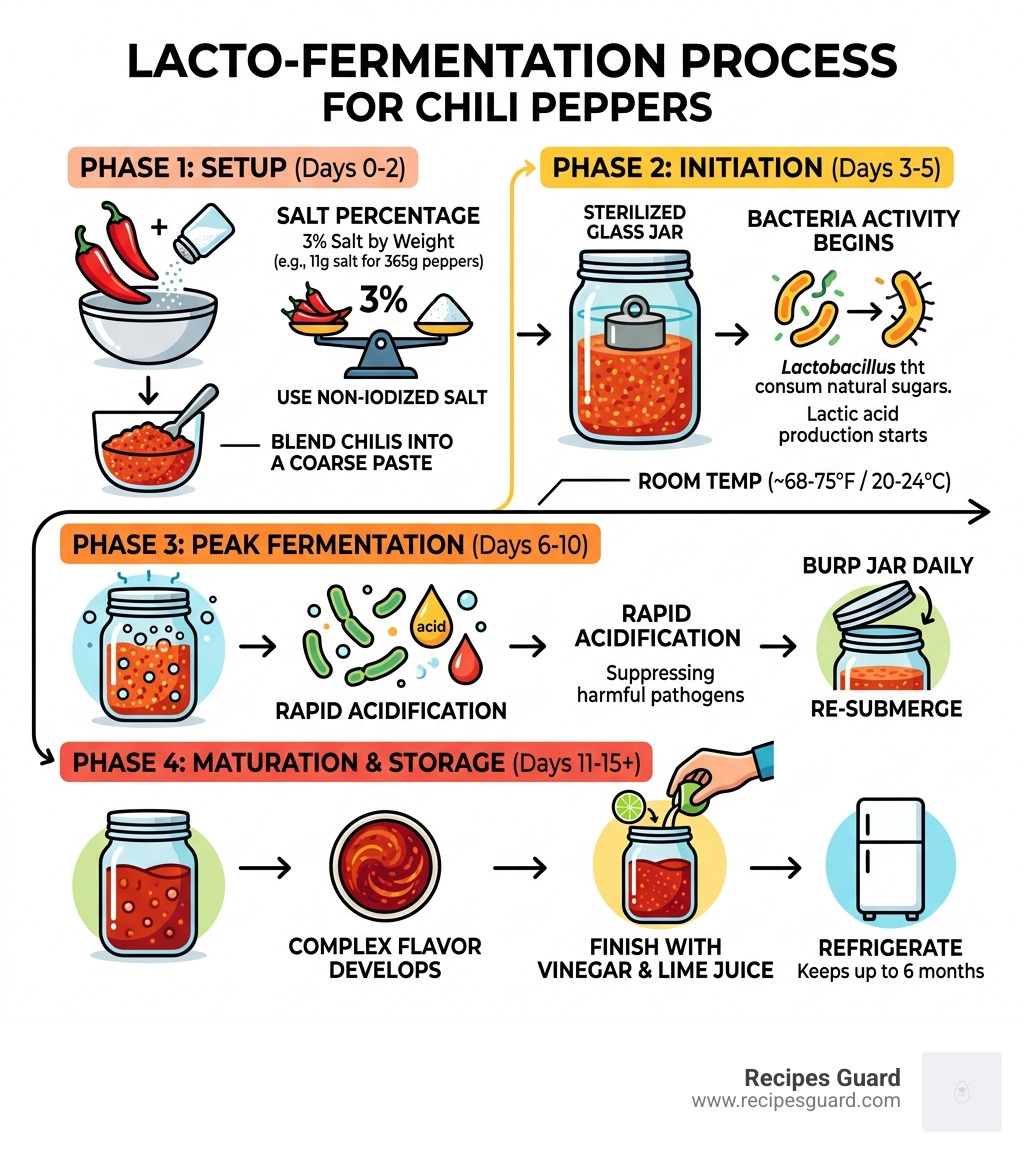
Quick answer — here’s how to make fermented sambal oelek:
- Weigh your fresh red chili peppers (and any aromatics like garlic or shallots)
- Add 3% salt by weight (e.g., 11g salt for 365g peppers) — use non-iodized salt only
- Rest the mixture for 15 minutes, then blend into a coarse paste
- Pack into a sterilized glass jar, keeping the paste submerged under its brine
- Ferment at room temperature for 7 to 15 days, burping the jar daily
- Finish with rice vinegar and lime juice, then refrigerate
- Keeps in the fridge for up to 6 months
So what makes fermented sambal oelek special? The short answer: time and bacteria.
When you salt chili peppers and let them sit, naturally occurring Lactobacillus bacteria get to work. They produce lactic acid, which suppresses harmful bacteria, preserves the paste, and builds a tangy, layered heat that fresh sambal simply cannot match.
The word sambal comes from Indonesian, meaning a sauce or paste made from chili peppers. Oelek (also spelled ulek) refers to the traditional stone mortar and pestle used to grind it. While not all sambal is fermented, the fermented version has become a favorite among home fermenters for its probiotic benefits, long shelf life, and bold flavor payoff.
If you’ve ever struggled with finding a fermentation method you can actually trust — or lost a batch to mold and mystery smells — this guide covers everything you need to get it right the first time.
The Science and Soul of a Fermented Sambal Oelek Recipe
At Recipes Guard, we believe that understanding the “why” behind your food makes the “how” much more rewarding. Making a fermented sambal oelek recipe isn’t just about mixing peppers and salt; it’s about inviting beneficial microorganisms to a tiny, spicy party in your kitchen.
Lacto-fermentation is an ancient preservation technique. When we add salt to peppers, it draws out moisture (creating a brine) and creates an environment where Lactobacillus bacteria thrive while harmful pathogens—like Clostridium botulinum—are suppressed or killed. As these “good” bacteria consume the natural sugars in the peppers, they produce lactic acid. This acid acts as a natural preservative and gives the sambal its signature tangy “funk.”
Historically, Southeast Asian cuisines have used various forms of fermentation to preserve seasonal harvests. While a standard sambal might be made fresh for immediate consumption, the fermented version allows you to capture the peak of chili season and enjoy it for months. If you want to dive deeper into the mechanics of spicy ferments, check out our guide on Mastering the Art of Lacto-Fermented Hot Sauce.
Comparison: Fresh vs. Fermented Sambal Oelek
| Feature | Fresh Sambal Oelek | Fermented Sambal Oelek |
|---|---|---|
| Flavor Profile | Sharp, bright, raw heat | Complex, tangy, mellowed “funk” |
| Texture | Crunchy or watery | Softened, integrated paste |
| Probiotics | None | High (Live active cultures) |
| Shelf Life | 1–2 weeks | Up to 6 months (refrigerated) |
| Preservative | Vinegar (added) | Natural Lactic Acid |
Why This Fermented Sambal Oelek Recipe Beats Store-Bought
If you look at a commercial jar of sambal oelek, you’ll often see ingredients like potassium sorbate, sodium bisulfite, or xantham gum. Our fermented sambal oelek recipe has a “vibrant soul” that factory-made versions simply lack.
By making it yourself, you control the heat level, the salt content, and the quality of the peppers. Plus, it is incredibly healthy! A one-ounce serving contains only about 7 kcal, making it a guilt-free way to add massive flavor to your meals. You can learn more about the basics of this condiment in this article: What is sambal oelek recipe?.
Customizing Your Fermented Sambal Oelek Recipe
One of the best parts of home fermentation is the ability to play “mad scientist.” While a traditional fermented sambal oelek recipe is primarily chilies and salt, you can easily elevate it with aromatics.
- Garlic: Adding a few cloves of garlic provides a savory backbone. If you love that pungent kick, you might also enjoy our Easy Fermented Garlic Recipe.
- Shallots or Onions: These add a subtle sweetness that balances the heat.
- Lemongrass & Turmeric: For a more complex, Thai-inspired profile, finely minced lemongrass and a pinch of turmeric work wonders.
- Tamarind: A teaspoon of tamarind paste added after fermentation provides a sour, fruity depth.
Essential Ingredients and Equipment for Fermentation
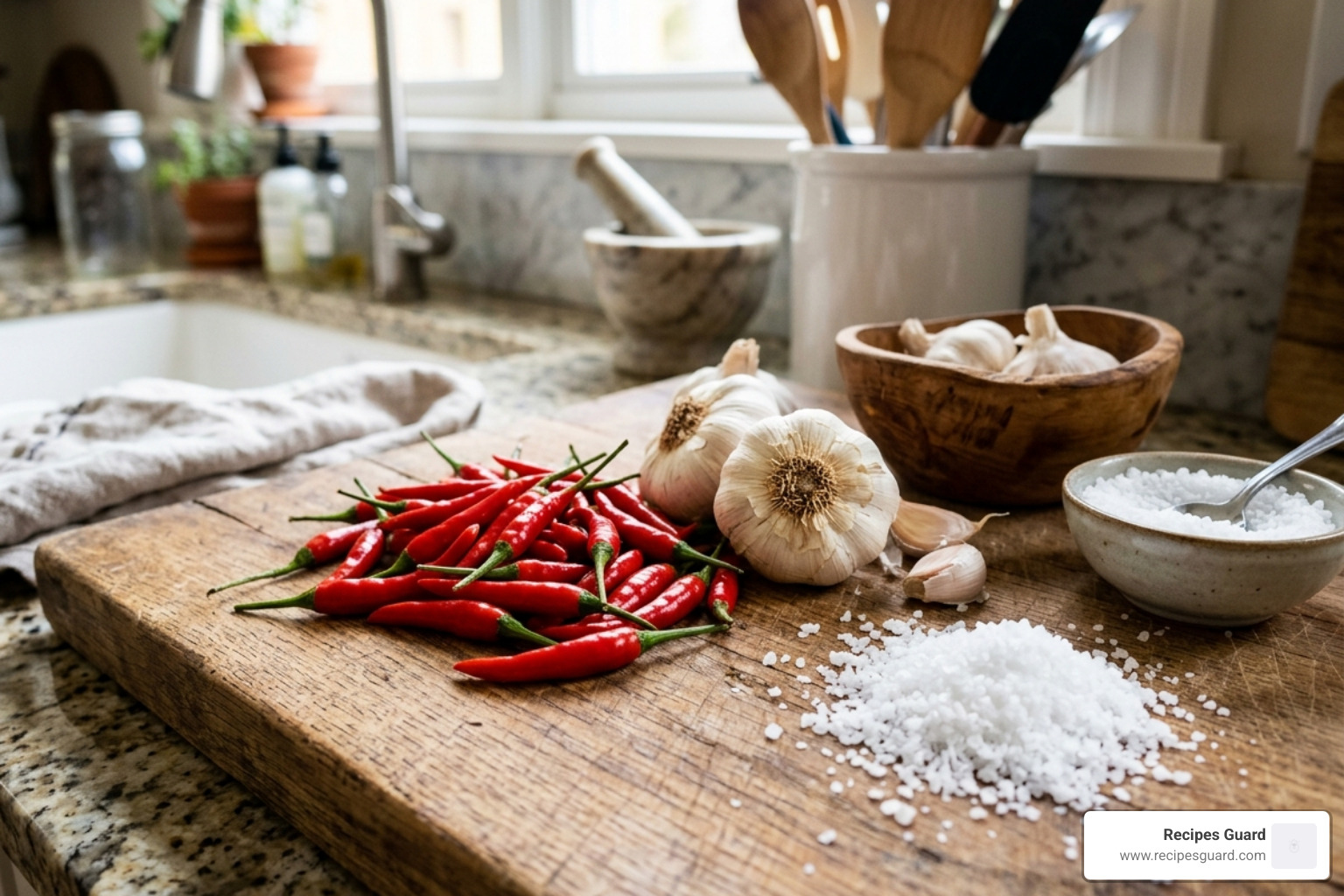
To ensure a safe and successful ferment in April 2026, you need the right tools and ingredients. Fermentation is a science, and precision matters.
The Peppers: Choosing Your Heat
The soul of your sambal is the chili.
- Thai Bird’s Eye Chilis: These are traditional and pack a serious punch (50,000–100,000 SHU).
- Fresno Peppers: Great for beginners; they have a fruitier flavor and milder heat (2,500–10,000 SHU).
- Cayenne: A classic choice for a balanced, sharp heat.
- Sweet Bell Peppers: If you are sensitive to spice, you can replace up to 30% of the hot peppers with red bell peppers to mellow the paste without losing the vibrant color.
The Salt: Non-Iodized is Key
Always use high-quality sea salt, kosher salt, or pickling salt. Avoid iodized table salt. Iodine has antimicrobial properties that can inhibit the growth of the “good” bacteria you need for fermentation. It can also give your ferment a metallic aftertaste.
The Water: Filtered Only
If your recipe requires a splash of water to help the blending process, use non-chlorinated, filtered, or spring water. Chlorine is designed to kill bacteria in tap water—including the Lactobacillus we are trying to grow!
Essential Equipment
- Kitchen Scale: This is non-negotiable. We use a 3% salt ratio based on the weight of the peppers. For example, if you have 350g of peppers, you need roughly 10.5g to 11g of salt.
- Glass Mason Jars: Glass is non-reactive and easy to sterilize. Avoid plastic or metal, as the acidity of the ferment can leach chemicals or cause corrosion.
- Fermentation Weights: These keep the pepper mash submerged under the brine, which is the “golden rule” of fermentation. If it’s under the brine, it’s fine!
- Airlocks or Fermentation Lids: These allow carbon dioxide to escape without letting oxygen (and mold spores) in.
- Food Processor or Mortar and Pestle: For achieving that perfect coarse texture.
For more on setting up a safe kitchen, read our Safety First: A Guide to Preserving Fermented Foods.
Step-by-Step: Crafting Your Fermented Sambal Oelek Recipe
Ready to get started? Follow our tested process for a foolproof ferment.
1. Preparation and Safety
First, wash your peppers thoroughly and remove the green stems. Pro tip: Wear gloves! Handling 8 ounces of Thai chiles (roughly 200 small peppers) without gloves is a mistake you’ll only make once. Avoid touching your eyes or face during this process.
2. The Weight and Salt Calculation
Place a bowl on your kitchen scale and tare it. Add your chopped peppers, garlic, and any shallots. Note the total weight. Multiply that weight by 0.03 to find your 3% salt requirement. Example: 400g ingredients x 0.03 = 12g salt.
3. The Maceration Rest
Toss the ingredients with the salt in a bowl and let them sit for about 15 to 60 minutes. This is called maceration. The salt draws out the natural juices of the peppers, creating a concentrated brine that will protect the mash during the early stages of fermentation.
4. Blending for Texture
Transfer the mixture to a food processor. Add a teaspoon of non-chlorinated water if needed to get things moving. Pulse in short bursts. You are looking for a coarse, chunky paste, not a smooth purée like Sriracha. Authenticity lies in the texture!
5. Packing the Jar
Pack the mash into a sterilized glass jar. Use a spoon to press down firmly, removing any air pockets. You should see the brine rise to the top. Place a fermentation weight on top to ensure the solids stay submerged. If using a standard lid, leave about an inch of headspace.
6. The Fermentation Timeline
Place the jar in a cool, dark spot in your kitchen (out of direct sunlight).
- Days 1–3: You may see small bubbles forming—this is a great sign!
- Days 7–15: This is the sweet spot. Start tasting your sambal around day 7 using a clean spoon. It should be spicy, tangy, and slightly “fizzy” on the tongue.
For a classic take on this method, you can also reference A Classic, Spicy Sambal Oelek Recipe You Can Make.
7. Finishing and Storing
Once the flavor is to your liking, stir in a tablespoon of rice vinegar and a squeeze of lime juice. This adds a final layer of brightness and further lowers the pH for long-term storage. Secure the lid and move it to the refrigerator.
Troubleshooting, Safety, and Storage
Fermentation can be intimidating for beginners, but it’s actually one of the safest ways to prepare food if you follow the rules.
Dealing with Mold vs. Kahm Yeast
If you see a fuzzy, colorful (blue, green, or black) growth on the surface, that is mold. Toss the batch. However, if you see a thin, white, wavy film on top, that is likely Kahm yeast. It’s harmless but can affect the flavor. You can gently scrape it off, but it usually means your ferment is getting too much oxygen.
Off Smells
Your sambal should smell spicy, sour, and slightly garlicky. If it smells like rotting garbage, sulfur, or “wrong” in a way that makes your nose wrinkle in disgust, trust your instincts and start over. This usually happens if the salt ratio was too low or the equipment wasn’t clean.
The “Burping” Rule
If you aren’t using an airlock lid, you must “burp” your jar daily. Simply unscrew the lid slightly to let the built-up carbon dioxide hiss out, then reseal it. Failure to do this can lead to a “chili explosion” or a cracked jar!
Shelf Life and Storage
In the refrigerator, your fermented sambal oelek recipe will last for up to 6 months. The cold temperature slows down the bacteria significantly, though the flavor will continue to mellow and develop over time. Always use a clean spoon to scoop out your sambal to prevent introducing new bacteria to the jar. For a deeper dive into these techniques, see How to Cook Sambal Oelek: A Definitive Guide.
Serving Suggestions: How to Use Your Spicy Creation
Now that you have a jar of “liquid gold” in your fridge, how do you use it? Its versatility is unmatched.
- The Breakfast Staple: A dollop of sambal on fried eggs or an omelet is life-changing.
- Nasi Goreng: Use it as the base for Indonesian Fried Rice. Sauté the paste with rice, kecap manis (sweet soy sauce), and shrimp.
- Spicy Pizza Sauce: Mix a tablespoon into your tomato sauce for a pizza with a probiotic kick.
- Marinades: Use it as a rub for tofu, chicken, or grilled fish. The acidity helps tenderize the protein while the heat infuses deeply.
- Soups and Stews: Drop a spoonful into Pho, Laksa, or even a basic chicken noodle soup to add instant depth.
- Noodle Seasoning: Toss it with stir-fried noodles or use it to spike your favorite peanut sauce.
Explore more ways to use your ferments in our Fermented Recipes section.
Frequently Asked Questions about Fermented Sambal
How long does fermented sambal oelek last in the fridge?
When kept in a sealed glass jar and handled with clean utensils, it can last up to 6 months. Some enthusiasts find it stays good even longer, but for peak flavor and probiotic activity, we recommend using it within half a year.
Is fermentation safe for beginners in 2026?
Absolutely! Fermentation is a natural process that has been used for millennia. As long as you use the correct salt percentage (3%) and keep your ingredients submerged, the lactic acid will do the hard work of keeping you safe. If it looks good and smells like pickles/chilies, it’s usually fine!
Can I use iodized table salt for this recipe?
We strongly advise against it. Iodine can inhibit the Lactobacillus bacteria, potentially stalling your ferment. It can also cause the peppers to darken and develop a metallic, medicinal taste. Stick to sea salt or kosher salt for the best results.
Conclusion
Making a fermented sambal oelek recipe at home is a rewarding journey into “slow food.” It connects you to ancient preservation traditions while providing a probiotic-rich condiment that makes every meal more exciting.
At Recipes Guard, we are dedicated to helping you master the art of food preservation. Whether you are a heat-seeker looking for the perfect chili paste or a health-conscious cook wanting more live cultures in your diet, this sambal is the perfect project.
Ready to expand your fermentation pantry? Explore more Fermented Recipes and start your next batch today!