
The Best Ways to Compare Health Insurance Coverage Today
Why Health Insurance Coverage Comparison Can Save You Thousands in 2026
Health insurance coverage comparison is the process of evaluating different health plans side by side — looking at premiums, deductibles, network access, and out-of-pocket limits — to find the best fit for your health needs and budget.
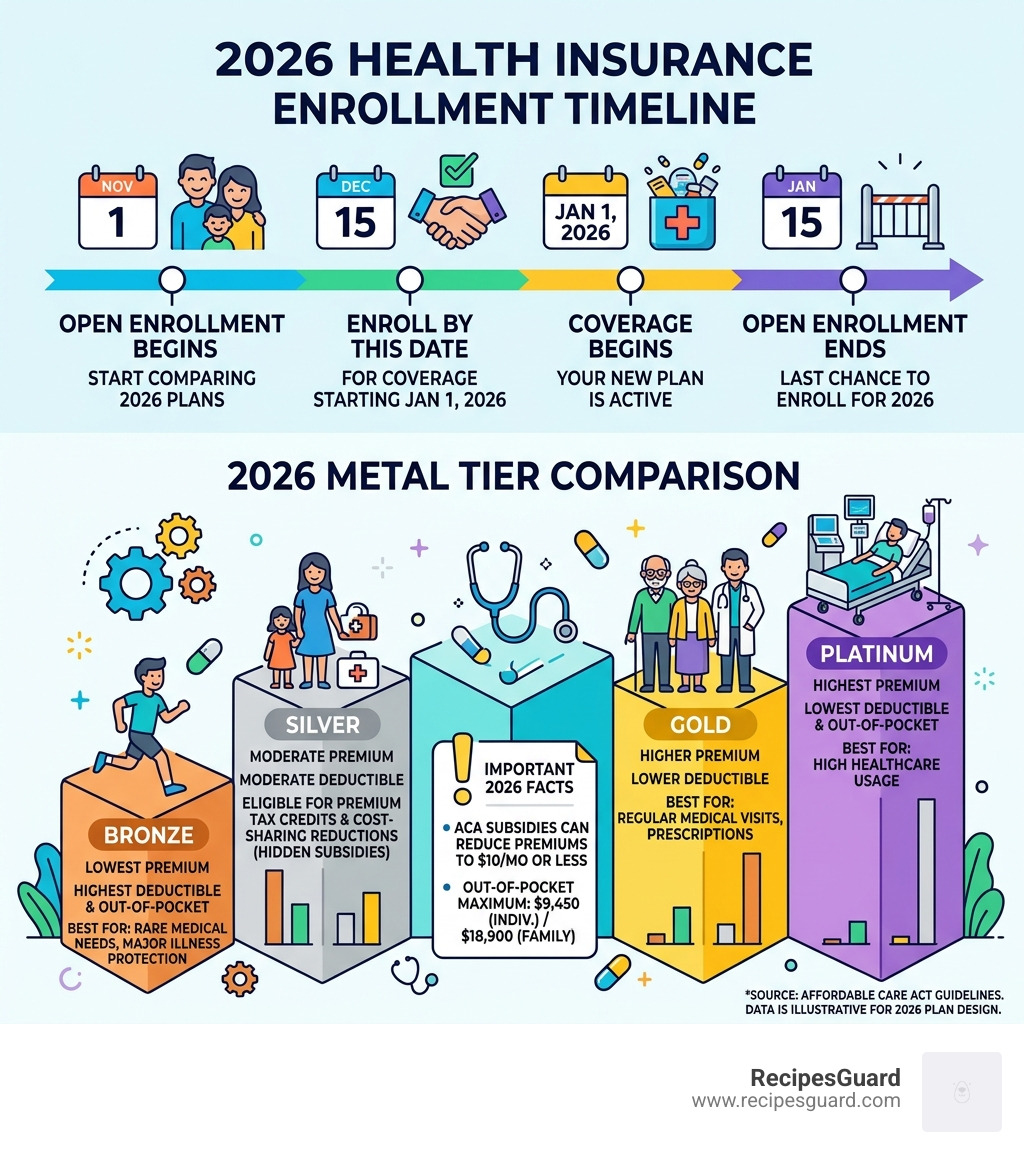
Here’s a quick look at your main options for 2026:
| Plan Type | Best For | Avg. Monthly Premium (Individual) |
|---|---|---|
| Bronze | Healthy, low usage | ~$350/month |
| Silver | Most buyers; subsidy eligible | ~$456/month |
| Gold | Regular care needs | ~$600/month |
| Platinum | High healthcare users | $600+/month |
Key facts to know before you compare:
- The 2026 out-of-pocket maximum is $9,450 for individuals and $18,900 for families
- ACA subsidies can reduce your premium to as low as $10/month or less if you qualify
- Silver plans unlock hidden cost-sharing reductions for lower-income households
- HMO plans cost less but limit your provider choice; PPO plans cost more but offer flexibility
Most people pick a health plan by glancing at the monthly premium and clicking “enroll.” That’s a costly mistake.
A plan charging $200 a month can leave you facing an $8,000 deductible the moment you actually need care. That’s not cheap — that’s a financial trap, especially if you’re a student navigating a medical emergency far from home.
The real cost of any health plan is the total you’d pay in a worst-case year: premiums plus out-of-pocket expenses. Understanding that number — before you enroll — is what separates a smart choice from an expensive regret.
This guide walks you through every step of comparing 2026 health plans clearly and confidently.
Key terms for health insurance coverage comparison:
- Private Health Insurance vs. Government
- Single Payer vs. Private Insurance
- Student Health Insurance Australia
Understanding the Core Costs of 2026 Health Plans

When we dive into a health insurance coverage comparison, we first have to look past the “sticker price” (the premium). Think of your health plan like a car: the premium is the monthly payment to keep it in the driveway, but the deductible, copays, and coinsurance are what you pay to actually drive it.
The Five Pillars of Cost
- Monthly Premium: This is the fixed amount you pay every month. In 2026, the average individual premium on the marketplace is roughly $456 per month.
- Annual Deductible: This is the amount you pay out of your own pocket for covered services before your insurance starts to chip in. For many marketplace Bronze plans, this can exceed $4,500.
- Copayments (Copays): A flat fee you pay for a specific service (e.g., $30 for a GP visit).
- Coinsurance: Your share of the costs of a covered service, calculated as a percentage (e.g., you pay 20%, the insurer pays 80%).
- Out-of-Pocket Maximum: This is your safety net. In 2026, the legal limit for this is $9,450 for individuals and $18,900 for families. Once you hit this, the insurance company pays 100% of your covered in-network care.
To see how these numbers interact, check out our guide on How to Calculate Your Total Healthcare Costs | RecipesGuard. We often tell our student community that a plan with a $0 premium isn’t always a “deal” if the out-of-pocket maximum is so high that one hospital stay would wipe out your savings.
Navigating Plan Types and Network Flexibility

The “alphabet soup” of plan types—HMO, PPO, EPO—dictates which doctors you can see and whether you need a permission slip (referral) to see a specialist. If you value seeing a specific doctor, this section of your health insurance coverage comparison is critical.
Health Insurance Coverage Comparison: HMO vs. PPO
- HMO (Health Maintenance Organization): These usually have the lowest premiums. However, you are generally required to stay within a specific local network. You’ll need a Primary Care Physician (PCP) to coordinate your care and provide referrals for specialists.
- PPO (Preferred Provider Organization): These offer the most flexibility. You can see any doctor, in or out of network (though out-of-network costs more), and you don’t need referrals. This is often the best choice for students who travel between states or regions.
- EPO (Exclusive Provider Organization): A hybrid. You don’t usually need a referral for a specialist, but the plan won’t pay a cent if you go out-of-network (except for emergencies).
- POS (Point of Service): These require a PCP and referrals like an HMO but allow you to go out-of-network for a higher cost like a PPO.
High-Deductible Health Plans and HSAs
A popular strategy for 2026 is pairing a High-Deductible Health Plan (HDHP) with a Health Savings Account (HSA). To qualify as an HDHP in 2026, the plan must meet certain deductible thresholds.
The “Triple-Tax Advantage” of an HSA is a powerful financial tool:
- Contributions are tax-deductible (pre-tax).
- Growth is tax-free.
- Withdrawals for medical expenses are tax-free.
In 2026, you can contribute up to $4,300 for an individual or $8,550 for a family into an HSA. For healthy students or young professionals who don’t expect many doctor visits, this allows you to save for future medical needs while paying lower monthly premiums.
Comparing Metal Tiers: Bronze, Silver, Gold, and Platinum
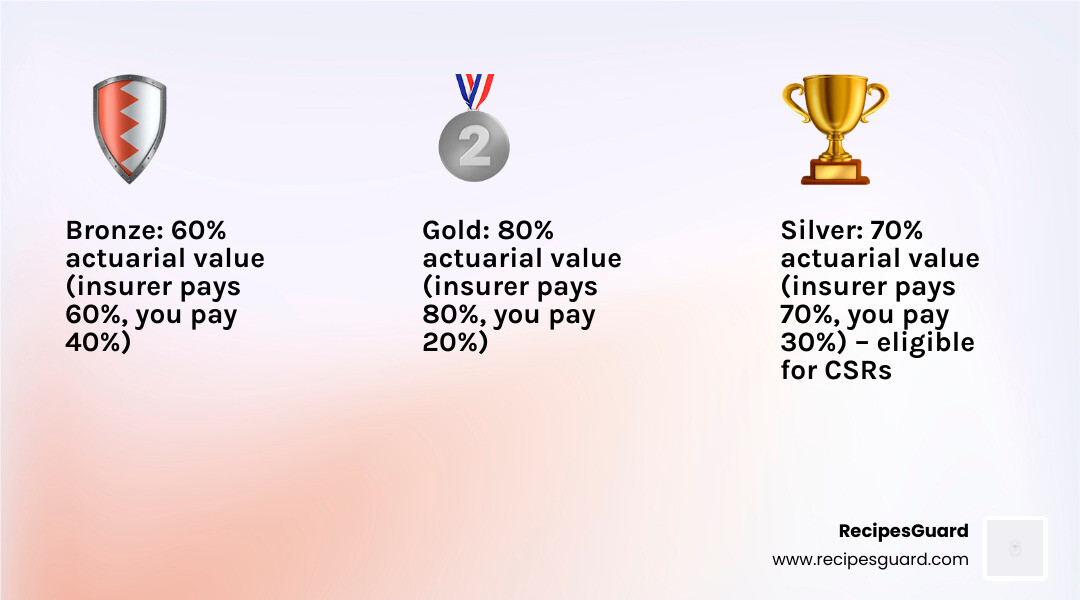
The “Metal Tiers” don’t describe the quality of medical care—every doctor in a network provides the same care regardless of your tier. Instead, they describe how you and your insurer split the costs.
Choosing the Right Tier for Your Health Needs
- Bronze (60/40 split): You pay 40% of costs; the insurer pays 60%. Best for those who rarely see a doctor and want protection against “catastrophic” events.
- Silver (70/30 split): The “middle ground.” It’s the most popular tier because it’s the only one eligible for Cost-Sharing Reductions (CSRs).
- Gold (80/20 split): Higher premiums, but lower costs when you receive care. Great for managing chronic conditions like diabetes.
- Platinum (90/10 split): The highest premiums but very low out-of-pocket costs. Best if you know you have a major surgery or high-cost treatment coming up in 2026.
The Silver Plan Secret: Cost-Sharing Reductions
If your household income is between 100% and 250% of the Federal Poverty Level (FPL), you qualify for “extra savings” called Cost-Sharing Reductions. Crucially, these only apply if you choose a Silver plan.
CSRs effectively turn a Silver plan into a Gold or Platinum plan by lowering your deductible and out-of-pocket max, but keeping the Silver-level premium. For many families earning around $60,000, this can save thousands. You can learn more about eligibility in our article Understanding ACA Subsidies and Credits | RecipesGuard.
How to Perform a Comprehensive Health Insurance Coverage Comparison
Now that you know the terms, how do you actually pick? We recommend a “Total Cost” approach.
Total Annual Cost = (Monthly Premium x 12) + Expected Out-of-Pocket Expenses.
When comparing plans, don’t just look at the numbers. Check the “SBC” (Summary of Benefits and Coverage). This standardized document shows you exactly what a plan would cost in three specific scenarios:
- Having a baby.
- Managing type 2 diabetes.
- Treating a simple fracture.
Using Tools for Health Insurance Coverage Comparison
We suggest using official marketplace calculators to input your specific prescriptions and doctors. In 2026, provider networks are narrower than ever. Even if a company like Blue Cross Blue Shield is “huge,” your specific local hospital might not be in the “Select” or “Advantage” version of their network.
Always check the NCQA Quality Ratings and CMS Star Ratings. A plan might be cheap, but if their customer complaint rate is high or they frequently deny claims, it will cause you stress when you’re already feeling unwell. At RecipesGuard, we specialize in helping students navigate these hurdles, providing step-by-step tutorials on how to file claims if your insurer pushes back.
Evaluating Employer-Sponsored vs. Marketplace Plans
If you have a job that offers insurance, that’s usually your best bet because employers typically pay a large portion of the premium. However, if the cost for the employee-only coverage exceeds 8.5% of your household income, you might qualify for marketplace subsidies.
For small business owners or freelancers, look into ICHRA (Individual Coverage Health Reimbursement Arrangements), which allow employers to give you tax-free money to buy your own marketplace plan.
Frequently Asked Questions about Health Insurance Coverage Comparison
When is the 2026 Open Enrollment period?
For most states, Open Enrollment for 2026 plans begins on November 1, 2025, and ends on January 15, 2026. If you want your coverage to start on New Year’s Day, you usually need to enroll by December 15.
How do I check if my specific doctor is in-network?
Never rely on a doctor’s office saying “we take most insurance.” Instead, use the insurer’s 2026 provider directory tool or call the insurer directly with the doctor’s NPI (National Provider Identifier) number. Networks can change annually, so check every year during enrollment.
What qualifies for a Special Enrollment Period in 2026?
If you miss the January 15 deadline, you can’t just sign up whenever you want. you need a Qualifying Life Event. Common ones include:
- Losing other health coverage (e.g., leaving a job or graduating).
- Getting married or divorced.
- Having a baby or adopting.
- Moving to a new permanent residence in a different zip code.
Conclusion
Choosing the right plan in 2026 requires more than a cursory glance at a monthly price tag. By performing a rigorous health insurance coverage comparison, you protect not just your health, but your financial future.
Whether you are a student studying in Australia looking for claim filing guidance or a family trying to navigate the complex marketplace, the “best” plan is the one that covers your specific doctors and medications at a total annual cost you can afford.
At RecipesGuard, we are dedicated to student insurance advocacy. If you find yourself struggling with a claim or confused by the fine print, our step-by-step tutorials are designed to get you the money you’re owed. For More info about insurance services, visit our homepage and let us help you navigate the 2026 insurance landscape with ease.

My name is Bianca, and my journey into the world of fermentation and food safety began with a costly mistake. I once lost an entire season’s harvest of chili peppers because I relied on guesswork instead of science. That failure was my turning point.
