
The Global Student Guide to Travel Health Claims
Why Every International Student Needs to Understand a Student Travel Medical Claim
Filing a student travel medical claim is the process of submitting medical expenses to your travel insurance provider for reimbursement after receiving care abroad.
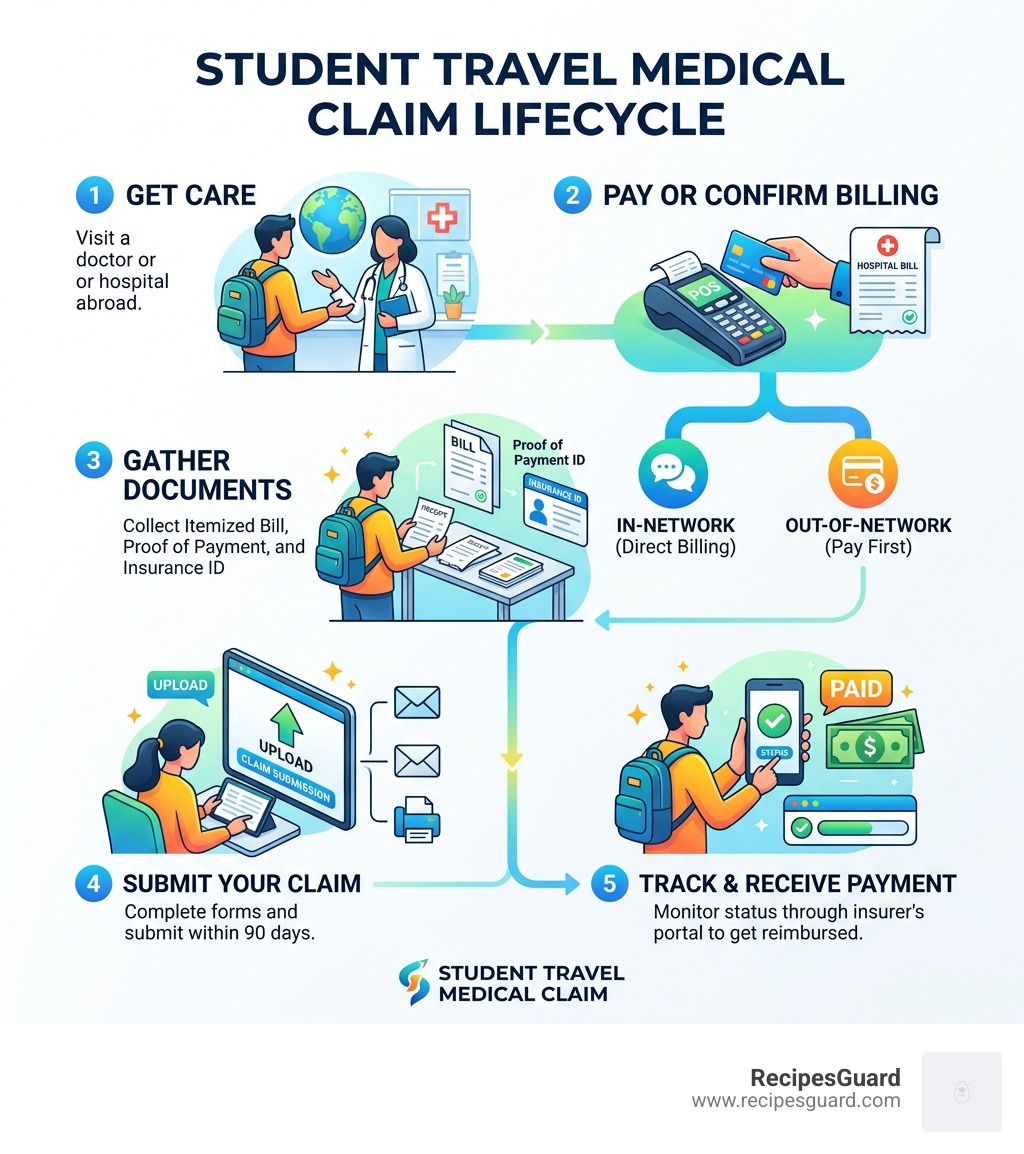
Here’s the quick version of how it works:
- Get care – Visit a doctor or hospital abroad (in-network or out-of-network)
- Pay or confirm billing – In-network providers often bill your insurer directly; out-of-network means you pay first
- Gather documents – Itemized bill, proof of payment, your insurance ID card
- Submit your claim – Online, by email, mail, or fax, usually within 90 days of the date of service
- Track and receive payment – Log in to your insurer’s portal to monitor status and receive reimbursement
Picture this: you’re halfway through a semester abroad when a sudden illness lands you in a foreign hospital. You don’t speak the local language. You don’t know if your insurance covers this. And you’re not sure what paperwork you’ll need to get your money back.
This is the reality for thousands of students every year.
Your domestic health insurance almost certainly won’t help. U.S. health insurance, for example, is generally not valid overseas. That leaves a gap that student travel medical insurance is specifically designed to fill — covering everything from emergency room visits to medical evacuations that can cost tens of thousands of dollars.
The good news? The claims process is manageable once you know the steps. Plans from leading international insurance providers offer medical coverage ranging from $25,000 up to $1,000,000, and some even process claims within 48 hours.
But most students run into problems because they don’t know what documents to collect, what deadlines apply, or how to appeal a denial.
This guide walks you through everything — from choosing the right plan to getting reimbursed quickly.
Student travel medical claim basics:
- medical claim student guide
- medical expenses student australia
- student claim hospital expenses
Choosing the Right Coverage for Your Academic Journey
Selecting the right insurance isn’t just about finding the cheapest premium; it’s about ensuring you meet legal requirements while protecting your health. Whether you are heading off for a full degree, a semester-long exchange, or a gap year, your insurance needs to align with your destination’s regulations.

If you’re traveling to the United States, your plan must often be F-1 or J-1 visa compliant. These visas have strict federal requirements, including specific minimums for medical benefits and repatriation of remains. Similarly, students heading to Europe often need a plan that meets Schengen visa requirements, covering at least €30,000 for medical expenses and emergency evacuation across all 26 member countries.
When we look at specialized student insurance plans, we see options that offer up to $1,000,000 in maximum coverage with a $0 deductible, which is a dream for a student on a budget. Meanwhile, major global health networks offer single-trip plans for up to 182 days, making them ideal for a standard semester.
One of the biggest hurdles students face is the pre-existing condition clause. In many student-specific plans, there is a 12-month waiting period for pre-existing conditions. However, some providers may waive this waiting period if you can provide proof of “creditable coverage” (meaning you had insurance that covered the condition for at least six months prior to the new plan’s start date).
Integrating University Plans with Supplemental Insurance
Many top-tier universities provide their own institutional coverage. For example, students on university business are often covered by global emergency assistance providers for up to $250,000 in medical expenses. However, these plans often have a “personal travel deviation” limit—usually around 14 days.
If you plan to backpack through Europe for a month after your semester ends, your university plan might stop covering you the moment your classes finish. This is where supplemental private insurance becomes vital. We recommend checking if your university plan is “reimbursement-based” (where you pay upfront) or “direct-pay” (where they handle the bill). Adding a supplemental plan can provide a “safety net” for those personal travel days or offer higher limits for emergency evacuation.
Essential Benefits for International Students
When evaluating a student travel medical claim, the outcome often depends on whether the specific service you received was a “covered benefit.” Not all plans are created equal.
| Benefit Type | What it Usually Covers | Why You Need It |
|---|---|---|
| Emergency Medical | Hospital stays, surgery, ER visits | Covers the “big” bills that could bankrupt a student. |
| Emergency Evacuation | Medically necessary transport to a better facility | Costs can exceed $100,000 without insurance. |
| Virtual Visits | 24/7 Telehealth via phone or video | Perfect for minor issues like sinus infections or rashes without leaving your dorm. |
| Mental Health | Outpatient counseling or crisis intervention | Vital for students dealing with the stress of living abroad. |
| Prescription Drugs | Antibiotics or maintenance meds | Often covered at 50% to 100% depending on the plan. |
Comprehensive student plans even include specific coverage for intercollegiate or intramural sports, which is a must-have if you plan on joining a local soccer club or basketball team.
How to File a Student Travel Medical Claim: A Step-by-Step Guide
The moment you leave the doctor’s office, the “claims clock” starts ticking. Most providers, including specialized student health insurers, require you to file your reimbursement claim within 90 days of the service date.

If you visit an in-network provider, you might skip the claim process entirely. In-network hospitals usually contact the insurer directly. You just show your ID card, pay your copay, and walk out. But if you go out-of-network, you will likely have to pay the full bill yourself and then fight for reimbursement.
Required Documentation for Reimbursement
To ensure your student travel medical claim isn’t stuck in “pending” limbo, you need a very specific set of papers. A simple credit card receipt is never enough. You must provide:
- Itemized Bill: This must include the Diagnosis Code (what’s wrong with you) and the Procedure Code (what the doctor did). It should also list the provider’s address, Tax ID, and phone number.
- Proof of Payment: If you paid by card, provide a bank statement. If you paid cash, get a formal receipt. If it was charged to your student account, a screenshot of the billing activity is required.
- Insurance ID Card: A clear copy of your current card.
- Proof of Enrollment: Sometimes required to prove you are still a student and eligible for the plan.
Submission Methods and Timelines
In 2026, the days of faxing 50 pages of medical records are mostly over. Most modern insurers offer:
- Online Portals: Upload PDFs directly to your “MyAccount.”
- Mobile Apps: Take photos of your receipts and submit them instantly.
- Email: Send scans to the customer service inbox.
While some modern travel insurance providers boast a 48-hour processing window for most claims, a standard reimbursement cycle usually takes about 30 days. We suggest tracking your claim digitally to ensure no documents were “lost in the mail.”
Navigating Hospitalization and Emergency Evacuation Abroad
A hospitalization is the most stressful event a student can face abroad. If this happens, the first rule is: Notify your insurer immediately. Most plans require notification within 48 hours of an emergency admission.
Leading global assistance networks operate 24/7 Emergency Response Centers. Once notified, they don’t just pay the bills; they monitor your care, coordinate with local doctors, and provide updates to your family back home.
Accessing Care Through Provider Networks
Using a network provider is the easiest way to manage a student travel medical claim. When you use a network facility, the insurer can often issue a Guarantee of Payment (GOP). This is a legal document sent to the hospital promising that the insurance company will pay the bill directly. This prevents you from having to find thousands of dollars in cash to secure your discharge.
For minor issues, many students are now turning to telehealth. Specialized medical networks allow you to book a virtual or in-home visit without any upfront payment or the need to file a claim later.
Procedures for Major Medical Emergencies
In the event of a “medical evacuation,” the process is highly complex. It involves:
- Transport Evaluation: Determining if you need a private air ambulance or a commercial flight with a medical escort.
- Clearances: Handling immigration and “fit-to-fly” authorizations.
- Family Arrangements: Many premium student health plans often include benefits to fly a family member to your bedside if you are hospitalized alone for more than a few days.
Understanding Your Explanation of Benefits and the Appeals Process
After your claim is processed, you will receive an Explanation of Benefits (EOB). It is important to remember: The EOB is not a bill. It is a report card showing what the insurance covered and what you still owe the doctor.
Key terms to look for on your EOB:
- Ineligible: Charges the insurance won’t pay (e.g., elective treatments).
- Remark Code: A shorthand code explaining why a certain part of the claim was denied.
- Patient Balance: The actual amount you are responsible for paying.
How to Appeal a Denied Student Travel Medical Claim
If your claim is denied, don’t panic. You have the right to an appeal. Most denials are due to simple clerical errors or missing information. To appeal, you should:
- Write an Appeal Letter: Clearly state why you believe the service should be covered.
- Gather Medical Records: Request the full notes from the doctor you visited abroad.
- Submit the EOB: Include a copy of the denied claim for reference.
Common Reasons for Claim Denials
We see three main reasons why a student travel medical claim gets rejected:
- Missing “Codes”: The bill didn’t have the ICD-10 (diagnosis) or CPT (procedure) codes.
- Filing Deadlines: You waited 91 days to submit a claim with a 90-day limit.
- Exclusions: You were injured while participating in a “high-risk” activity not covered by your base plan.
Exclusions and Supplemental Travel Benefits
Student travel insurance is designed for “unexpected” accidents and illnesses. It is not a blank check for all behavior.
Common exclusions include:
- Alcohol and Drugs: If an accident happens while you are intoxicated, the claim will almost certainly be denied.
- Extreme Sports: Unless you bought a specific “Adventure Sports” rider, skydiving or bungee jumping is usually off the table.
- High-Risk Countries: Traveling to countries with active war zones or “Do Not Travel” advisories may void your coverage.
However, many student plans are “comprehensive,” meaning they include more than just medical. You might have Trip Cancellation (up to $3,000) if a family emergency forces you to stay home, or Baggage Delay benefits to buy clothes if the airline loses your suitcase. Some plans even offer Cancel For Any Reason (CFAR), which can reimburse up to 80% of your non-refundable costs if you decide not to go.
Frequently Asked Questions about Student Travel Medical Claims
What documents are required for a student travel medical claim?
You need an itemized bill (with diagnosis and procedure codes), proof of payment (bank statement or receipt), a copy of your insurance card, and sometimes a screenshot of your student account if the school paid the bill initially.
How long does it take to process a student travel medical claim?
Initial reviews often happen within 48 hours for digital-first providers. However, the full reimbursement cycle usually takes 30 days. Be sure to file within the 90-day window to avoid automatic denial.
Are pre-existing conditions covered for students abroad?
Most student plans have a 12-month waiting period. However, if you can show you had “creditable coverage” for the 6 months immediately preceding your trip, some insurers will waive this waiting period and cover your chronic conditions from day one.
Conclusion
Navigating a student travel medical claim can feel like learning a second language, but it is the most important skill you can pack in your suitcase. By choosing a plan that meets your visa requirements, keeping meticulous records of your medical visits, and knowing how to use your insurer’s 24/7 assistance services, you can focus on what really matters: your education and your adventure.
At RecipesGuard, we specialize in providing student-focused, step-by-step claim filing tutorials to take the mystery out of insurance. Don’t let a medical bill derail your future. For more expert advice on navigating student insurance, check out our travel insurance services. Safe travels!

My name is Bianca, and my journey into the world of fermentation and food safety began with a costly mistake. I once lost an entire season’s harvest of chili peppers because I relied on guesswork instead of science. That failure was my turning point.
