
A Guide to Road Trip Interruption Coverage
When Your Road Trip Goes Wrong: What Interruption Coverage Actually Does
Road trip interruption coverage is a type of insurance benefit that reimburses you for unexpected costs — like lodging, meals, and transportation — when something forces you to cut your trip short or get stuck far from home.
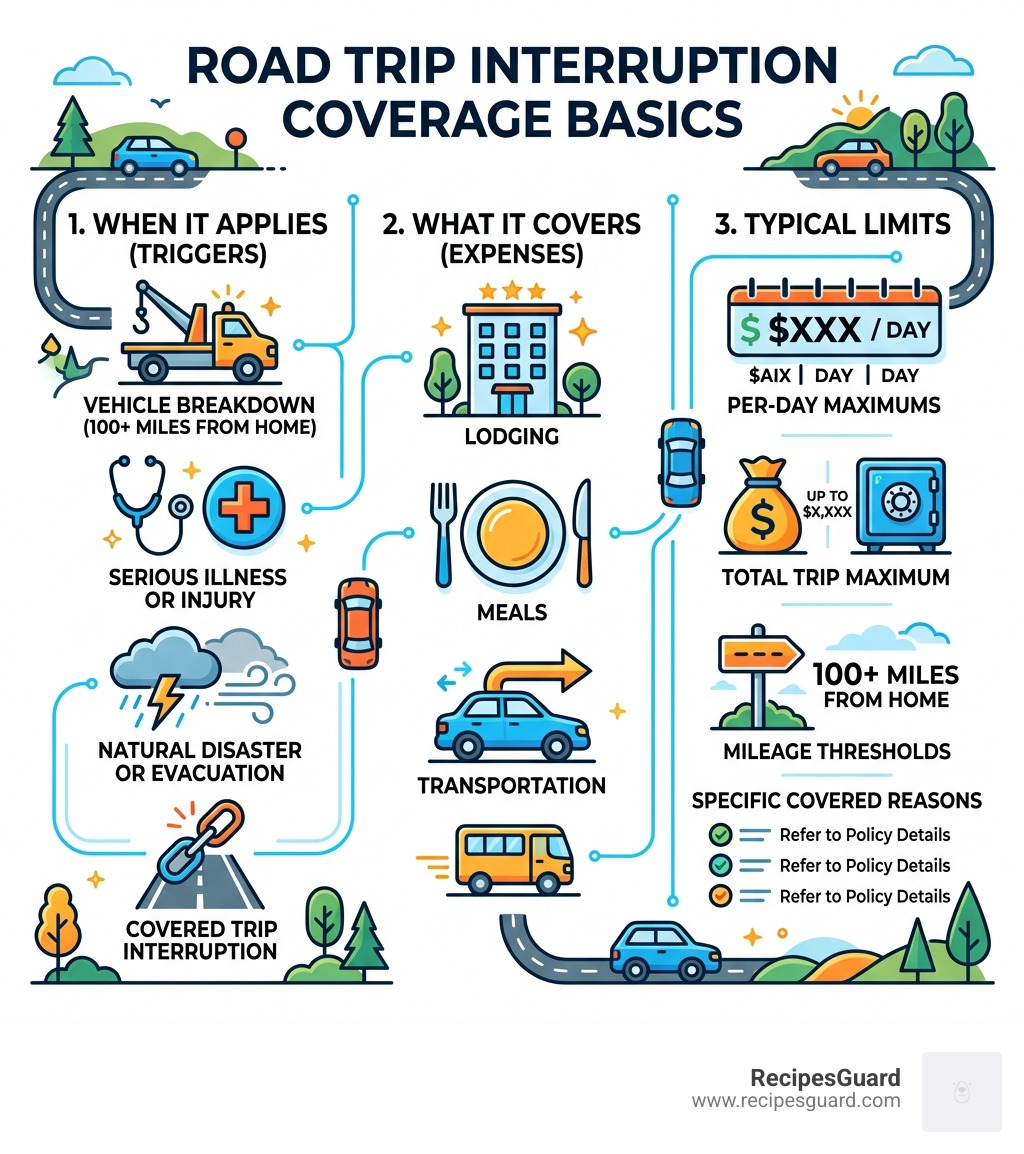
Here’s what it covers at a glance:
| Situation | What Coverage Helps With |
|---|---|
| Vehicle breaks down 100+ miles from home | Hotel stays, meals, rental car or transport costs |
| Serious illness or injury during the trip | Unused prepaid bookings, extra travel costs to return home |
| Natural disaster or mandatory evacuation | Non-refundable trip expenses, additional accommodations |
| Trip cut short for a covered reason | Prorated refund of prepaid, non-refundable travel costs |
Most road trips go smoothly. But when something goes wrong — a blown engine in the middle of nowhere, a sudden illness, or a natural disaster closing the roads — the costs add up fast. A single unplanned hotel night, a tow, and a few meals can easily run $300 or more out of pocket.
For students traveling on tight budgets, that kind of surprise expense can be really stressful. And most people don’t realize that standard auto insurance won’t cover those extra costs — it only handles damage to the vehicle itself.
That’s exactly where road trip interruption coverage fills the gap.
Road trip interruption coverage word roundup:
- cancel for any reason plan
- holiday insurance cancellation due to illness
- student travel claim process
What is Road Trip Interruption Coverage?

When we talk about road trip interruption coverage, we are looking at a financial safety net designed specifically for the moments after your journey has already begun. Unlike “cancellation” insurance, which protects you before you turn the ignition, interruption coverage kicks in once you are officially on the road.
At its core, this coverage reimburses you for unused, prepaid, and non-refundable expenses if your trip is cut short or delayed by a covered event. Think about those non-refundable Airbnb bookings, pre-paid music festival tickets, or guided tour deposits. If you’re stuck in a repair shop three towns away and can’t make it to your destination, this insurance helps you get your money back.
One of the biggest points of confusion we see at RecipesGuard is the difference between auto insurance and travel insurance. Your standard car insurance is there to fix the dented fender or pay for a broken windshield. However, it rarely—if ever—pays for your $150 hotel room or your $40 dinner while the car is being fixed. Road trip interruption coverage is what handles those “human” costs.
Comparing the “Trip” Trio
To choose the right protection, you need to know the difference between the three main types of travel protection.
| Feature | Trip Cancellation | Trip Interruption | Trip Delay |
|---|---|---|---|
| When it starts | Before you leave home. | After your trip begins. | During the trip. |
| Primary Goal | Refund total trip cost if you can’t go. | Refund unused costs and pay for the return home. | Pay for “waiting” costs (meals/hotels). |
| Trigger | Illness, jury duty, etc. | Injury, breakdown, disaster. | Flight delay, road closure. |
Understanding the 100-Mile Rule
In insurance, not every drive to the grocery store counts as a “trip.” Most providers apply what we call the “100-mile rule.” To qualify for road trip interruption coverage benefits, the incident (like a mechanical breakdown) usually needs to occur at least 100 miles away from your primary residence.
Some premium memberships, such as those offered by major Australian motoring clubs, might lower this threshold to 50 miles, but 100 miles remains the industry standard. This geographic limit ensures the insurance is used for genuine travel rather than local car trouble. If you’re a student living on campus, your “primary residence” is typically the address listed on your policy—so make sure that’s up to date before you head out!
Triggers and Reimbursable Expenses

What actually allows you to make a claim? It’s not just “bad luck”; it has to be a specific “covered reason.” For road trippers, the most common trigger is a Vehicle Breakdown.
However, insurers are specific about what counts as a breakdown. Usually, the vehicle must be rendered “undrivable.” If your air conditioning stops working, it’s annoying, but the car still moves. If your transmission falls out on the highway, that’s a trigger.
Many policies also include a time threshold. For example, some plans require the vehicle to be out of commission for at least 12 to 24 hours before you can start claiming for hotel and meal expenses. This prevents claims for minor one-hour flat tire changes that don’t actually interrupt your overnight plans.
Covered Reasons for Road Trip Interruption Coverage
While car trouble is the “star” of road trip claims, it isn’t the only reason you can get reimbursed. Standard Driving Trip Interruption Reimbursement scenarios often include:
- Mechanical or Electrical Failure: A breakdown that isn’t caused by an accident but makes the car unsafe or impossible to drive.
- Severe Illness or Injury: If you or a traveling companion becomes too sick to continue driving (certified by a doctor).
- Natural Disasters: Bushfires, floods, or severe storms that force road closures or mandatory evacuations.
- Traffic Accidents: If a collision prevents you from continuing your journey.
Common Limits for Road Trip Interruption Coverage
It is important to remember that this isn’t a blank check for a five-star resort. Most policies have “daily caps” and “total limits.”
For example, a typical Trip Interruption benefit might offer a total of $500 to $1,500 for the entire trip. Within that total, there are often sub-limits like:
- Lodging: Up to $100 or $200 per day.
- Meals: Up to $50 per day.
- Transportation: Up to $50 per day for a rental car or taxi.
If you are a student traveling in a group, check if your policy covers the vehicle or the person. Some memberships cover the member regardless of whose car they are in, which is a great perk for shared road trips.
Filing a Claim and Exclusions
At RecipesGuard, we specialize in helping students navigate the often-confusing world of insurance claims. Filing a claim for road trip interruption coverage requires a paper trail. If you don’t have the right documents, the insurer won’t be able to verify your loss.
Step-by-Step Claim Filing:
- Notify the Authorities/Insurers: Many policies have a “72-hour notification rule.” You must contact your insurance provider or travel supplier within 72 hours of the interruption occurring.
- Get Professional Documentation: If the car broke down, you need a formal repair bill from a licensed mechanic. If you got sick, you need a physician’s certification stating you were unfit to travel.
- Save Every Receipt: This is the most important part! Keep every receipt for water, snacks, hotels, and Uber rides. Digital photos of receipts are usually accepted and are much harder to lose than scraps of paper.
- Submit Proof of Delay: If the road was closed due to a flood, a screenshot of the official government road closure notice can serve as vital evidence.
Common Exclusions and Vehicle Types
Not every situation or vehicle is covered. You should read your Road Trip Travel Insurance PDS (Product Disclosure Statement) carefully.
Common exclusions include:
- Routine Maintenance: You can’t claim for a trip interruption if you just stopped to get an oil change or new tires.
- Theft or Vandalism: While devastating, some breakdown-specific coverages exclude theft (this is usually handled by your comprehensive auto insurance).
- Unregistered Vehicles: Your car must be roadworthy and registered.
- Specific Vehicle Types: Some basic policies only cover “private passenger vehicles.” If you are driving a heavy-duty RV, a motorcycle, or towing a boat, you may need to add a specific rider or upgrade your membership to ensure those vehicles are included. Roadside Assistance & Trip Interruption Claims | Progressive notes that coverage for RVs and trailers often requires specialized plans.
Frequently Asked Questions about Road Trip Interruption
How far from home must I be to use road trip interruption coverage?
Most policies require you to be at least 100 miles (approximately 160 kilometers) from your primary residence. However, some Travel With More Protection plans for premium members kick in at just 50 miles. Always check your specific policy distance requirements before you leave.
Does road trip interruption coverage apply to rental vehicles?
Yes, many standalone travel insurance plans, like those from AXA, specifically include rental cars. If your rental breaks down, the insurance can help cover the costs of getting you to a place where you can pick up a replacement vehicle or stay overnight while the rental agency sorts out the mess.
When is the best time to purchase road trip interruption coverage?
The best time is as soon as you make your first non-refundable deposit (like booking a campsite or a hotel). While you can often buy it up until the day before you leave, buying early protects you against things that might happen before the trip even starts (trip cancellation).
Conclusion
A road trip is a rite of passage, especially for students looking to explore the vast landscapes of Australia. But a mechanical failure or a sudden storm shouldn’t have to mean the end of your savings. By securing road trip interruption coverage, you ensure that if the worst happens, you’ll have a warm bed, a hot meal, and a way to get back home without breaking the bank.
We hope this guide helps you feel more prepared for your next adventure. The key to a successful claim is documentation and speed. If you find yourself stuck, take a deep breath, call your insurer, and start saving those receipts.
For more student-focused advice and step-by-step tutorials on navigating the insurance world, Protect your next journey with expert guidance. Safe travels!

My name is Bianca, and my journey into the world of fermentation and food safety began with a costly mistake. I once lost an entire season’s harvest of chili peppers because I relied on guesswork instead of science. That failure was my turning point.
