
How to Not Lose Your Deposit with Hotel Cancelation Insurance
What Is Hotel Cancelation Insurance (And Why It Matters Before You Book)
Hotel cancelation insurance is a type of travel protection that reimburses you for prepaid, non-refundable hotel costs if you have to cancel your trip — whether due to illness, an emergency, or sometimes any reason at all.
Here’s a quick breakdown of what you need to know:
| What You Want to Know | Quick Answer |
|---|---|
| What does it cover? | Non-refundable hotel deposits and prepaid costs for covered cancellation reasons |
| How much will I get back? | 50% to 80% of non-refundable costs, depending on your plan |
| Can I cancel for any reason? | Yes, with a CFAR upgrade — but you must cancel 48-72 hours before departure |
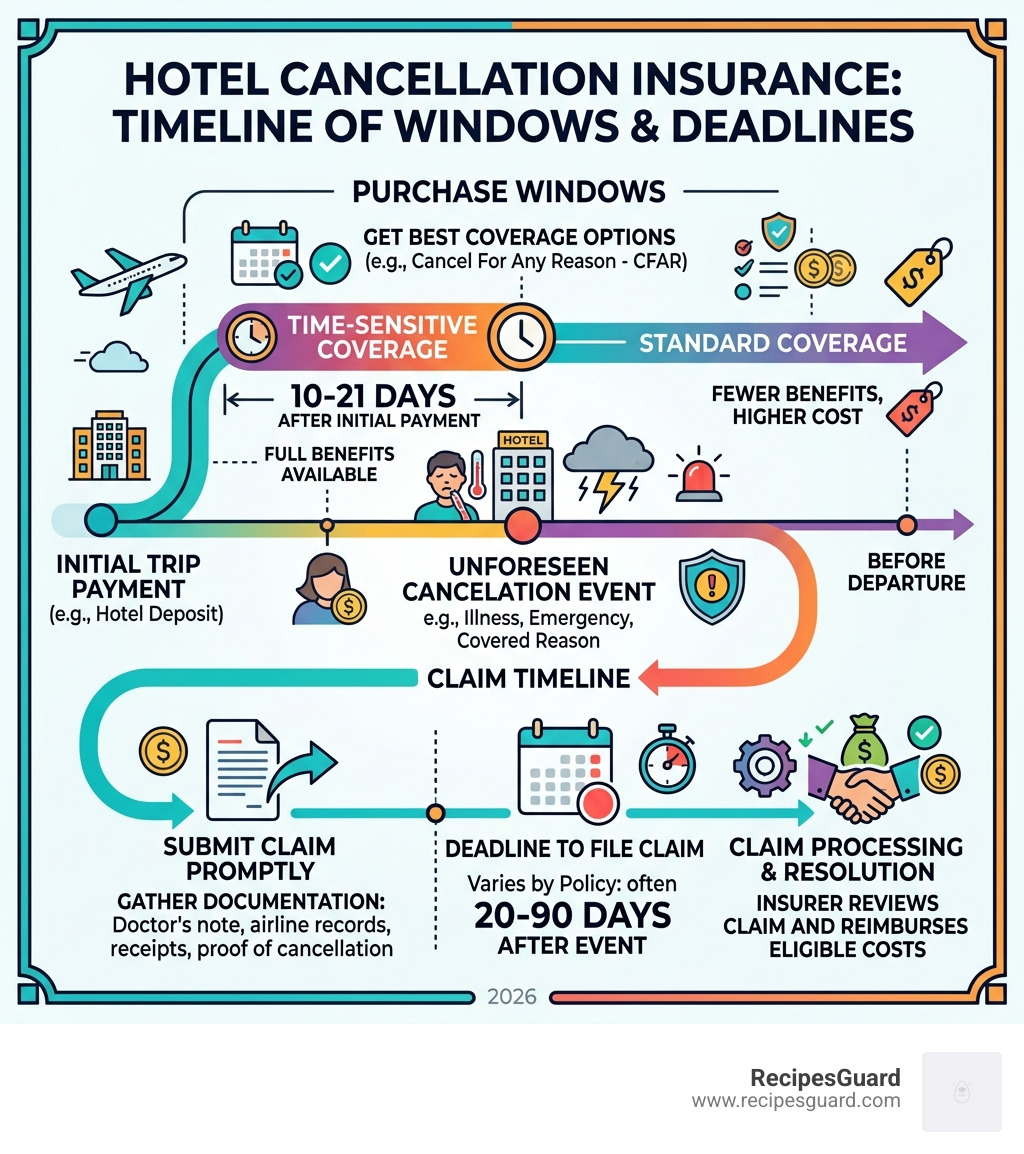
| When do I need to buy it? | Within 10-21 days of your first trip payment |
| Who offers it? | Travel insurers, credit cards, and booking platforms |
So you’ve booked a hotel. Maybe it was a great non-refundable rate — cheaper than the flexible option. Then life happens. A medical issue. A family emergency. Or you simply can’t go anymore.
Without protection, that deposit is gone.
This is exactly the situation hotel cancelation insurance is designed for. Whether you’re a student studying abroad or a first-time traveler booking internationally, losing a non-refundable deposit can seriously hurt your budget.
The good news: the right coverage can get most — or all — of that money back. But there are time limits, documentation requirements, and reimbursement caps that catch a lot of travelers off guard.
This guide walks you through everything you need to know to protect your booking and actually get reimbursed if things go wrong.
Hotel cancelation insurance vocab explained:
- cancel for any reason plan
- holiday insurance cancellation due to illness
- student travel claim process
Understanding Hotel Cancelation Insurance and How It Works

When we talk about hotel cancelation insurance, we are looking at a specific safety net designed to catch your fall when a trip is canceled before it even begins. In travel, especially for students on a budget, “non-refundable” is a scary word. It usually means that once you click ‘book’, that money belongs to the hotel regardless of whether you show up.
At its core, this insurance covers your prepaid, non-refundable expenses. This includes the deposit you paid to secure the room and any remaining balance paid in advance. If you are forced to cancel for a “covered reason,” the insurance provider steps in to reimburse those lost funds.
What are Covered Reasons?
Standard policies don’t just let you cancel because you changed your mind. Usually, “covered reasons” include:
- Unforeseen injury or illness (to you or a travel companion).
- Death of a family member.
- Natural disasters or severe weather making the hotel unreachable.
- Jury duty or being subpoenaed.
- Unexpected job loss or termination.
Standalone Policies vs. Integrated Protection
You can find hotel cancelation insurance in a few different places. Some booking platforms offer “integrated protection” at checkout. For example, some flexible booking programs allow travelers to cancel reservations up until noon on the day of check-in, regardless of the hotel’s own policy. This essentially overrides the hotel’s rules, providing a direct refund or credit.
Alternatively, you might purchase a standalone travel insurance policy from a major provider. These are often more comprehensive, covering not just the hotel but also flights and medical emergencies. For students, we often recommend looking for policies that specifically mention “prepaid, non-refundable expenses” like vacation rentals and even campground reservations.
Standard Coverage vs. Cancel for Any Reason (CFAR)
Understanding the difference between standard coverage and a Cancel for Any Reason (CFAR) upgrade is the difference between getting 100% of your money back and getting $0.
| Feature | Standard Trip Cancellation | Cancel for Any Reason (CFAR) |
|---|---|---|
| Reimbursement Amount | Up to 100% of insured costs | 50% to 80% of insured costs |
| Reasons Allowed | Specific “Covered Reasons” only | Literally any reason (even “just because”) |
| Purchase Window | Usually anytime before departure | Within 10-21 days of initial payment |
| Cancellation Deadline | Up to the time of departure | 48-72 hours before departure |
| Cost | Included in base plan | Additional premium (usually 40-60% extra) |
Standard insurance is great for emergencies, but it is rigid. If your reason for canceling isn’t on their list — like a sudden exam conflict or just feeling uneasy about the destination — a standard policy won’t pay out.
This is where CFAR comes in. It is a premium upgrade that provides the ultimate flexibility. While standard plans might offer 100% back for a broken leg, a CFAR plan might offer a 75% reimbursement for any reason at all. Some providers offer a “Cancel Anytime” upgrade that can reimburse up to 80% of unused, prepaid, non-refundable costs. Others typically reimburse around 50%.
The Benefits of CFAR for Hotel Cancelation Insurance
For students, CFAR is often a lifesaver. Maybe your study schedule changed, or your friend group decided to go to a different city at the last minute.
- Discretionary Cancellation: You don’t need a doctor’s note or a death certificate. If you decide the trip isn’t right for you, you’re covered.
- Peace of Mind for Non-Refundable Stays: If you snagged a “Super Saver” rate that is strictly non-refundable, CFAR ensures you won’t lose the whole investment.
- Personal Reasons: Whether it’s a breakup or a sudden invite to a concert, CFAR handles the “life happens” moments that standard insurance ignores.
Key Requirements and Time Limits for Filing a Claim

One of the biggest mistakes we see travelers make is missing the strict deadlines associated with hotel cancelation insurance. Insurance companies are sticklers for timing.
- The Purchase Window: You generally cannot buy CFAR coverage whenever you want. Most providers require you to add this upgrade within 14 to 21 days of your initial trip payment (the very first deposit you made).
- The 48/72-Hour Rule: To use a CFAR benefit, you must cancel your trip at least 48 to 72 hours before your scheduled departure. If you try to cancel the night before because you’re tired, you likely won’t see a cent.
- The 72-Hour Notification Rule: Once you realize you need to cancel, you must notify the hotel and your insurance provider as soon as possible—typically within 72 hours of the event that caused the cancellation.
Essential Documentation for Your Hotel Cancelation Insurance Claim
At RecipesGuard, we specialize in helping students navigate the paperwork. To get your money back, you need to prove you actually lost it. You will need:
- Proof of Payment: Credit card statements or receipts showing you paid for the hotel.
- Cancellation Confirmation: A document from the hotel or booking platform showing the date and time you canceled.
- Unused Reservation Receipts: Proof that the booking was non-refundable and that you didn’t use it.
- Claim Forms: The specific paperwork provided by your insurer.
- Itemized Invoices: A breakdown of costs (room rate, taxes, fees) to ensure the insurer knows exactly what they are reimbursing.
Evaluating the Cost: Is Hotel Booking Protection Worth It?
Is it worth spending an extra $50 or $100 on insurance for a $500 hotel stay? Let’s look at the numbers.
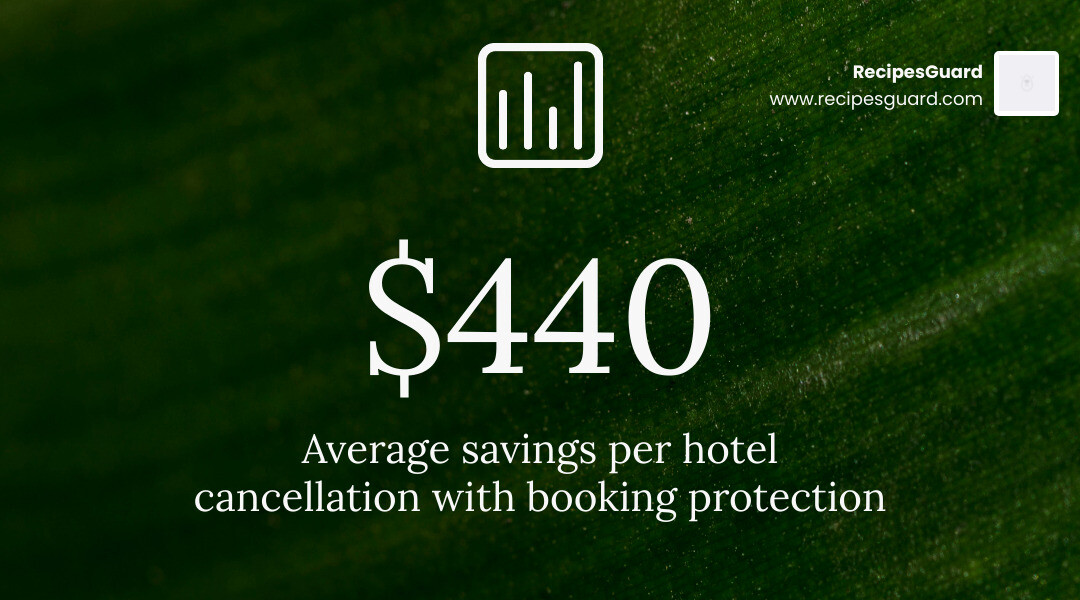
Industry research shows that travelers using cancellation protection save millions per year, with an average savings of $440 per cancellation. When you consider that a non-refundable room might cost you $600, paying a small percentage for insurance is a logical hedge against total loss.
Risk Assessment for Students
For students, the “worth it” factor increases if:
- The booking is non-refundable: If you booked a flexible rate, you don’t need insurance for the hotel specifically — you can just cancel with the hotel directly.
- You are traveling during “Sick Season”: If you’re heading out during winter or a known epidemic period, comprehensive travel insurance is vital.
- Your budget is tight: If losing $400 would ruin your semester’s savings, the insurance premium is a small price for “Total Cost Certainty.”
Credit Card Benefits vs. Comprehensive Insurance
Some premium credit cards offer built-in trip cancellation benefits. However, these are often limited. They might cover $5,000 to $10,000 per trip, but only for very specific reasons (illness, death, etc.). They rarely offer “Cancel for Any Reason” flexibility. If you need the ability to change plans because of a school conflict, a standalone policy with CFAR is usually the better bet.
Frequently Asked Questions about Hotel Cancelation Insurance
Can I cancel my hotel last minute with CFAR?
Generally, no. Most CFAR policies require you to cancel at least two days (48 hours) or sometimes three days (72 hours) before your scheduled departure. If you wait until the day of check-in, you likely won’t be eligible for the CFAR reimbursement, though you might still be covered under “Standard” reasons if a sudden emergency occurs.
Does hotel cancelation insurance cover COVID-19 or epidemics?
It depends on the plan. Many modern plans now include an Epidemic Coverage Endorsement. For example, certain comprehensive plans can reimburse you if you, a travel companion, or a family member are diagnosed with an epidemic disease like COVID-19. However, simply being “afraid to travel” due to an epidemic is usually only covered under a Cancel for Any Reason upgrade.
How much of my deposit will I get back?
If you cancel for a standard “covered reason,” you can often get 100% of your non-refundable costs back. If you are using a CFAR upgrade for a non-listed reason, you will typically receive between 50% and 80%. For instance, some plans usually pay 50%, while premium upgrades can go as high as 75% or 80%.
Conclusion
Losing a hotel deposit is a rite of passage for many travelers, but it doesn’t have to be yours. By understanding the nuances of hotel cancelation insurance, you can book those “non-refundable” deals with confidence, knowing you have a safety net.
At RecipesGuard, we are dedicated to making sure students don’t get stuck with the bill when life gets in the way of travel. Whether you need a step-by-step guide to filing a claim or advice on the best CFAR upgrades, we’ve got you covered.
Our final recommendation? Always check the “Purchase Window.” If you’ve just booked your hotel, you likely only have about two weeks to secure the best cancellation protection. Don’t wait until the week of your trip to realize you need it—by then, it will be too late.
Protect your trip with RecipesGuard

My name is Bianca, and my journey into the world of fermentation and food safety began with a costly mistake. I once lost an entire season’s harvest of chili peppers because I relied on guesswork instead of science. That failure was my turning point.
