
How to Avoid a Medical Claim Meltdown
Why Travel Insurance Medical Exclusions Can Cost You More Than Your Trip
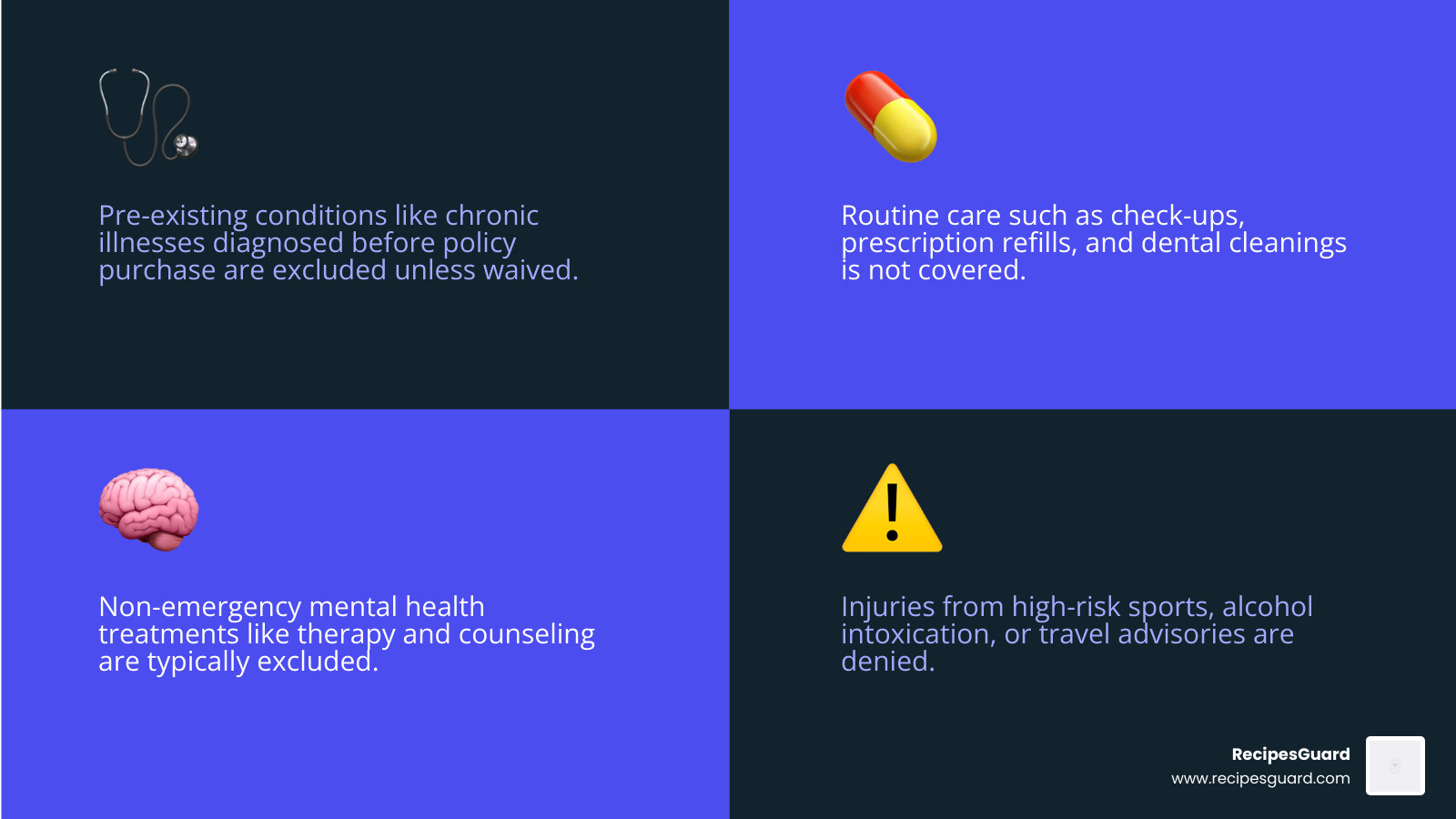
Travel insurance medical exclusions are the specific conditions, situations, and treatments your policy will not pay for — even when you’re sick or injured abroad.
Here’s a quick look at the most common exclusions to know before you travel:
| Exclusion Type | What It Means |
|---|---|
| Pre-existing conditions | Illnesses or injuries you had before buying the policy |
| Routine and preventive care | Check-ups, prescription refills, dental cleanings |
| Mental health (non-emergency) | Therapy, counseling, ongoing psychiatric care |
| High-risk sports injuries | Skydiving, mountaineering, scuba below certain depths |
| Pregnancy (routine) | Prenatal visits, childbirth, neonatal care |
| Alcohol or drug-related injuries | Incidents where intoxication is a factor |
| Medical tourism | Traveling specifically to get treatment abroad |
| Known events and travel advisories | Storms already named, destinations under government warnings |
Most travelers assume they’re fully covered the moment they buy a policy. They’re not.
Travel medical insurance is built for unexpected emergencies — not for managing ongoing health conditions, refilling prescriptions, or getting care you planned ahead of time. The gap between what you expect to be covered and what your policy actually pays can be enormous. Emergency evacuations alone can exceed $250,000, and a denied claim on top of that bill is a financial nightmare.
For international students navigating a foreign health system for the first time, understanding these exclusions before something goes wrong is critical. Medicare and Medicaid don’t cover care outside the U.S., and most overseas providers require payment upfront.
The fine print in your policy’s Certificate of Insurance (sometimes called the Description of Coverage) is where the real answers live — and most people never read it until it’s too late.
Travel insurance medical exclusions terms made easy:
- pre existing condition exclusion
- travel insurance exclusion
Decoding Travel Insurance Medical Exclusions: The Pre-Existing Condition

The most frequent “gotcha” in the industry is the pre-existing condition. In travel insurance medical exclusions, this is defined as any injury, illness, or medical condition that existed during a specific “look-back period” before your policy became effective.
In Australia, this look-back period typically ranges from 60 days to as long as 5 years, depending on the provider. If you had symptoms, received a diagnosis, changed your medication, or even just consulted a doctor about a “niggle” during this window, the condition is usually excluded from standard coverage.
Common chronic conditions that fall into this category include:
- Asthma and respiratory issues
- Diabetes (Type 1 and Type 2)
- Heart disease or high blood pressure
- Cancer (even if in remission)
- Chronic back pain or joint issues
The “diagnosis window” is strict. If you are diagnosed with a condition on Monday and buy your insurance on Tuesday, that condition is pre-existing. Even if the condition hasn’t “manifested” (meaning you haven’t felt sick yet) but a doctor’s notes show it was present, it could lead to a claim meltdown.
Chronic Conditions vs. Acute Onset of Pre-Existing Conditions
| Feature | Chronic Condition | Acute Onset |
|---|---|---|
| Definition | Long-term, ongoing management | Sudden, unexpected recurrence |
| Treatment Timing | Regular, planned care | Must seek help within 24 hours |
| Age Limit | Usually no specific age cap | Often restricted (e.g., under 70 or 80) |
| Coverage Status | Typically excluded | May be covered as a special benefit |
Qualifying for a Pre-Existing Condition Waiver
If you have a medical history, don’t panic. You can often bypass these travel insurance medical exclusions by obtaining a “Pre-existing Condition Waiver.” This effectively removes the exclusion, allowing you to claim for your known conditions.
To qualify, you must usually meet these “Golden Rules”:
- The Purchase Window: You must buy your insurance within a very tight timeframe after your initial trip deposit (usually 14 to 21 days).
- Medically Fit to Travel: You must be physically able to travel on the day you purchase the policy.
- Insure Total Costs: You must insure 100% of your prepaid, non-refundable trip expenses.
For students, this means if you’re booking a semester abroad in July 2026, you need to sort your insurance the moment you pay your tuition or flight deposit to ensure your health history is covered.
Understanding Acute Onset in Travel Insurance Medical Exclusions
Some policies offer a lifeline called “Acute Onset of a Pre-existing Condition.” This covers a sudden and unexpected outbreak or recurrence of a condition that was otherwise stable.
For example, if you have asthma that has been controlled for years but you suffer a sudden, life-threatening attack in a smoggy city, this might be covered. However, the “24-hour rule” is vital: you must seek emergency medical treatment within 24 hours of the symptoms starting. If you wait 48 hours to see a doctor, the insurer will likely categorize it as a chronic issue and deny the claim.
Routine Care and Lifestyle-Based Exclusions

One of the biggest misconceptions students have is that travel insurance functions like a standard health plan. It doesn’t. Travel insurance medical exclusions almost always apply to “routine” or “maintenance” care.
Preventive and Routine Care
If you decide to get your annual physical or a standard blood test while traveling, you’ll be paying out of pocket. Travel insurance is for accidents and emergencies.
- Prescription Refills: If you lose your medication or simply run out, the cost of the replacement and the doctor’s visit to get the new script are usually excluded.
- Dental: Standard policies only cover “acute pain” or injury to sound natural teeth. Routine cleanings or fillings are not on the menu.
- Elective Procedures: Thinking of getting a mole removed or starting physical therapy while overseas? These are 100% excluded.
Mental Health, Anxiety, and Depression
Mental health is a complex area in travel insurance medical exclusions. Many standard policies exclude coverage for psychiatric disorders, including anxiety and depression. If a student experiences a severe psychiatric emergency requiring hospitalization, some premium plans may offer limited coverage, but routine counseling or therapy sessions are virtually never covered. If you are currently taking medication for a mental health condition, any “flare-up” abroad will likely be treated as a pre-existing condition.
Substance Abuse and Alcohol Intoxication
This is where many young travelers run into trouble. Most Australian policies have a strict “intoxication clause.” If you are injured and your blood alcohol level is above a certain limit (some policies cite 950mg/l of breath alcohol, which is nearly four times the NZ legal driving limit), your claim will be denied. Whether it’s a fall from a balcony or a moped accident, if the insurer can prove alcohol or drugs played a role, you are on your own. This exclusion does not apply to drugs taken as prescribed by a doctor.
Pregnancy and Travel Insurance Medical Exclusions
If you are traveling while pregnant, you need to read your Exclusions and Limitations very carefully.
Standard travel insurance medical exclusions apply to:
- Routine Care: Prenatal check-ups and standard ultrasounds.
- Late-Term Travel: Most insurers will not cover any pregnancy-related claims if you are past the 26-week mark (sometimes as early as 24 weeks).
- Childbirth: The actual birth of the child and neonatal care for the newborn are almost always excluded unless it is a life-threatening complication.
“Complications of pregnancy” are often covered, but the definition is narrow. It usually refers to sudden, unexpected medical emergencies like pre-eclampsia or gestational diabetes that arise for the first time during the trip.
High-Risk Sports and Travel Insurance Medical Exclusions
Are you planning to go skydiving in the Swiss Alps or scuba diving in the Great Barrier Reef? Your standard policy might leave you high and dry.
Insurers categorize activities by risk. Common exclusions include:
- Mountaineering: Often excluded if you are using ropes or climbing above 4,500 meters.
- Scuba Diving: Generally excluded if you dive deeper than 10 to 30 meters or if you aren’t certified.
- Professional Athletics: If you are getting paid to play, you aren’t covered by travel insurance.
- Safety Gear: If you crash a moped while not wearing a helmet, or get injured while not following local safety laws, the “reasonable care” exclusion will trigger, and your claim will be rejected.
For students joining university “adventure clubs,” we recommend adding an “Adventure Sports Rider” to your policy to bridge these gaps.
External Risks: Advisories, Storms, and Medical Tourism
Sometimes the reason for your claim denial has nothing to do with your body and everything to do with where and why you traveled.
Government Travel Advisories
In Australia, we rely on Smartraveller.gov.au. If the Department of Foreign Affairs and Trade (DFAT) issues a “Do Not Travel” (Level 4) warning for a destination before you buy your policy or depart, any medical issues you encounter there will likely be excluded. This includes injuries sustained during civil unrest, war, or predictable disease outbreaks.
Known Events and Named Storms
Insurance is for the “unforeseen.” Once a hurricane is named by the Bureau of Meteorology or NOAA, it becomes a “known event.” If you buy insurance after a storm is named, any medical emergencies or evacuations caused by that storm are excluded.
Medical Tourism
Traveling specifically to receive medical treatment—whether it’s affordable dental work in Thailand or elective surgery—is a major exclusion. If you have a “medical meltdown” during or after a planned procedure abroad, your travel insurance will not cover the complications. These are viewed as predictable risks of elective behavior.
Frequently Asked Questions about Medical Exclusions
What documentation is required to prove a covered illness for a claim?
To avoid a claim denial, you must treat your paperwork like a university thesis. You will typically need:
- A Physician Statement Form: Completed by the treating doctor abroad, confirming the diagnosis and that the illness was “sudden and disabling.”
- Medical Records: A full history of the treatment received.
- Itemized Receipts: Don’t just show a credit card statement; the insurer needs to see exactly what you were charged for.
- 90-Day Window: Most claims must be filed within 90 days of the incident.
Are mental health conditions typically excluded from coverage?
Generally, yes. Most basic policies exclude “mental or nervous disorders.” However, some high-end student plans may cover a “crisis intervention” or a one-time psychiatric emergency. If you have a history of anxiety or depression, it is vital to declare this upfront and see if a waiver is available. Check out our guide on What Does Travel Insurance Not Cover? for more specifics.
Is emergency medical evacuation always covered?
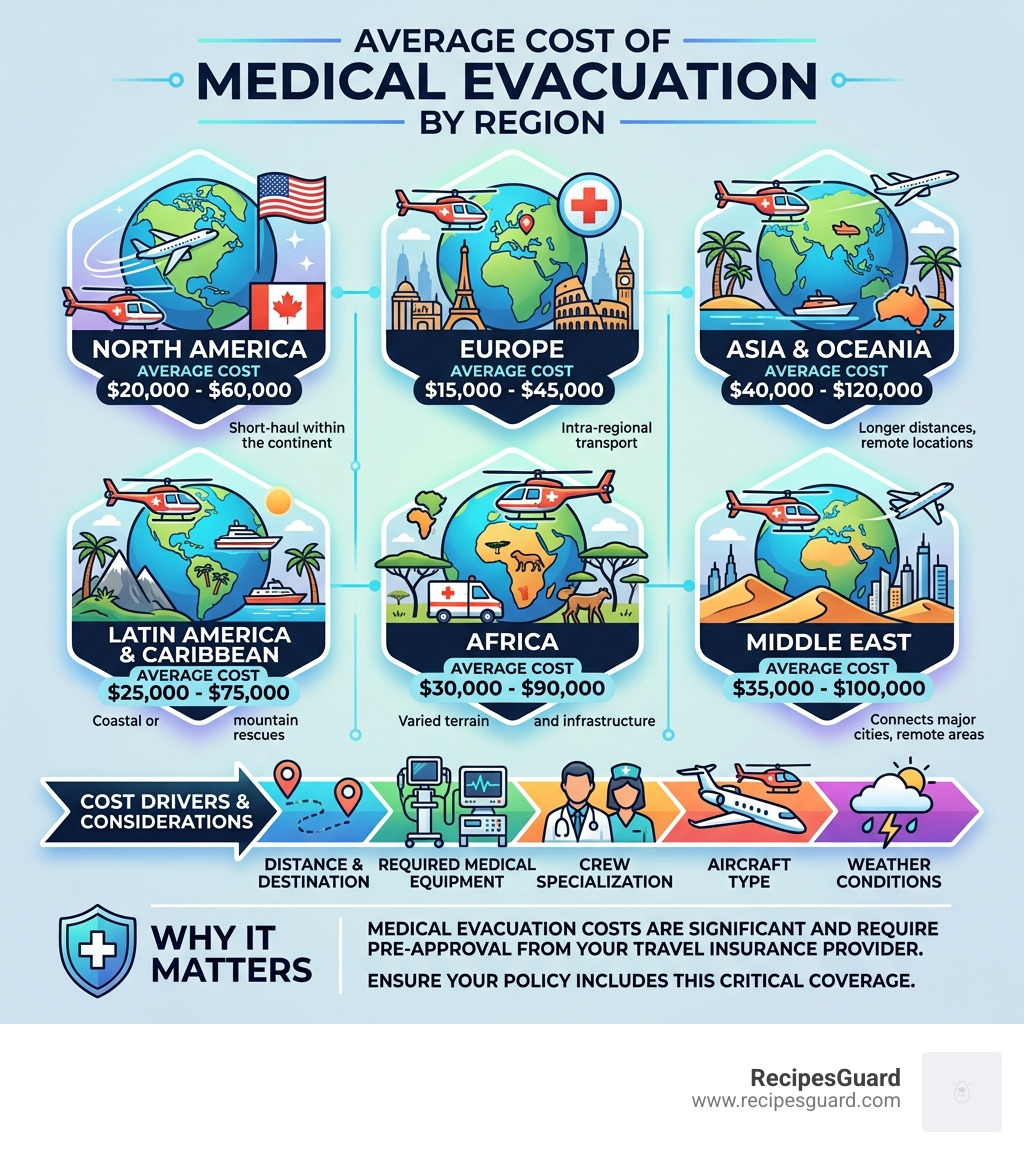
Not automatically. Evacuation must be deemed “medically necessary” and usually requires pre-approval from the insurance company’s emergency assistance team. If you charter a private jet home because you “feel better” there, but a local hospital could have treated you, the $250,000 bill will stay with you.
Conclusion
Navigating travel insurance medical exclusions can feel like walking through a minefield, especially for students who are often traveling on a budget and away from their support networks. As we move into April 2026, the complexity of global travel means that “hoping for the best” is no longer a viable strategy.
At RecipesGuard, we specialize in helping students understand the fine print. Our mission is to provide student-focused advisory services and step-by-step claim filing tutorials so that a medical mishap doesn’t end your academic journey.
Before you head to the airport, take 20 minutes to read your Certificate of Insurance. Look for the “General Exclusions” section and ensure your planned activities—and your medical history—are actually protected. If you’re unsure, More info about our services is just a click away. Don’t let an exclusion turn your dream trip into a financial meltdown. Safe travels!

My name is Bianca, and my journey into the world of fermentation and food safety began with a costly mistake. I once lost an entire season’s harvest of chili peppers because I relied on guesswork instead of science. That failure was my turning point.
