
Don’t Leave Money on the Table: Claiming Your Student Funds
Billions in Student Money Go Unclaimed Every Year — Here’s How to Get Yours Back
If you’re trying to claim student lost money, here’s a quick overview of your main options:
How to claim student lost money — quick steps:
- Check your school’s bursar or financial aid office for any unrefunded credit balances
- Search your state’s unclaimed property database for free at MissingMoney.com or via the NAUPA directory
- Check studentaid.gov for any outstanding federal aid or Pell Grant refunds
- Report scams to the FTC at reportfraud.ftc.gov and contact your bank immediately
- Search the FDIC database if you had funds in a failed financial institution
- Contact credit bureaus (TransUnion, Experian, Equifax) if you suspect identity theft linked to your student aid
Every year, an estimated $100 million in scholarships and $2 billion in student grants go unclaimed — not because the money disappears, but because students simply don’t know it exists or how to find it.
And that’s just the scholarship side.
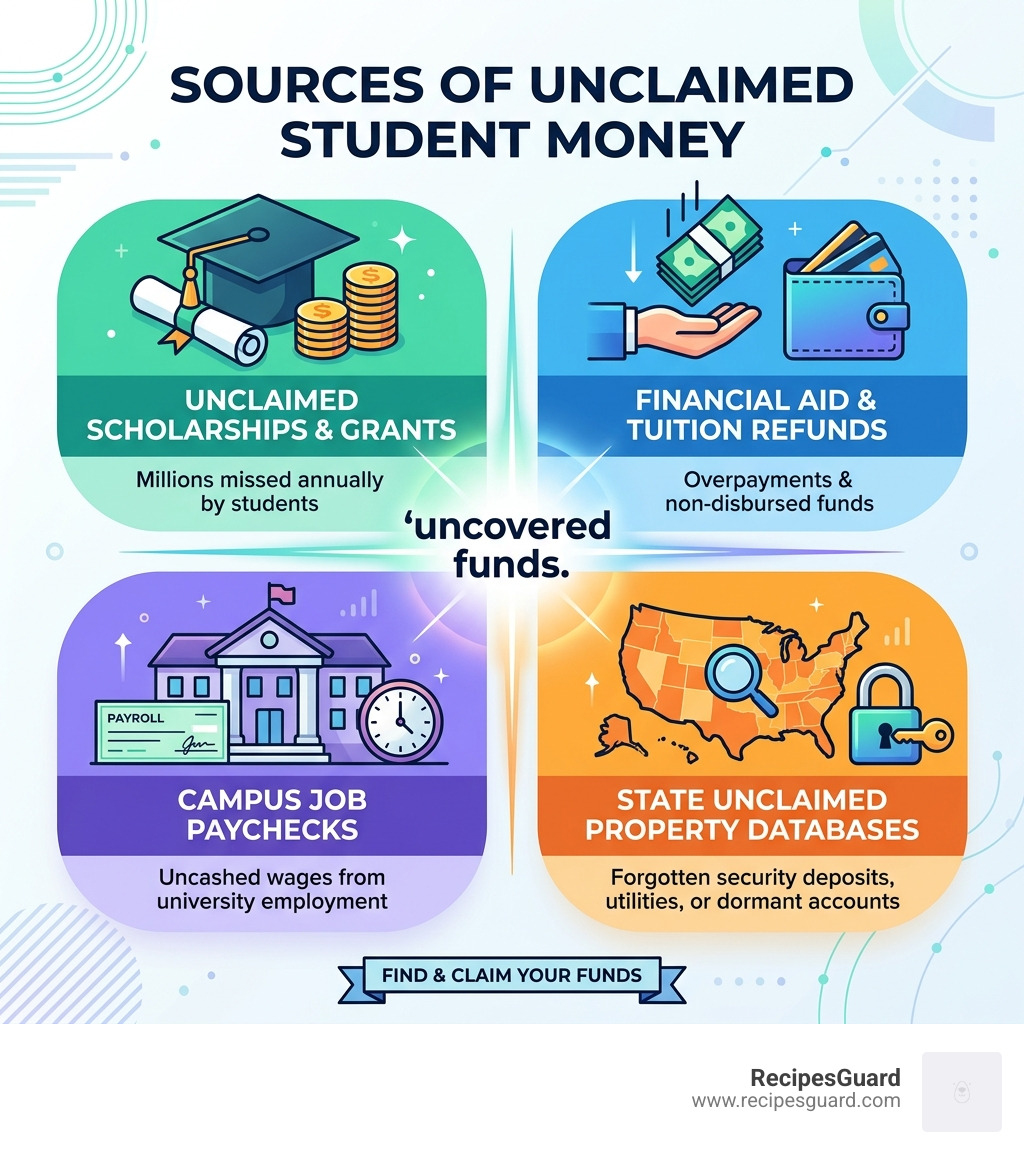
Tuition overpayments, financial aid refunds, campus job paychecks, and security deposits can all end up sitting in state unclaimed property offices — waiting indefinitely for the rightful owner to come forward.
For international students especially, this problem is compounded. Moving between countries, changing addresses, switching phone numbers, missing university emails — any of these can silently cut you off from money you’re owed.
On top of that, students are a prime target for financial scammers. Fraudsters know when student loan payments are released and strike fast — impersonating official bodies, offering fake tuition discounts, or posting fraudulent rental listings. In the UK alone, nearly 69,000 fraud cases involving young people aged 11–29 were reported in 2023, with total losses reaching £143.7 million.
The good news? Most of this money can still be recovered. It doesn’t expire. It doesn’t disappear. And in most cases, claiming it costs nothing.
This guide walks you through exactly how.
Common Financial Scams and How to Identify Red Flags

The journey to claim student lost money often begins because someone took it from you in the first place. As we move through April 2026, scammers have become incredibly sophisticated, using “smishing” (SMS phishing) and social media to hunt for student targets.
FAFSA Fraud and Unusual Parent Data
One of the most concerning trends involves fraudulent FAFSA applications. According to a Fraud Advisory from the U.S. Department of Education OIG, authorities identified over 12,000 dependent student identities associated with parent data that didn’t match. This type of identity theft can drain your federal aid eligibility before you even set foot on campus, resulting in potential losses of millions of dollars.
Accommodation Scams and Fake Tuition Discounts
Rental fraud is a massive headache, especially in high-demand university towns. Fraudsters post fake listings on social media and demand upfront deposits for properties that don’t exist. Similarly, “Tuition Discount” scams offer a 10% to 15% reduction on your fees if you pay through a “third-party agent.” In reality, these agents use stolen credit cards to pay the school, and when the bank reverses the charge, you are left owing the full tuition plus the money you gave the scammer.
Job Scams and Task-Based Fraud
Many students looking for extra cash fall for WhatsApp or social media job offers. You might be asked to “review products” or “complete tasks.” The scam occurs when you try to withdraw your earnings; the “employer” demands a fee to “release” your wages. You end up losing your own money while working for free.
Identifying Legitimate Aid vs. Fraudulent Schemes
How do you tell the difference between a helpful hand and a reaching claw? Legitimate organizations like the Student Loans Company (SLC) or Student Finance England (SFE) will never ask for your bank details or passwords via text or email.
Red Flags to Watch For:
- Urgency Tactics: “Your funding will be stopped unless you act now!”
- Generic Greetings: Messages that start with “Dear Student” instead of your name.
- Spelling Errors: Professional bodies rarely have typos in their official alerts.
- Suspicious Links: Always log in directly through the official website rather than clicking a link in a message.
If you’ve already been hit, you aren’t alone. Resources like Action Fraud provide guidance for young victims trying to navigate the recovery process.
Red Flags in Third-Party Recovery Firms
Be extremely wary of firms like ClaimProp or other “recovery specialists” that charge upfront fees. Official government databases and university bursar offices are free to use. A major red flag is any service that asks for a percentage of your “recovered” FAFSA money before they’ve even found it. Legitimate recovery help should be transparent and, in the case of government entities, entirely free.
Official Ways to Claim Student Lost Money

If you suspect you have forgotten funds, you don’t need a private investigator. There are official, regulated channels to help you claim student lost money.
Understanding Title IV and Credit Balances
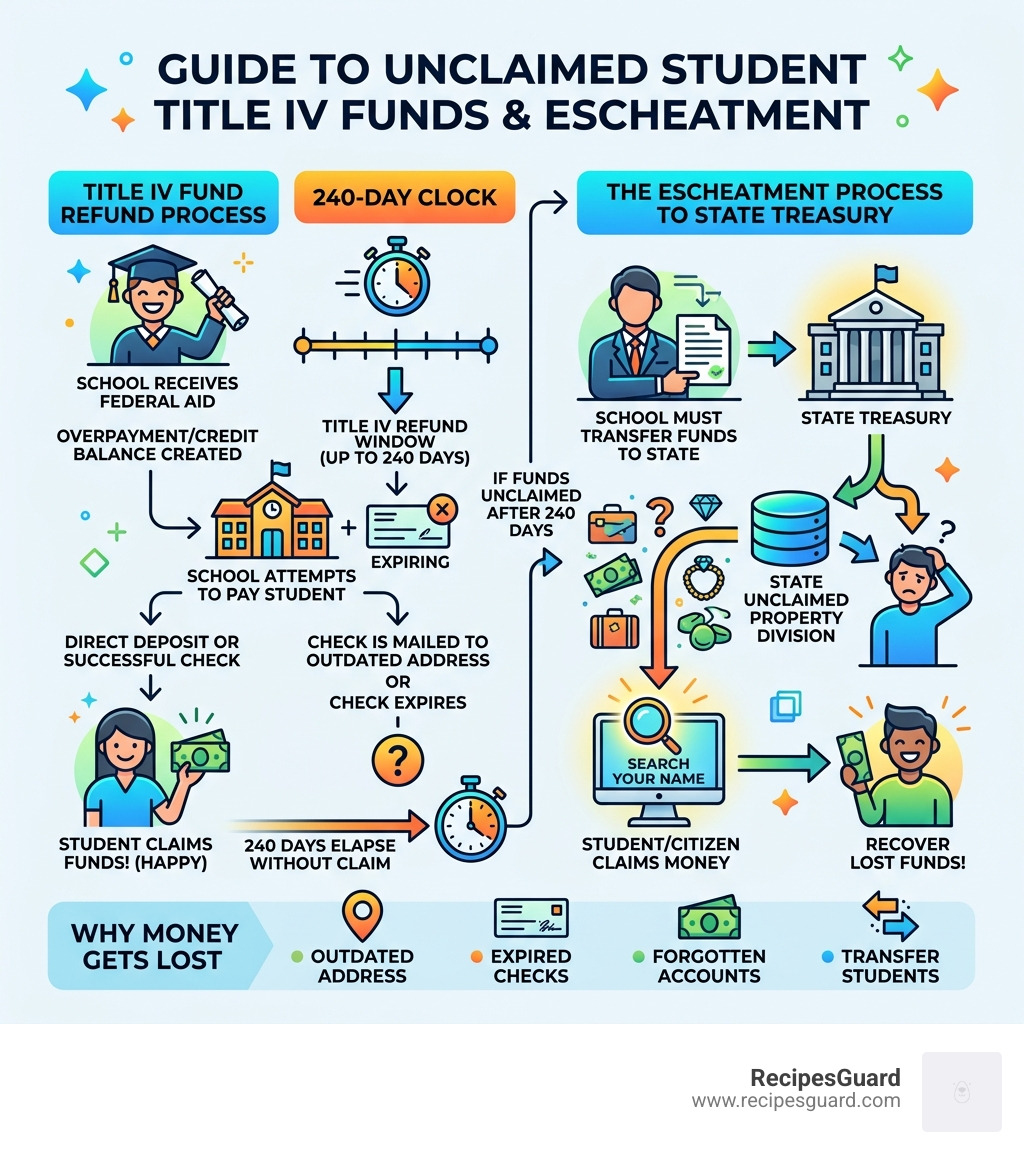
Under federal law (Title IV), schools are required to return unclaimed credit balances to students within 240 days of issuing a check. If they can’t find you (because you moved or changed your email), that money is eventually sent to the state treasury—a process called “escheatment.”
According to missingmoneynews.com, billions of dollars are currently sitting in state accounts from old student deposits, uncashed campus paychecks, and tuition overpayments.
How to Claim Student Lost Money from Federal Aid and Scholarships
The U.S. Department of Education awards roughly $46 billion in scholarships annually. Yet, $2 billion in student grants go unclaimed every year, mostly due to a lack of applicants or students failing to complete the CSS Profile.
| Type of Aid | Source | Repayment Required? |
|---|---|---|
| Pell Grant | Federal Government | No |
| Institutional Grant | College/University | No |
| Merit Scholarship | Private/Non-profit | No |
| Direct Subsidized Loan | Federal Government | Yes |
To maximize your recovery, don’t just look for “lost” money—look for “unclaimed” opportunities. Use official scholarship search engines and reach out to your high school counselor or your university’s financial aid office.
Using Government Databases to Claim Student Lost Money
If the money has already left your school’s hands, your next stop should be official databases.
- NAUPA & MissingMoney.com: These are the “gold standards” for searching state-held property. You can search by your name (and maiden name) in every state where you’ve lived.
- FDIC: If your bank failed while you were a student, the FDIC Unclaimed Funds portal can help you recover insured deposits.
- IRS: Check for undeliverable tax refunds if you worked during college.
- Digital Wallets: Don’t forget to check Venmo, PayPal, or CashApp. Many students leave small balances in these apps that add up over four years.
Why Billions in Student Aid and Scholarships Go Unclaimed
Why is there so much money just sitting there? It usually comes down to the “Protection Gap.” While the law requires schools to try and return money, they can’t do so if your contact info is four years old.
- The 240-Day Rule: Schools have a limited window to get the money to you directly. If the check is mailed to your parents’ old house and expires, the school moves on.
- Transfer Students: If you attended a community college before a university, you might have small refunds (like lab fees or parking deposits) waiting at both institutions.
- Niche Scholarships: Some money goes unclaimed because the criteria are so specific. From scholarships for left-handed students to the “Zombie Apocalypse Survival” scholarship, many funds receive zero applicants.
- Outdated Contact Info: This is the #1 reason. Students graduate, move to a new city for a job, and stop checking their “.edu” email address where the refund notification was sent.
Step-by-Step Guide to Recovering Funds from Scams or Identity Theft
If you’ve been the victim of a scam or identity theft, the process to claim student lost money is more urgent. You need to act fast to prevent further damage to your credit score.
Reporting Student Finance Fraud and Identity Theft
- Contact Your Bank: Immediately report unauthorized transactions. Ask them to freeze your accounts and issue new cards.
- Contact the School: If your student portal was compromised, alert the financial aid office. They can flag your account for “unusual parent data” or FAFSA fraud.
- File a Police Report: You’ll need this as evidence when dealing with credit bureaus.
- Alert the Credit Bureaus: Contact TransUnion, Experian, and Equifax to place a “Fraud Alert” on your file. This prevents scammers from opening new loans in your name.
- Use Official Protection Services: Organizations like the California Student Aid Commission offer specific advice on protecting your CSAC ID and SSN from educational fraud.
Proactive Strategies to Prevent Financial Loss
We at RecipesGuard believe that the best claim is the one you never have to make. To ensure you never have to desperately search for “lost” money, follow these proactive steps:
- Set Up Direct Deposit: This is the single most effective way to prevent unclaimed refunds. If the money goes straight to your bank, it can’t get lost in the mail.
- Keep Your Contact Info Current: Even after you graduate, ensure the bursar’s office has your permanent mailing address and a personal email (not just your school one).
- Financial Spring Cleaning: Once a year, search your name on MissingMoney.com. You might be surprised to find a $50 utility deposit from your sophomore year.
- Check Automated Programs: Some regions have proactive programs like CalKIDS, which automatically deposits money for eligible students. Make sure you’ve registered to claim what’s yours.
Frequently Asked Questions about Student Money Recovery
How do I know if I have unclaimed student money?
Start by contacting your former school’s bursar or financial aid office. If they don’t have anything on file, check the unclaimed property website for the state where the school is located. 1 in 10 people have unclaimed property—it’s worth the five-minute search!
What should I do if my bank denies a fraud refund?
If your bank denies a refund for a scam (like an APP scam), ask for the refusal in writing. You can escalate the case to the Financial Ombudsman Service (FOS) or seek legal advice. Banks have a duty to protect customers from “unusual payment patterns,” and many victims have successfully challenged denials.
Can transfer students claim money from multiple states?
Absolutely. If you went to school in Texas but moved to California, you should search the databases for both states. Transfer students are the most likely group to have small “orphaned” accounts scattered across different institutions.
Conclusion
At RecipesGuard, we specialize in helping students navigate the complex world of insurance and financial claims. Whether you’re dealing with a lost travel reimbursement or trying to claim student lost money from a forgotten scholarship, our goal is to provide you with the step-by-step tutorials you need to succeed.
Don’t let your hard-earned (or hard-awarded) money sit in a government vault. Take fifteen minutes today to check the databases, update your contact info, and secure your financial future.
Claim your funds today at RecipesGuard.com

My name is Bianca, and my journey into the world of fermentation and food safety began with a costly mistake. I once lost an entire season’s harvest of chili peppers because I relied on guesswork instead of science. That failure was my turning point.
