
The Truth About Medicare and Your International Emergency Medical Needs
What Medicare Actually Covers When You Travel Internationally
Does medicare cover emergency care in foreign countries — and the short answer is: almost never.
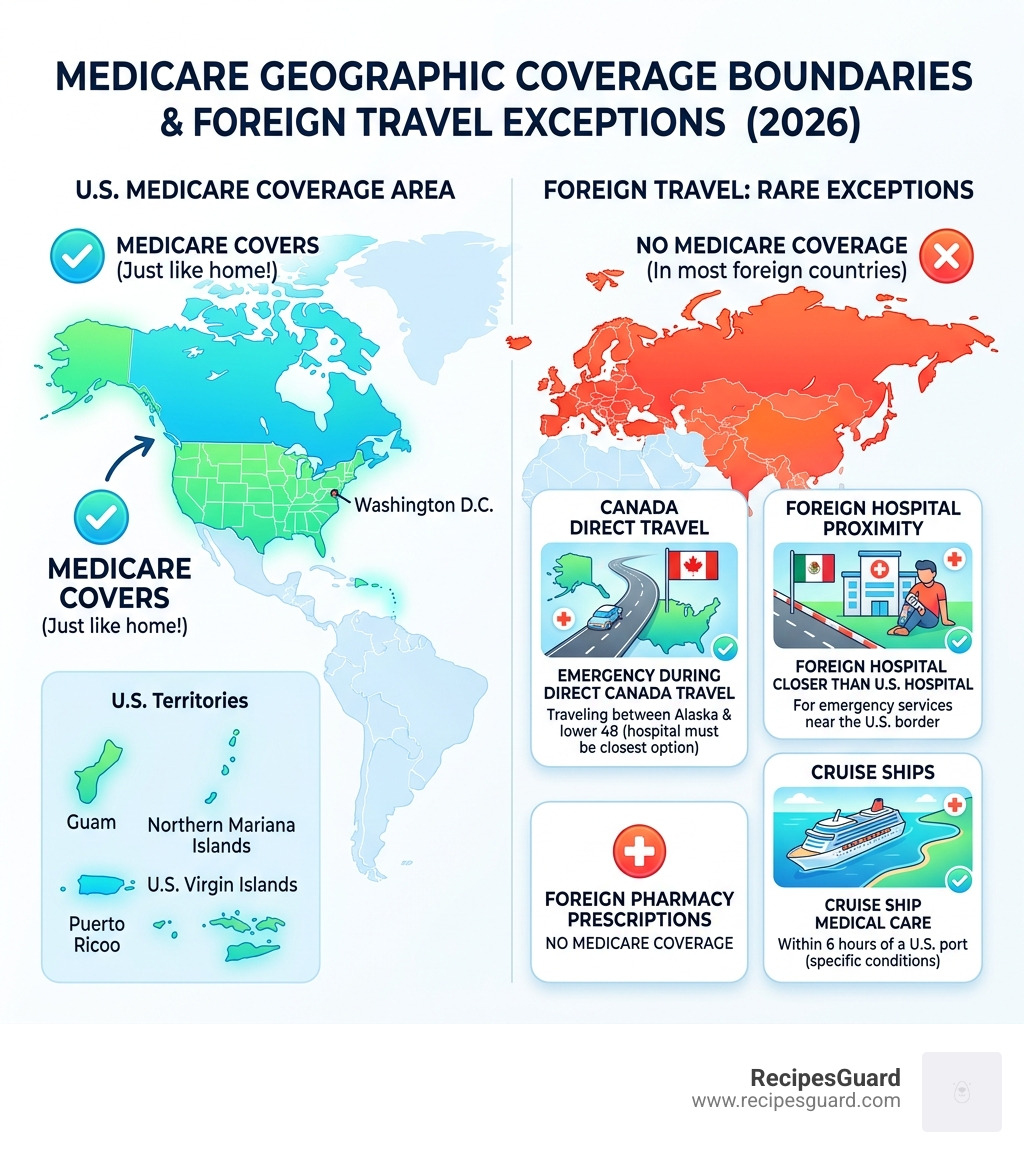
Original Medicare is designed for use inside the United States. That includes all 50 states, Washington D.C., and five U.S. territories. Anywhere else? You’re largely on your own.
Here’s a quick summary of what you need to know:
| Situation | Medicare Covers? |
|---|---|
| Medical care in Europe, Asia, or most of the world | No |
| Emergency at a foreign hospital closer than nearest U.S. hospital | Yes (rare exception) |
| Emergency during direct travel through Canada (Alaska to lower 48) | Yes (rare exception) |
| Care in U.S. territories (Puerto Rico, Guam, etc.) | Yes |
| Cruise ship care within 6 hours of a U.S. port | Yes (with conditions) |
| Prescription drugs from a foreign pharmacy | No |
This matters a lot if you’re traveling internationally and counting on Medicare to protect you. A medical emergency abroad can cost tens of thousands of dollars — and Medicare won’t pay a cent in most cases.
The good news is there are options. Supplemental plans like Medigap, some Medicare Advantage plans, and travel insurance can fill these gaps. But you need to know what you have before you board that plane.
Does Medicare Cover Emergency Care in Foreign Countries?

When we talk about “the United States” in the context of health insurance, Medicare has a very specific definition. It includes the 50 states and the District of Columbia, but it also extends to several U.S. territories. If you are visiting American Samoa, Guam, the Northern Mariana Islands, Puerto Rico, or the U.S. Virgin Islands, your Medicare coverage works exactly as it does back home.
However, once you cross into a foreign nation—whether it’s France, Mexico, or Australia—the rules change drastically. For the vast majority of international travelers, the answer to does medicare cover emergency care in foreign countries is a resounding “no.” According to the official Medicare Coverage Outside the US guide, the program generally does not pay for healthcare services or supplies if they are received outside these specific geographic boundaries.
Understanding Why Does Medicare Cover Emergency Care in Foreign Countries Only in Rare Cases?
Original Medicare, which consists of Part A (Hospital Insurance) and Part B (Medical Insurance), is a domestic program funded by U.S. taxpayers for use within the U.S. healthcare system. The geographic restrictions are baked into the law.
Medicare’s primary mission is to ensure that seniors and certain individuals with disabilities have access to medically necessary care within the American infrastructure. Because the U.S. government cannot regulate the quality, pricing, or billing practices of hospitals in London or Tokyo, they simply exclude those providers from the network. There are no “preferred providers” in foreign lands under Original Medicare.
Does Medicare Cover Emergency Care in Foreign Countries for Prescription Drugs?
One of the biggest shocks for travelers is discovering that Medicare Part D (prescription drug coverage) has zero “passport power.” Medicare drug plans are prohibited by law from covering any medications you purchase outside the U.S. If you lose your blood pressure medication in Rome, you will have to pay the full local price at a foreign pharmacy, and you cannot seek reimbursement from your Part D provider later.
There is one small silver lining: Medicare Part D does cover vaccines that are recommended by the Advisory Committee on Immunization Practices (ACIP). This includes certain “travel vaccines” like those for yellow fever, Japanese encephalitis, or chikungunya. However, we recommend getting these shots while you are still on U.S. soil to ensure they are covered.
The 4 Rare Exceptions Where Medicare Pays for Foreign Care
While the general rule is “no coverage,” the government does recognize four very specific, almost “geographic fluke” scenarios where they will step in.
| Exception | Requirement | Coverage Type |
|---|---|---|
| Border Proximity | You’re in the U.S. but a foreign hospital is closer for an emergency. | Part A & B |
| Alaska Transit | You’re traveling through Canada between Alaska and the lower 48. | Part A & B |
| Border Resident | You live in the U.S. and a foreign hospital is closer for non-emergencies. | Part A & B |
| Cruise Ships | The ship is in U.S. waters or within 6 hours of a U.S. port. | Part B only |
For more on these specific rules, you can review the Traveling with Medicare resources provided by Medicare Interactive.
Emergency Care Near the U.S. Border
Imagine you are hiking near the border in a remote part of a northern or southern state. You have a heart attack, and the absolute nearest hospital equipped to save your life is across the border in Canada or Mexico. In this rare instance, Medicare may cover your emergency inpatient care because the foreign facility was the most accessible “qualified” facility at the moment of the crisis.
Direct Travel Between Alaska and the Lower 48
This is a famous exception for those driving the Alcan Highway. If you are traveling “without unreasonable delay” by the most direct route between Alaska and another U.S. state and an emergency occurs, Medicare will cover your care in a Canadian hospital if it is closer than a U.S. one. If you are taking a leisurely three-week sightseeing tour through the Canadian Rockies, this exception might not apply, as it’s intended for direct transit.
Non-Emergency Care for Border Residents
This is the only exception that doesn’t require an actual “emergency.” If you live in the U.S. and a foreign hospital is closer to your home than the nearest U.S. hospital, Medicare may cover medically necessary inpatient services there, even if it’s for a planned procedure. This is quite rare but helpful for those in extremely rural border communities.
Medical Emergencies on Cruise Ships
Cruising is a favorite pastime, but does medicare cover emergency care in foreign countries when you are at sea? Only if you meet the “6-hour rule.” Medicare may pay for services if the ship is in a U.S. port or within 6 hours of arrival or departure from a U.S. port. Additionally, the doctor must be legally allowed to provide services on the ship. Once you are 7 hours out at sea, you are effectively in “international waters” as far as Medicare is concerned, and coverage stops.
How Medigap and Medicare Advantage Fill the Gaps
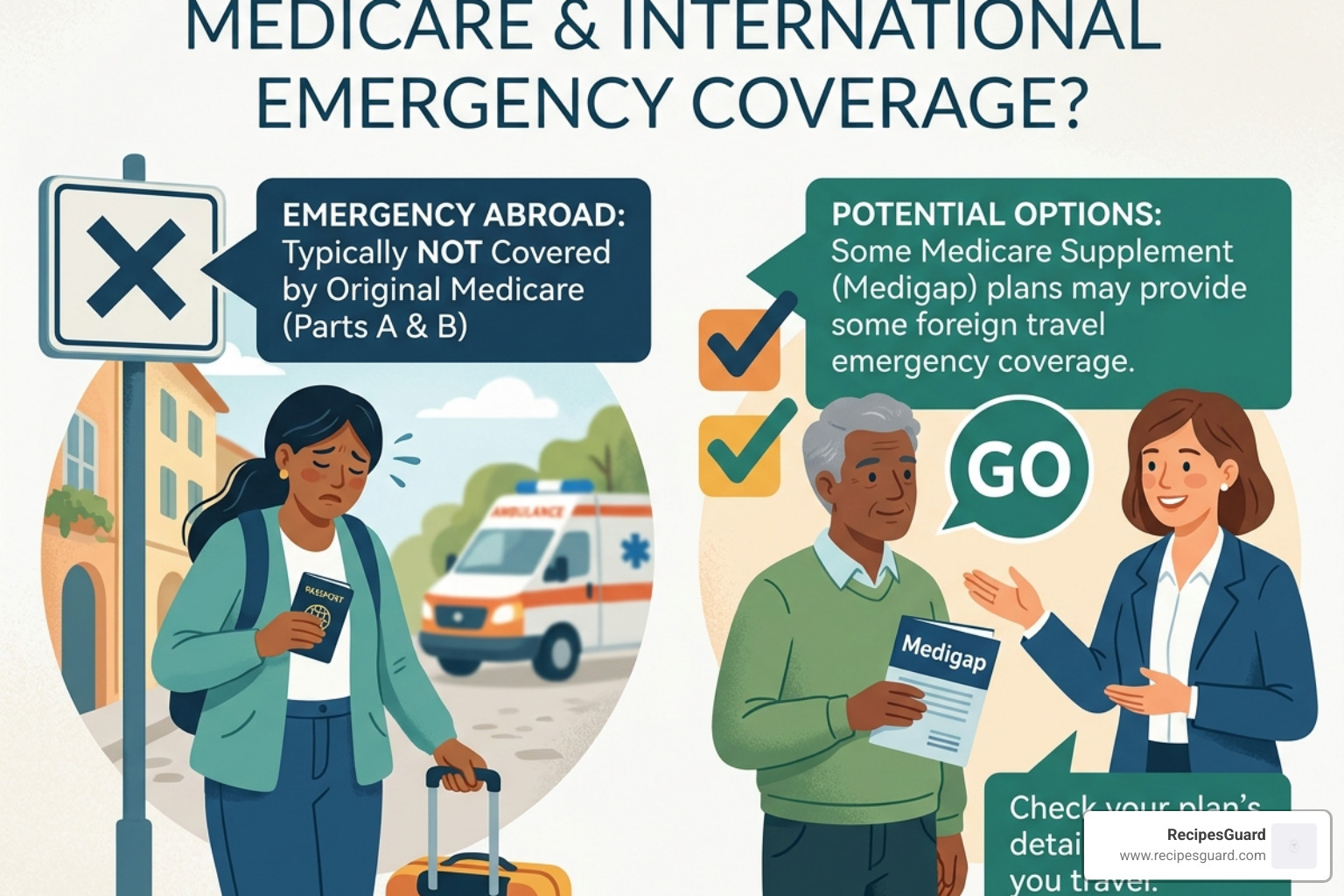
Since Original Medicare is so limited, most savvy travelers look to supplemental insurance. This is where the protection really starts. As noted in Medicare Coverage Outside the US: What You Need to Know, private plans offer the “safety net” that the government program lacks.
Medigap Foreign Travel Emergency Benefits
If you have a Medigap (Medicare Supplement) plan, you might already have international coverage and not even know it. Specifically, Medigap Plans C, D, F, G, M, and N provide foreign travel emergency healthcare.
Here is how it works:
- Coverage: It pays 80% of the billed charges for medically necessary emergency care.
- Deductible: You must first meet a $250 annual deductible.
- Lifetime Limit: There is a $50,000 lifetime maximum.
- Time Limit: The emergency must begin during the first 60 days of your trip.
If you are planning a trip longer than two months, or if your medical bills exceed $50,000 (which can happen quickly with an air ambulance), even Medigap might fall short.
Medicare Advantage International Coverage
Medicare Advantage (Part C) plans are offered by private companies. While they are required to cover everything Original Medicare covers (including those four rare exceptions), many plans go further. Some Advantage plans offer “worldwide emergency” coverage as an extra perk. However, these benefits vary wildly from one plan to another. You might face higher out-of-network costs or specific “urgent care” definitions, so we always recommend calling your plan provider before you book your tickets.
How to File a Claim for Foreign Medical Services
In the U.S., doctors are required by law to file Medicare claims for you. In a foreign country, they are under no such obligation. Most foreign hospitals will expect payment upfront—either by credit card or cash—and will hand you a pile of paperwork.
To get your money back, you must be the one to file the claim. You have a 12-month deadline from the date of service to submit your request to Medicare.
Required Documentation for Medicare Reimbursement
If you fall into one of the rare exception categories, you will need to submit Form CMS-1490S (Patient’s Request for Medical Payment). Along with this form, you must provide:
- Itemized Statements: A detailed list of every service received.
- English Translations: If the bill is in another language, you are responsible for providing a translation.
- Proof of Payment: Receipts showing you paid the bill.
- Letter of Explanation: A detailed account of why you needed care and why a foreign hospital was used.
- Physician Notes: Documentation showing the “medical necessity” of the treatment.
Essential Considerations for Students and Expats Abroad
At RecipesGuard, we specialize in providing guides for student travelers and insurance advisory services. While Medicare is primarily for seniors, many younger people with disabilities or specific chronic conditions also rely on it. We provide step-by-step claim filing tutorials to help navigate these complex waters.
If you are moving abroad permanently or for an extended period, you face a tough choice regarding Medicare Part B. Even if you live in a country with a nationalized health system (like Australia), you might want to keep paying your Part B premiums.
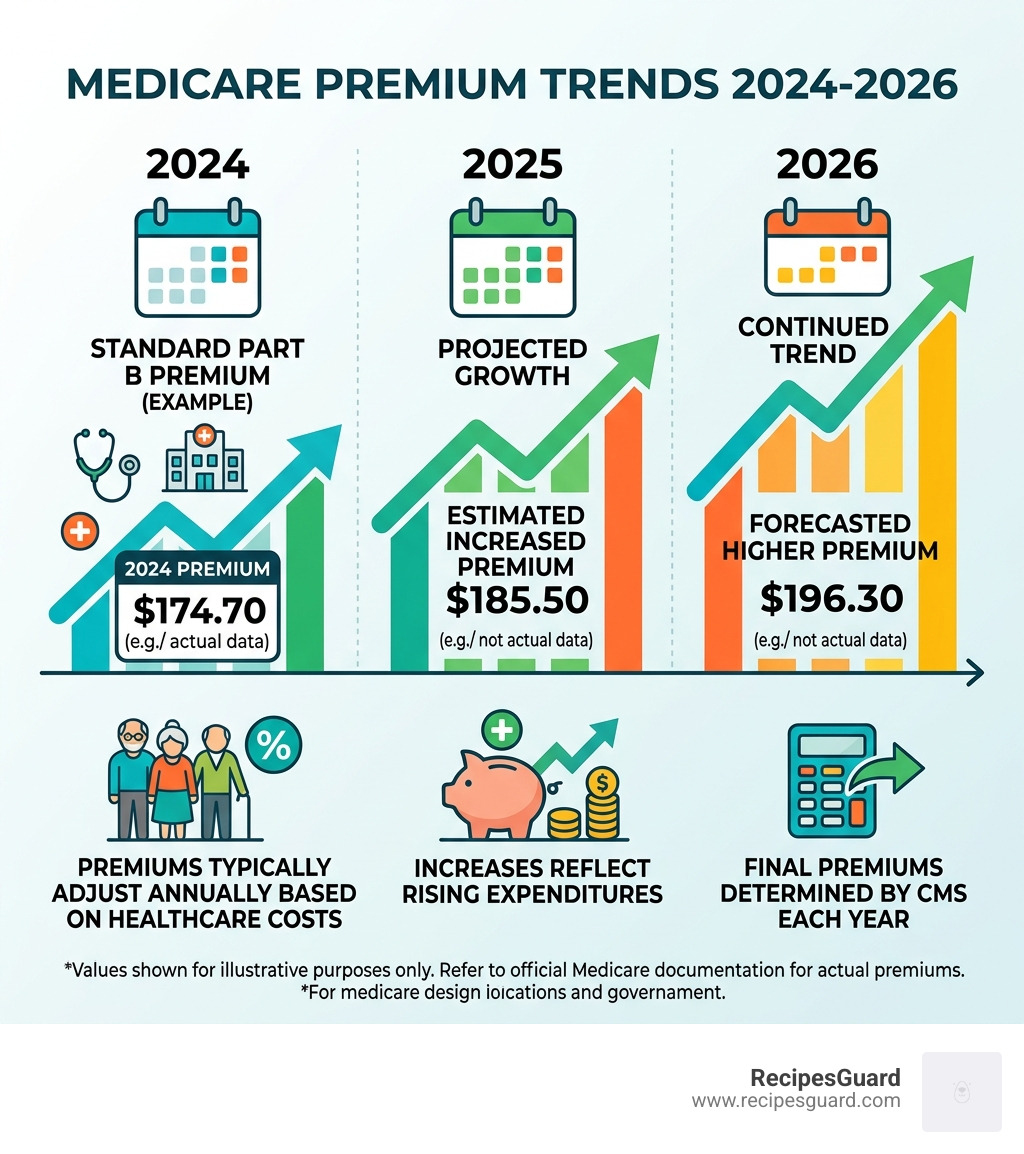
In April 2026, the standard Part B premium is a significant monthly expense (it was $174.70 back in 2024 and has risen since). If you stop paying while living abroad, you will face a 10% late enrollment penalty for every year you were gone when you eventually return to the U.S. and want to restart coverage. For military retirees, Tricare for Life can often act as a secondary payer for foreign care, which is a huge advantage.
For more tailored advice, you can find More info about insurance services on our main site.
Maintaining Medicare While Living Overseas
To keep your Medicare active, you must maintain U.S. residency or at least continue paying your premiums. If you turn 65 while living abroad, you generally have a three-month window after moving back to the U.S. to sign up for Part B without a penalty. We suggest keeping a “home base” address in the U.S. if you plan to travel frequently, as this simplifies the residency requirements.
Frequently Asked Questions about Medicare Abroad
Does Medicare cover dialysis treatments in foreign countries?
Generally, no. Medicare does not cover “routine” maintenance dialysis outside the U.S. The only exception is if you are admitted to a foreign hospital for an emergency that falls under one of the four exceptions mentioned earlier, and dialysis is required as part of that inpatient stay.
Will Medicare pay for a return ambulance to the United States?
No. Even if Medicare covers your initial stay in a Canadian or Mexican hospital, it will not pay for “repatriation”—the cost of an ambulance or medical flight to bring you back to a hospital near your home in the U.S. This is a major gap that only private travel insurance typically covers.
Does Medigap cover routine checkups during international travel?
No. Medigap’s foreign travel benefit is strictly for “medically necessary emergency care.” It does not cover routine physicals, teeth cleanings, or elective procedures while you are on vacation.
Conclusion
The truth is that while Medicare is a fantastic program at home, it is a poor travel companion. If you are relying solely on Original Medicare, you are essentially “uninsured” the moment you fly over the ocean.
To ensure you aren’t left with a life-altering medical bill, we strongly recommend a “belt and suspenders” approach: check your Medigap or Advantage plan for emergency benefits, and then purchase a dedicated travel insurance policy that includes medical evacuation. This ensures that if the worst happens, you can get the care you need and a flight back home without draining your retirement savings.
For more help navigating international claims and student-focused insurance needs, visit us for More info about insurance services. Safe travels!

My name is Bianca, and my journey into the world of fermentation and food safety began with a costly mistake. I once lost an entire season’s harvest of chili peppers because I relied on guesswork instead of science. That failure was my turning point.
