
The Baggage Claim Survival Guide for Students
What to Do When Your Bags Don’t Show Up: A Student’s Quick Guide
Filing a baggage delay claim is something every traveler hopes they’ll never need to do — but if your bag doesn’t show up at the carousel, acting fast makes all the difference.
Here’s how to get started right away:
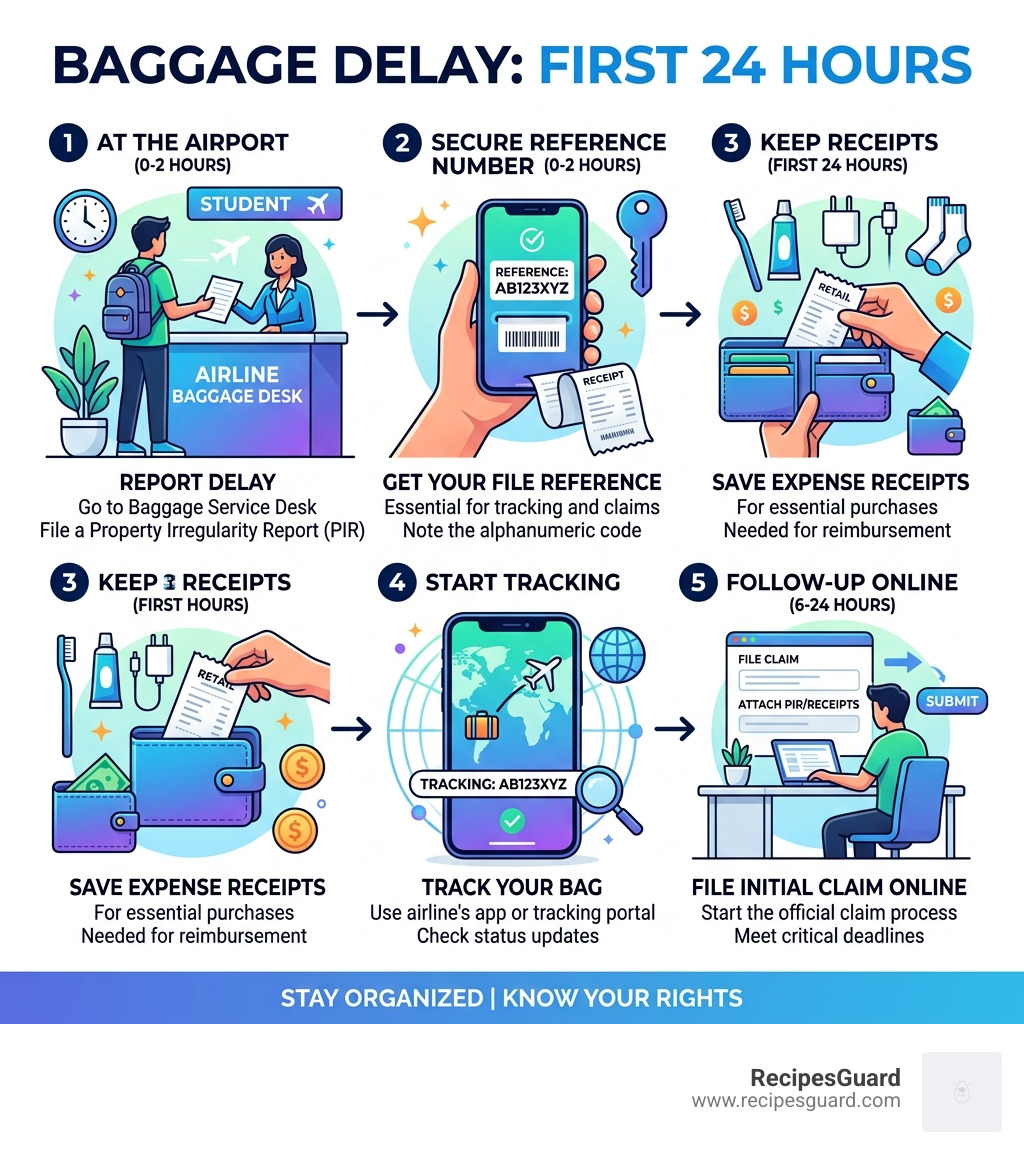
- Report it before you leave the airport — go to the airline’s baggage service desk and file a Property Irregularity Report (PIR)
- Get your file reference number — you’ll need this for every step that follows
- Keep all receipts for essential items you buy while your bag is missing
- File your claim online using the airline’s baggage portal within the required deadline (usually 21 days for international flights)
- Track your bag using the airline’s app or the WorldTracer portal
As a student traveling internationally, losing your luggage at the worst possible moment — arriving in a new country, jet-lagged, maybe already stressed — is genuinely awful. Your clothes, your textbooks, your chargers: all of it, just gone.
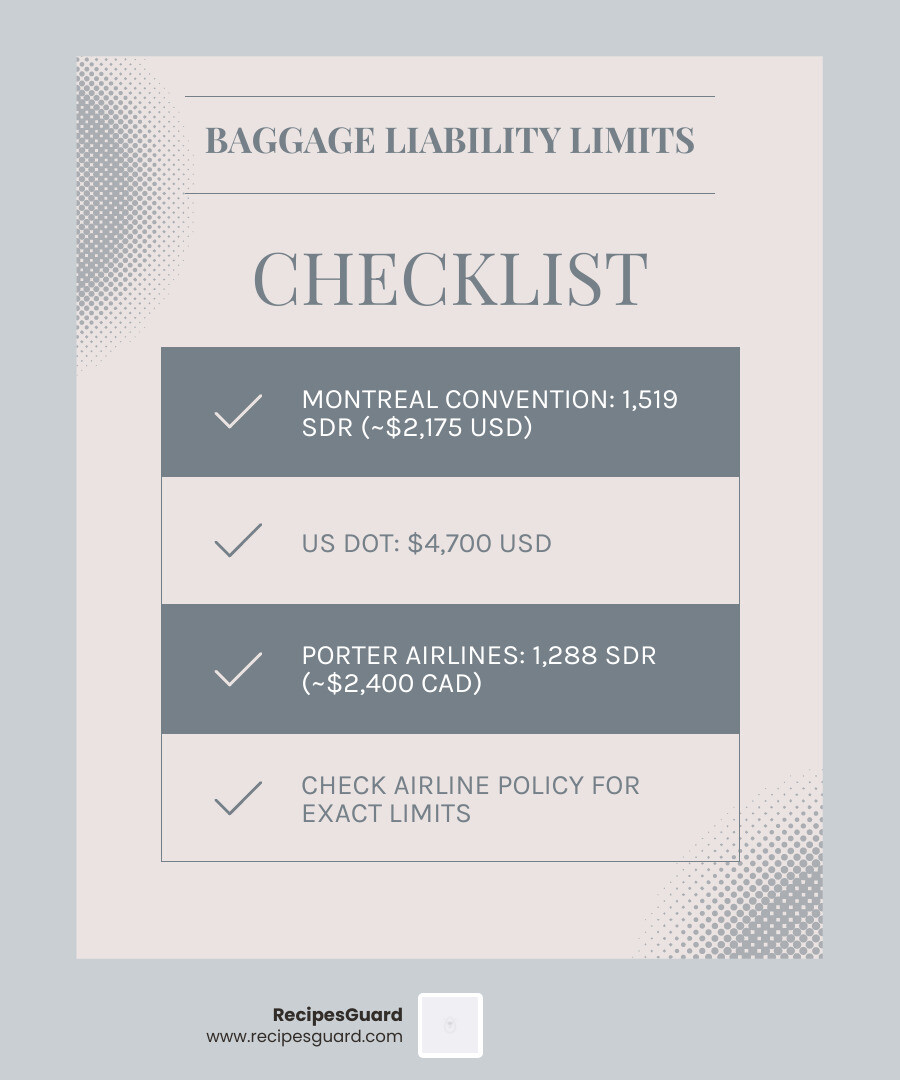
The good news? You have real rights here. Under the Montreal Convention, international airlines are liable for delayed baggage up to around 1,519 Special Drawing Rights (roughly $2,175 USD). On U.S. domestic flights, that limit goes up to $4,700 per passenger under DOT regulations.
But those protections only kick in if you file correctly and on time.
Most students don’t know the deadlines, don’t save their receipts, or wait too long to report. This guide walks you through every step so you don’t leave money on the table.
Immediate Actions: What to Do at the Airport

The moment the baggage carousel stops spinning and you realize your suitcase isn’t coming out is the moment your “mission” begins. In April 2026, air travel is busier than ever, and while most bags arrive safely, mishandling still happens. Take a deep breath. We are here to help you navigate this.
The most critical step you can take is to not leave the airport without a paper trail. Head straight to the airline’s baggage service counter. Even if there is a long line of other frustrated travelers, staying in that line is your best chance at getting reimbursed later.
Once you reach the agent, you will file a Property Irregularity Report (PIR). This is a formal document that records the delay. The agent will ask for your boarding pass and your baggage claim stickers (those little barcodes they stuck to your passport or ticket at check-in). Do not lose these!
The PIR will generate a unique PIR code (also known as a file reference number). This is usually a 10-digit alpha-numeric code that looks something like “SYDAC12345.” This code is your golden ticket; you will need it to track your bag and eventually file baggage delay claim paperwork for your expenses.
Many modern airlines now offer QR code reporting. If the line is too long, look for signs near the carousel. Scanning these codes often allows you to start the report on your phone immediately. However, we always recommend speaking to a human if possible to ensure your delivery address is entered correctly. According to the US Department of Transportation, filing a claim as soon as possible is the best way to protect your rights.
How to File Baggage Delay Claim: A Step-by-Step Tutorial

Once you’ve left the airport and reached your dorm or hostel, the real paperwork begins. Reporting the bag at the airport is just step one. To get money back for the things you have to buy (like a toothbrush or fresh socks), you must formally file baggage delay claim documents.
Here is our step-by-step breakdown:
- Check the Deadlines: For international flights, you generally have 21 days from the date your bag was delivered to submit a claim for expenses. If you wait until day 22, the airline can legally say “no.” For domestic flights within Australia or the US, these timelines can be even tighter depending on the airline’s specific rules.
- Access the Portal: Most major carriers use centralized systems. For example, Air Canada has a dedicated online portal where you can upload your PIR code and receipts.
- Itemize Everything: Don’t just say “I bought clothes.” List each item, its price, and why it was essential. As a student, “essential” might include a basic calculator for an exam or a formal shirt for an internship interview.
- Submit Supporting Documents: You will need to upload clear photos or scans of your boarding pass, the PIR receipt, and every single itemized receipt for your purchases.
The goal of the airline is to find your bag using the WorldTracer system, a global database that almost all airlines share. When you file baggage delay claim info, be as descriptive as possible about your bag’s appearance—mention that “RecipesGuard” sticker or the bright blue ribbon you tied to the handle!
Essential Information to File Baggage Delay Claim
When you sit down to fill out the forms, have these details ready. Missing one can result in a denied claim:
- The 10-digit File Reference Number: Not your booking code (PNR), but the specific baggage code from the PIR.
- Flight Numbers and Dates: Including any connecting flights where the bag might have gone rogue.
- Detailed Baggage Description: Brand, color, material, and any identifying marks.
- Permanent and Temporary Address: Tell them where you are staying now and where you live back home.
- Contact Details: A local phone number is best so the delivery driver can call you.
American Airlines and other major carriers emphasize that having your contact info inside the bag is just as important as the tag on the outside!
Tracking Your Progress After You File Baggage Delay Claim
Waiting is the hardest part. Fortunately, technology is on your side. Most airlines now offer real-time tracking through their mobile apps. If you flew with United Airlines, you can often see exactly which airport your bag is currently sitting in.
Pro-Tip for Students: We highly recommend using a Bluetooth tracker like an AirTag or Tile. Many airlines now allow you to share a tracking link from your “Find My” app directly in your baggage report. This can significantly speed up the process if the airline’s own scanners missed your bag.
If the app isn’t giving you enough info, you can use your file reference number on the WorldTracer website to see the official status. If it’s been more than 5 days, it’s time to start calling the airline’s central baggage office. Be polite but firm—remind them you are a student and these items are essential for your studies.
Understanding Your Rights and Compensation Limits
It’s important to know how much you can actually claim so you don’t overspend. Liability is governed by international treaties and domestic laws.
| Regulation/Airline | Liability Limit (Approx.) | Type of Flight |
|---|---|---|
| Montreal Convention | 1,519 SDR (~$2,175 USD) | International |
| US DOT Regulation | $4,700 USD | US Domestic |
| Porter Airlines | 1,288 SDR (~$2,400 CAD) | Domestic/Intl |
| United Airlines | $3,800 USD | US Domestic |
| WestJet | $250 CAD total interim | General Delay |
What is an SDR? It stands for Special Drawing Rights. It’s a “virtual” currency used by the International Monetary Fund. The value fluctuates, but as of April 2026, it remains the standard for international flight claims.
Important Note on Assistive Devices: If you are a student traveling with a wheelchair, hearing aids, or other mobility devices, the standard limits often do not apply. On many domestic flights, airlines are liable for the full original purchase price of these items if they are lost or damaged. Always notify the agent immediately if a mobility aid is involved. Delta Air Lines provides specific forms for these high-priority claims.
Reimbursement for Essentials: What Students Can Claim
A common myth is that airlines only give you a “$50 per day” allowance. This is false. Under the law, airlines must reimburse you for “reasonable” expenses. What is reasonable for a student might be different than what is reasonable for a CEO, but the core items remain the same.
What you SHOULD claim:
- Toiletries: Toothbrush, toothpaste, deodorant, soap, and basic skincare.
- Clothing: Enough underwear, socks, and a change of clothes to get you through the next few days. If you have a specific event (like a graduation ceremony or a job interview), a suit or dress may be considered reasonable.
- Study Materials: If your textbooks were in your checked bag and you have an assignment due, the cost of a temporary replacement or essential stationery can often be claimed.
- Cables and Chargers: If your laptop charger was in the bag, you can’t exactly do your homework without it!
What you generally CANNOT claim:
- Luxury Items: Don’t go out and buy a designer handbag and expect the airline to pay for it.
- Perishables: If you were carrying home-cooked food from your parents, the airline won’t pay for it if it spoils.
- Lost Wages: If you missed a shift at your part-time job because you were at the airport filing a claim, this is usually not covered.
Always keep itemized receipts. A credit card statement is usually not enough; the airline needs to see exactly what you bought. Qantas and other Australian-operating airlines are very strict about seeing the specific items listed on the receipt.
When Delayed Bags Become Lost Bags
Most bags are found within 24 to 48 hours. However, if your bag hasn’t appeared after 5 to 14 days, most airlines will ask you to fill out a more detailed “Baggage Declaration Form.” This is a deep dive into everything that was inside the bag.
After 21 days, the bag is officially considered lost in the eyes of the law. At this point, you are no longer just claiming for “interim expenses” (your toothbrush and socks); you are claiming for the total value of the bag and its contents, up to the liability limits mentioned earlier.
When a bag is officially lost, you are also entitled to a refund of your baggage fees. If you paid $60 to check that bag, the airline shouldn’t get to keep that money if they didn’t deliver the service. According to Virgin Australia, a bag is significantly delayed if it’s not back within 12 hours (domestic) or 15-30 hours (international), which can trigger fee refunds even before the bag is declared “lost.”
Frequently Asked Questions about Baggage Claims
How long does it take to process a baggage claim?
While every airline is different, most aim to resolve expense reimbursements within 30 to 45 days. However, if your bag is officially lost, the settlement process for the full contents can take several months as they verify the value of your items. Always follow up every two weeks if you haven’t heard back.
Are baggage fees refunded if my bag is late?
Yes, in many jurisdictions! In the US and Canada, if your bag is “significantly delayed” (usually 12+ hours for domestic), you are entitled to a refund of the fee you paid to check the bag. You often have to file a separate short form for this, so don’t forget to ask!
What should I do if my bag is damaged instead of delayed?
Damaged baggage has a much shorter reporting window. You usually must report damage in writing within 7 days of receiving the bag. Take photos of the damage immediately—ideally while still at the airport. Airlines generally won’t pay for “wear and tear” like minor scratches or broken zippers, but they are responsible for major structural damage or broken wheels.
Conclusion
At RecipesGuard, we know that as a student, your budget is tight and your time is valuable. Dealing with a baggage delay is a massive headache, but by following these steps, you can ensure you aren’t out of pocket for the airline’s mistake.
We specialize in helping students navigate the complex world of travel insurance and airline claims. Whether you are studying abroad in Melbourne or flying home for the holidays, knowing how to file baggage delay claim paperwork correctly is a vital travel skill.
Remember:
- Act fast and get that PIR code.
- Keep every single receipt.
- Be persistent with the airline.
For more step-by-step tutorials on protecting your student travels, visit our main site. Safe travels, and we hope your bags find their way back to you soon!
More info about travel insurance claims

My name is Bianca, and my journey into the world of fermentation and food safety began with a costly mistake. I once lost an entire season’s harvest of chili peppers because I relied on guesswork instead of science. That failure was my turning point.
