
Quick steps to recover costs for lost wallets and medical bills
Immediate student lost wallet claim steps on campus
When that initial wave of panic hits, the first five minutes are the most critical. We recommend taking a deep breath—seriously, it helps—and focusing on the student lost wallet claim steps that can prevent a bad situation from getting worse. On a bustling campus in April 2026, things move fast, but so can you. Start by retracing your steps immediately; check the last point of sale where you used your card, whether it was the campus cafe or a vending machine. Often, a wallet is simply sitting on a counter or tucked into a library carrel where you were recently studying.
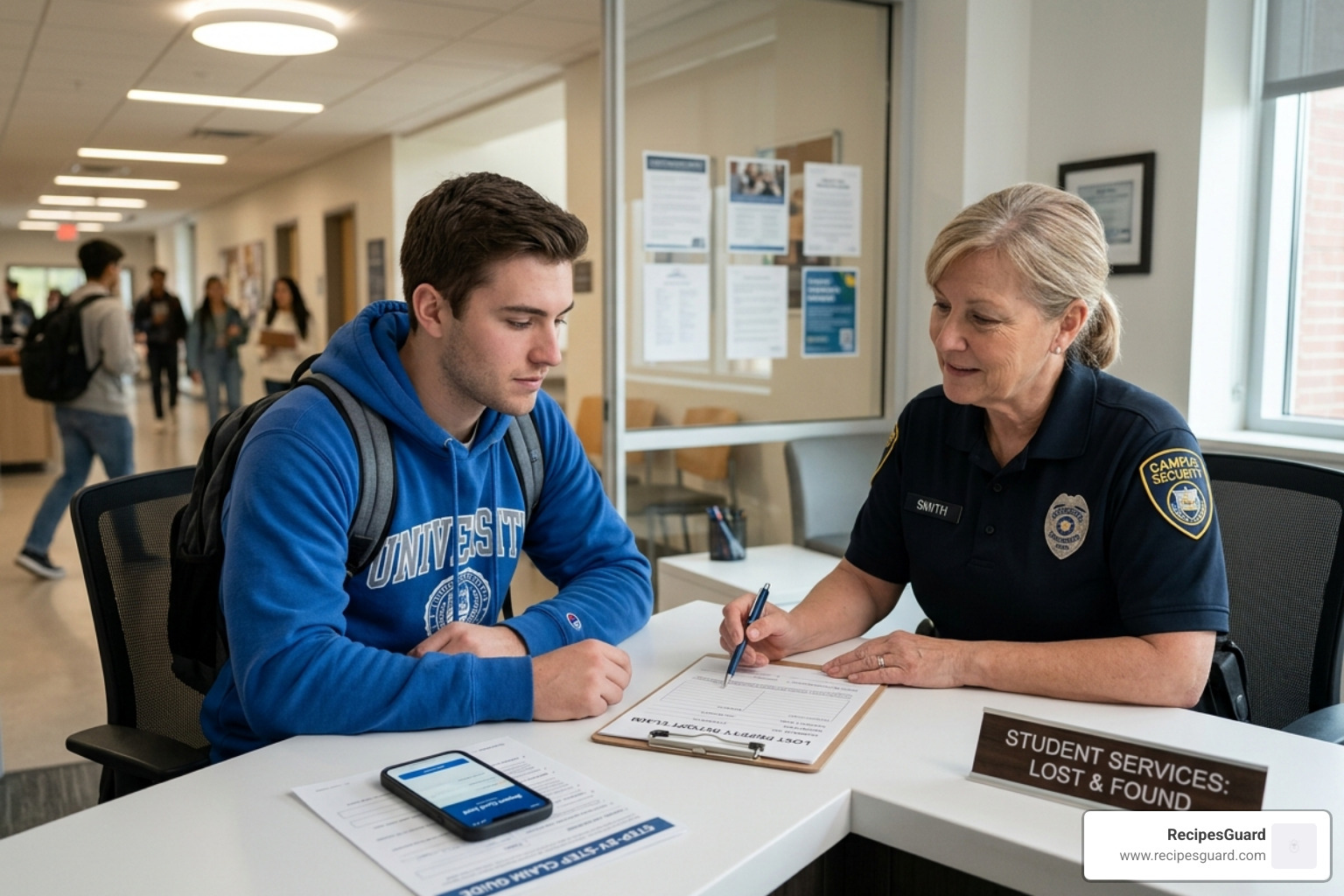
Locating campus lost and found repositories
Most students assume there is one giant box labeled “Lost and Found” somewhere in the basement, but university systems are usually decentralized. To find your wallet, you need to check several key locations:
- The Student Union or Hub: This is often the primary repository for items found in common areas.
- Campus Security/Police: If your wallet contains high-value items like cash over $100 or jewelry, university policy (like the Procedure AD2001 Lost and Found Items) often requires it to be turned over to campus police within 24 hours.
- The Library Circulation Desk: If you were studying late, this is the most likely spot for a kind stranger to drop off your belongings.
- Building Supervisors: If you lost it in a specific lecture hall, check with the administrative office for that specific building.
For a detailed look at how these repositories function, the Iowa State Lost and Found Guide provides an excellent roadmap for navigating campus-wide search efforts.
Securing digital accounts and mobile wallets
In 2026, your physical wallet is only half the battle. Your phone likely contains “digital versions” of your cards via Apple Pay or Google Wallet.
- Lock, Don’t Cancel (Yet): Use your mobile banking app to “Freeze” or “Lock” your debit and credit cards. This prevents new transactions but allows you to “Unlock” them instantly if you find your wallet under a library sofa ten minutes later.
- Two-Factor Authentication (2FA): If your wallet had your phone in it (or notes with passwords), immediately change your primary email and banking passwords.
- Check the Checklist: We suggest following a formal Lost or Stolen Wallet Checklist to ensure you haven’t missed a single account.
Reporting to authorities and securing your identity
Even if you are 90% sure you just misplaced your wallet, you must treat the situation as a potential identity theft risk. Reporting the loss creates a paper trail that is essential for insurance claims and legal protection. This documentation serves as the foundation for any future disputes regarding unauthorized transactions or fraudulent accounts opened in your name.

Notifying credit bureaus and banks
If your wallet isn’t found within the first hour, it’s time to involve the professionals. In Australia, you should contact your bank immediately to report the loss. According to Losing your wallet | Service NSW, notifying the proper authorities quickly is the best way to limit your liability for unauthorized charges. This is especially important if your wallet contained your Medicare card or other sensitive identification that could be used for identity takeover.
You should also contact the major credit bureaus—Equifax, Experian, and TransUnion. You can request a fraud alert, which tells lenders to verify your identity before opening new accounts, or a credit freeze, which completely blocks access to your credit report. In Australia, you can also contact IDCARE, a national identity and cyber support service, which provides free assistance to individuals who have had their personal information compromised.
| Feature | Fraud Alert | Credit Freeze |
|---|---|---|
| Cost | Free | Free |
| Duration | 1 year (renewable) | Until you lift it |
| Impact on Credit Score | None | None |
| Best For | Suspected loss | Confirmed theft |
Protecting against long-term fraud
Identity theft doesn’t always happen overnight. Sometimes, thieves wait months before using your information. As part of your student lost wallet claim steps, sign up for credit monitoring services. In April 2026, many banks offer this for free within their apps. Be wary of phishing scams; if you receive an email asking you to “verify your identity” to recover your lost wallet, it’s likely a scammer trying to get your new passwords.
For campus-specific reporting, check the Lost Wallet – Campus Community Police guidelines to see how an official report can help protect your student standing.
Replacing essential documents and student ID cards
Once the security fires are put out, it’s time to rebuild. Your student ID is often your key to everything: food, housing, and the library. Without it, your daily routine on campus can come to a grinding halt, making immediate replacement a top priority.

Student lost wallet claim steps for ID cards
Most universities, such as those detailed in the Student Lost, Stolen, Damaged Cards policy, charge a replacement fee (usually around $25 to $35). This fee often covers the cost of the smart-chip technology embedded in modern IDs. If you are facing financial hardship, some student unions offer emergency grants or vouchers to cover the cost of a replacement ID, so don’t hesitate to ask the registrar about available support programs.
- Deactivate Immediately: Use your university’s online portal (like GET Funds or Hokie Passport systems) to kill the old card. This protects your meal plan balance and “campus cash.”
- Visit the Registrar: You’ll likely need a secondary form of ID (like a passport or birth certificate) to get a new one printed.
- Access Rights: A new card means a new chip; you may need to wait 24 hours for your building access and library privileges to sync up.
Student lost wallet claim steps for government IDs
Replacing a driver’s license or passport is a bit more tedious.
- Driver’s License: Visit Service NSW or your local transport authority. You’ll usually receive a temporary paper license while the plastic one is mailed to you. Ensure you bring any remaining identification you have, such as a birth certificate or a utility bill, to prove your residency.
- Passports: If you are an international student and lose your passport, contact your embassy immediately. A lost passport is often cancelled globally the moment it is reported to prevent international fraud, and you may need to apply for an emergency travel document.
Filing insurance claims for lost items and medical expenses
This is where we at RecipesGuard specialize. Many students don’t realize that their student travel insurance or even some renters’ insurance policies may cover the cost of a lost wallet and its contents. If you are an international student or currently on a gap year, your travel insurance policy often includes specific provisions for “loss of personal effects.” This coverage can be a lifesaver, helping you recover the value of the wallet itself and the administrative fees associated with replacing your vital documents.
Documenting medical bills for reimbursement
If your wallet was stolen during an incident that resulted in injury, you might have medical bills piling up alongside your lost cash. To file a successful claim:
- Save Everything: Keep every hospital invoice, physician statement, and pharmacy receipt.
- Incident Report: Most insurers require a police report or a campus security report to prove the loss occurred. You can use tools like Online lost property reporting to generate a recognized report in Australia.
- Verification: Ensure the dates on your medical receipts match the date of the reported wallet loss.
Recovering costs for high-value wallet contents
While insurance rarely covers loose cash over a certain limit (often $100-$200), it may cover the replacement cost of the wallet itself, expensive handbags, or electronics that were lost at the same time. According to the Auswide Bank Lost Wallet Guide, keeping a record of what was in your wallet—including photos of your cards—can speed up the bank’s internal investigation and your insurance claim. This proactive documentation is a key part of the student lost wallet claim steps that many people overlook until it is too late.
Frequently Asked Questions about lost wallets
How long does campus lost and found hold items?
Holding periods vary by institution. For example, Penn State typically holds items for 60 days, while Virginia Tech may hold them for up to 120 days. After this period, unclaimed items are often sent to a university surplus sale, donated, or, in the case of cash, deposited into a scholarship fund. It is worth checking back multiple times, as items found by janitorial staff may take several days to reach the central repository.
Can I reverse a card cancellation if my wallet is found?
Generally, no. If you “Lock” or “Freeze” the card through an app, you can reverse it. However, once you call the bank and “Cancel” the card to order a replacement, the old card becomes a useless piece of plastic for security reasons. The bank will issue a new card number and CVV to ensure your account remains secure.
What should I do if my wallet was stolen off-campus?
If the theft occurred off-campus, your first stop is the local police precinct, not campus security. You will need a theft affidavit or a formal police report number to satisfy insurance requirements and to waive fees for replacing government IDs. Make sure to request a physical copy of the report, as many insurance providers will not accept a simple “incident number” without the full documentation of the event.
Conclusion
Losing a wallet is a rite of passage for many students, but it doesn’t have to be a financial disaster. By following these student lost wallet claim steps, you can secure your identity and potentially recover your costs. Time is of the essence; the faster you act, the less likely you are to suffer from fraudulent charges or identity theft. Whether you are dealing with a simple misplacement or a targeted theft, staying calm and methodical is your best defense.
In the future, consider “future-proofing” your gear. Use Bluetooth trackers like AirTags, switch to RFID-blocking wallets, and keep digital backups of all your important documents in a secure cloud folder. These small investments can save you hours of administrative headaches down the road.
If you’re feeling stuck with your insurance paperwork, we’re here to help. At RecipesGuard, we provide the More info about student insurance claims you need to navigate the fine print and get your money back. Stay safe, stay organized, and keep those wallets tucked away!

My name is Bianca, and my journey into the world of fermentation and food safety began with a costly mistake. I once lost an entire season’s harvest of chili peppers because I relied on guesswork instead of science. That failure was my turning point.
