
What You Need to Know About How to Submit a Claim
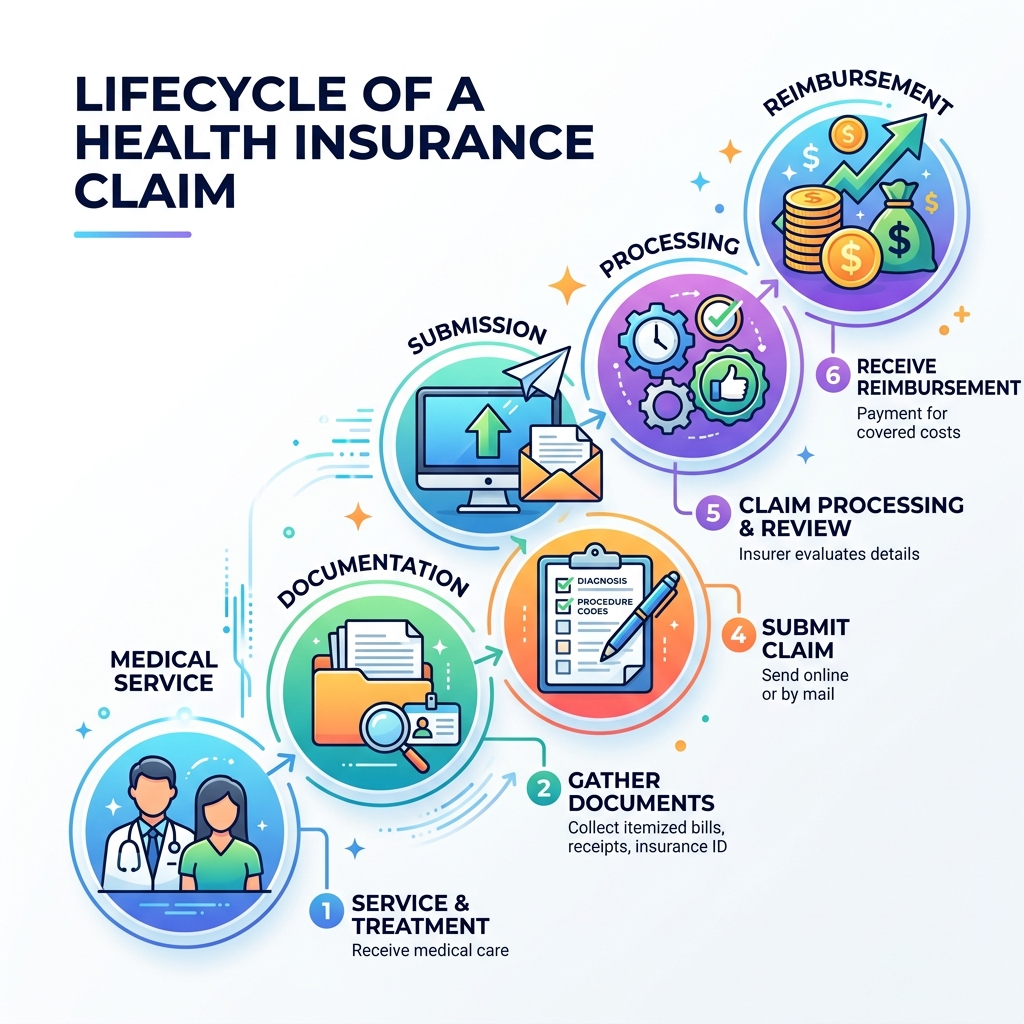
How to submit a claim in five basic steps:
- Get your documents — itemized bill, proof of payment, and your insurance ID
- Download the right form — such as CMS-1490S for Medicare or your insurer’s specific claim form
- Fill it out completely — include diagnosis codes, procedure codes, and provider details
- Submit it — online through your member portal, or by mail to the address on your insurance card
- Track it — log into your member account or call your insurer to check status
Most of the time, your doctor or provider submits the claim for you. You never have to think about it.
But sometimes — especially if you’re traveling abroad, seeing an out-of-network provider, or paying upfront out of pocket — you have to do it yourself.
That’s where most people get stuck.
The process isn’t hard, but the details matter. A missing code, a wrong date, or a late submission can mean your claim gets denied and you get nothing back.
Every insurer has its own forms, deadlines, and rules. Medicare gives you 12 months. CHAMPVA gives you 1 year from the date of care. Cigna requires participating providers to file within 90 days. Miss those windows and your reimbursement disappears.
This guide walks you through exactly what to do — step by step — so your claim goes through the first time.
When and Why You Need to Submit a Claim Yourself
In a perfect world, you’d walk into a clinic, show your card, and walk out without ever seeing a bill. But as we know, insurance is rarely that simple. While in-network providers usually handle the heavy lifting, there are several scenarios where the responsibility falls squarely on your shoulders.
One of the most common reasons you’ll need to know how to submit claim paperwork is when you use an out-of-network provider. If a doctor doesn’t have a contract with your insurance company, they aren’t obligated to file the paperwork for you. They might hand you a “superbill” and wish you luck. In these cases, you pay the full amount upfront and then ask your insurance company to pay you back.
Upfront billing also happens frequently during international travel. If you are a student studying in Australia or an Australian student heading overseas, you might find that local clinics require immediate payment. To get your money back, you’ll need to follow the How to Handle the Hospital Stay Claim Process and submit the request yourself.
Other situations include:
- FSA/HSA Reimbursements: If you’re using a Flexible Spending Account for dependent care or specific medical supplies, you often have to submit a manual claim to get reimbursed from your own tax-advantaged funds.
- Retroactive Eligibility: Sometimes you receive medical care while your insurance application is still being processed. Once you receive your card, you may need to submit claims for services received during that waiting period.
- Provider Refusal: In rare cases, even an in-network provider might experience technical issues or simply refuse to file a specific type of claim.
Whether you are dealing with private health cover or government programs, understanding the “why” helps you stay organized. For instance, those under specific federal programs can Learn More How to Submit a Claim – Blue Cross and Blue Shield’s Federal Employee Program to see how these rules apply to their unique situation.

The Step-by-Step Process of How to Submit Claim Paperwork
Once you realize you need to file the claim yourself, don’t panic. Take a deep breath and gather your supplies. We like to think of this as a scavenger hunt where the prize is your own money.
The first step is gathering the “superbill” or itemized statement. A standard receipt from a credit card machine isn’t enough. You need a document that lists the Provider’s Tax Identification Number (TIN), the specific procedure codes (CPT or HCPCS), and the diagnosis codes (ICD-10). These codes tell the insurance company exactly what happened and why it was medically necessary.
If you’re a student, the requirements might be slightly different depending on your policy. You can check What Documents Students Need for Travel Insurance Claims to ensure you aren’t missing any academic-specific paperwork.
Essential Documents for How to Submit Claim Requests
To ensure your claim isn’t tossed into the “denied” pile, you must include:
- The Claim Form: This is the “cover letter” for your request. For many private insurers, this is a version of the medical claim form. For Medicare, you’ll specifically need the Patient Request for Medical Payment form (CMS-1490S).
- Itemized Bill: As mentioned, this must have the CPT, HCPCS, and ICD-10 codes.
- Proof of Payment: A copy of your bank statement or a receipt showing the balance is $0.
- Explanation of Benefits (EOB): If you have a primary insurance and you are filing with a secondary insurer, you must include the EOB from the primary company.
How to Submit Claim Forms Online vs. Mail
We live in a digital age, and most insurance companies prefer you to use their member portals or mobile apps. For example, the SydneySM Health app allows users to snap photos of their receipts and submit everything in seconds. Using a portal is usually faster because the system checks for missing fields before you hit “submit.”
However, if you prefer the old-school route, you can always mail your claim. If you choose this method:
- Print clearly: Use black or blue ink.
- Original Signatures: Many government programs, like Medi-Cal or Medicare, require an original signature—not a photocopy.
- Make Copies: Never mail your only copy of a receipt. If the mail gets lost, your reimbursement goes with it.
- Check the Address: The mailing address is often found on the back of your member ID card.
For a more detailed walkthrough, check out our Step-by-Step Guide to Filing a Travel Insurance Claim as a Student.
Timely Filing Deadlines and Insurance-Specific Requirements
Timing is everything. If you submit a perfect claim but you’re one day late, the insurance company has the legal right to say “no.” These “timely filing limits” vary wildly between providers.
| Insurance Program | Filing Deadline |
|---|---|
| Medicare | 12 months (1 full calendar year) from the date of service. |
| Private Insurers (In-Network) | Often 90 days for the provider. |
| Private Insurers (Out-of-Network) | Usually 180 days for the member. |
| BCBS FEP | December 31 of the year following the year of service. |
| CHAMPVA | 1 year from the date of care or hospital discharge. |
| VA Disability | No strict deadline, but an “Intent to File” preserves your start date. |
For veterans, the process is a bit different. While you can file at any time, the VA took an average of 76.7 days to process disability-related claims in early 2026. To make sure you get the maximum back-pay, you should learn How To File A VA Disability Claim | Veterans Affairs and use the “Intent to File” form to lock in your effective date.
If you’re a student traveling, your window might be even shorter. Some travel policies require notification within 30 days of the incident. Reviewing How to Effectively File a Travel Insurance Claim as a Student can help you stay ahead of these ticking clocks.
Managing Multiple Insurances and Special Programs
Things get complicated when you have more than one insurance plan. This is called “Coordination of Benefits” (COB). The “Primary” insurance pays first, and the “Secondary” insurance covers what’s left.
If you are a student studying abroad, you might have a local student health plan and a travel insurance policy from home. In this case, you must submit the claim to your primary insurance first. Once they process it and send you an EOB, you send that EOB along with your claim form to the secondary insurer.
Special programs also have unique forms:
- TRICARE: Use the DD Form 2642. For more details, see Medical Claims | TRICARE.
- CHAMPVA: Requires very specific documentation, including the provider’s NPI and specific pharmacy details for prescriptions.
- Overseas Claims: Often require a proof of payment and sometimes a currency conversion calculation.
For those navigating international education, our guide on Study Abroad Claims: How to Get Your Credits and Cash Back provides a roadmap for these complex “dual-coverage” situations.
What to Do After Submitting: Tracking and Denials
After you hit submit, the waiting game begins. Most insurers allow you to Sign in to your member account to track the status. You’ll usually see statuses like “Received,” “In Processing,” or “Paid.”
If you see “Denied,” don’t panic. Claims are often denied for simple reasons:
- Missing information (like a provider’s TIN).
- The service requires “Clinical Documentation” or a doctor’s note.
- The filing deadline was missed.
- The service isn’t covered under your specific plan.
If you disagree with a denial, you have the right to an appeal. This usually involves writing a letter explaining why the service should be covered and providing additional medical records. If the claim was due to an accident, you might need to provide extra details on how the injury occurred. Check How to Handle an Insurance Claim After an Accident for tips on winning these specific disputes.
Frequently Asked Questions about How to Submit Claim Forms
How long does it take to process a claim?
While the VA average is around 76.7 days, private insurers are usually faster, often processing clean electronic claims within 30 days. Paper claims mailed in can take 45 to 60 days. To speed things up, ensure your form is “clean”—meaning it has no errors and all required attachments. You can learn more about managing expectations in our guide: How to Master the Student Travel Claim Process.
What is an Explanation of Benefits (EOB)?
An EOB is not a bill. It is a document sent by your insurer explaining what portion of the medical service they paid and what portion you are responsible for. It will show how much was applied to your deductible and any co-insurance amounts. You should always Sign in to your member account to compare your EOB against the bill you receive from the doctor to ensure you aren’t being overcharged.
Can I submit a claim for services received overseas?
Yes! Most travel and student insurance plans are designed for this. However, you must have an itemized bill (translated into English if possible) and proof of payment. Because overseas providers aren’t in your network, you will almost always have to pay upfront and file the claim yourself. For emergencies, see The International Student Guide to Emergency Claims and Evacuations.
Conclusion
Knowing how to submit claim paperwork is a vital skill for anyone navigating the modern healthcare system, especially students and frequent travelers. While it might seem like a mountain of bureaucracy, following a systematic approach—gathering the right codes, meeting deadlines, and keeping digital copies—ensures you get the money you’re owed.
At RecipesGuard, we specialize in making these complex processes simple for students. Whether you’re studying in Australia or exploring the world, we’re here to provide the step-by-step tutorials you need to handle insurance with confidence. Ready to get started? Start your claim journey with RecipesGuard today and make sure your next claim is a success.
