
What You Need to Know About an Illness Claim Student Travel Situation
Illness claim student travel is something most students never think about — until they’re sick in a foreign country with a stack of medical bills and no idea what to do next.
Here’s a quick answer if you need it fast:
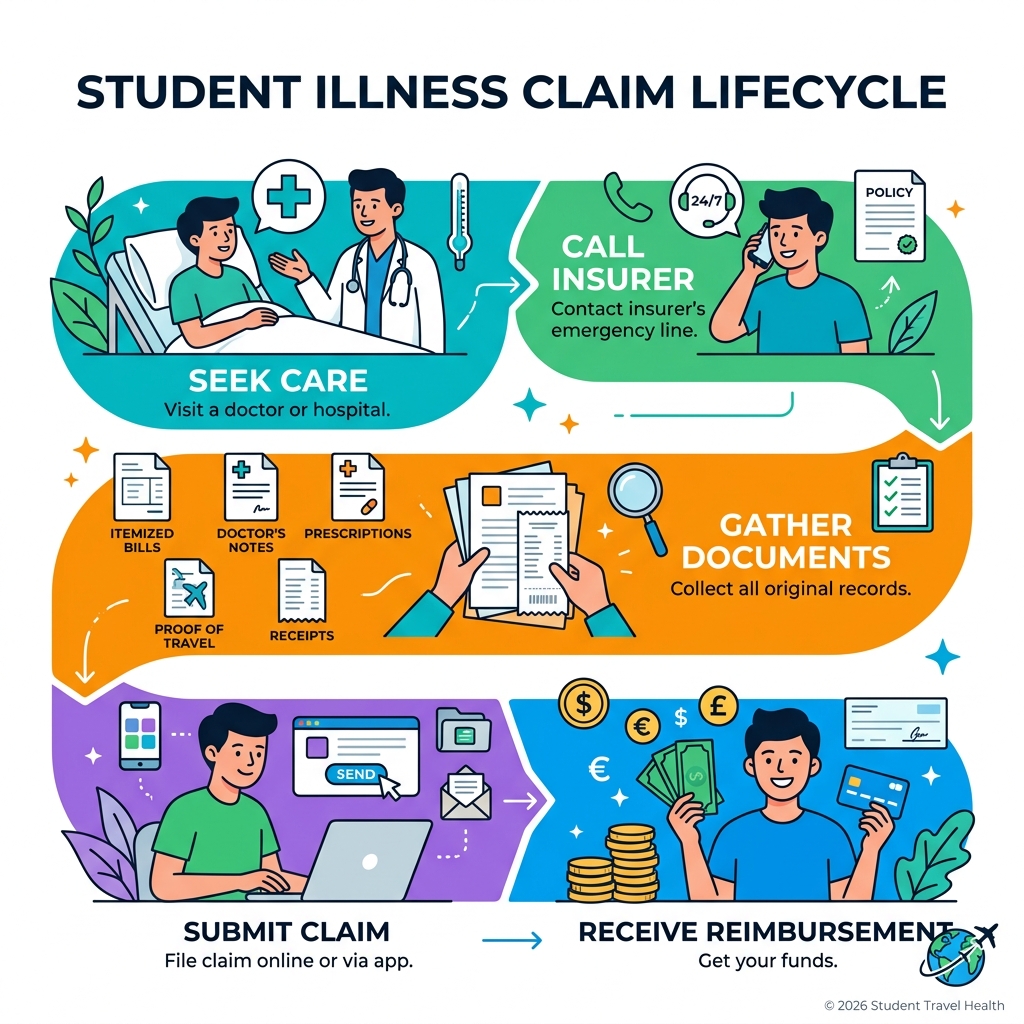
How to file a student travel illness claim (summary):
- Seek medical care first — your health comes before paperwork
- Call your insurer’s 24/7 emergency line — give them your policy number, school name, and location
- Save every document — itemized bills, doctor’s notes, prescriptions, and proof of travel
- Submit your claim — through your insurer’s online portal, app, or by email, with all required documents attached
- Track your claim — most insurers process claims within 15 business days
More than 300,000 American students study abroad every year. Most go without incident. But illness doesn’t check your travel schedule.
A bad flu, an infection, or something more serious can turn a semester abroad into a financial nightmare — fast. A medical evacuation alone can cost $100,000 or more. Without the right insurance and a clear claims process, that bill lands on you.
The good news? Most student travel insurance plans are built to handle exactly this. The tricky part is knowing how to use them when you actually need them.
This guide walks you through everything — from understanding what’s covered, to filing your claim correctly, to getting your money back without delays.
Understanding Your Coverage: What Illnesses Are Included?
When we talk about an illness claim student travel policy, we aren’t just talking about the common cold. Most comprehensive student plans are designed to mirror the health coverage you might have back home, but with a “travel twist.” Generally, these policies cover any “new” illness that manifests while you are outside your home country.
This includes common infections, the flu, appendicitis, and more serious conditions that require hospitalization. One of the most frequent questions we hear is: “Does it cover the big stuff?” The answer is usually yes. Modern plans treat COVID-19 and other pandemics just like any other sickness. This means if you contract a virus while studying in London or Sydney, your medical expenses and potential quarantine costs (up to certain limits, often around $200 a day) are typically eligible for a claim.
However, it is vital to check if your plan provides comprehensive medical coverage. Some budget plans might only cover accidents, leaving you high and dry if you catch a nasty fever. According to the CDC medical insurance guide, the cost of international medical care varies wildly, and having a plan that covers basic illness is the bare minimum for any student traveler.
Pre-existing Conditions and Limitations
This is where things can get a bit sticky. A “pre-existing condition” is generally any illness or injury you had before your policy started. Most individual student travel plans have a “look-back window”—usually 6 to 12 months—where they check your medical history. If you’ve been treated for a chronic condition during that time, a claim related to that condition might be denied.
However, many university-sponsored plans are more lenient. They often include a “stability period.” If your condition has been stable (no changes in medication or hospital visits) for a set period, you might still be covered. It’s essential to understand medical emergency coverage details before you fly, as the last thing you want is a claim denial because of a prescription you’ve had for years.
Mental Health and Pandemic Provisions
We are happy to see that the industry is catching up with the times. Mental health is increasingly recognized as a vital part of student well-being. Many modern student plans now include coverage for mental health crises, including inpatient and outpatient care. Some even offer telehealth services, allowing you to speak with a therapist in your own language while you’re thousands of miles from home. If you are feeling overwhelmed, resources like SAMHSA provide excellent guidance on managing your mental health.
Regarding pandemics, most insurers now treat COVID-19 as a standard illness. If you are under 50, many plans will cover your medical expenses even if there is a high-level travel advisory in place. This includes coverage for physician visits, diagnostic tests, and even trip interruption if you are medically required to isolate.
Immediate Steps: What to Do When You Fall Ill Abroad
Falling ill in a foreign country is scary, but having a plan makes it manageable. Your first priority is always your health. If it’s an emergency, go to the nearest hospital immediately. Once you are stable—or if the illness is non-urgent—your very next step should be contacting your insurance provider’s 24/7 assistance line.
Most insurers partner with global response centers (like On Call International or CanAssistance) to provide medical monitoring. They don’t just pay the bills; they talk to your doctors to ensure you’re getting the right care. For a deeper dive into this, check out our emergency claims and evacuations guide.

Contacting Emergency Assistance for an Illness Claim Student Travel
When you call the hotline, have your “Travel Health Passport” or ID card ready. They will ask for:
- Your full name and policy number.
- Your school’s name (especially for university-sponsored plans).
- Your current location and a phone number where you can be reached.
- A brief description of your symptoms.
The assistance team can often set up “direct billing” or “cashless payments,” meaning they pay the hospital directly so you don’t have to cough up thousands of dollars upfront. We always recommend following these tips for medical emergencies to ensure your claim stays on track from minute one.
Navigating Medical Evacuation
In some cases, local clinics might not have the equipment needed to treat you. This is where “Medical Evacuation” kicks in. If the insurance company’s medical team decides you need better care, they will arrange transport to the nearest adequate facility—or even back home.
As we mentioned, an evacuation can easily top $100,000. Most student plans provide at least $250,000 in evacuation coverage, and some go up to $1 million. Some plans even include a “bedside visit” benefit, which pays for a family member to fly to you if you are hospitalized for more than a few days. Understanding how to handle medical emergencies abroad is the difference between a stressful week and a financial catastrophe.
How to File an Illness Claim Student Travel: A Step-by-Step Guide
Once the doctor has seen you and you’re on the mend, it’s time to tackle the paperwork. Filing an illness claim student travel doesn’t have to be a headache if you stay organized.
- Gather your documents: Collect everything from the hospital (more on this below).
- Fill out the claim form: Most insurers have a digital portal or an app. This is much faster than mailing paper forms.
- Submit the “Proof of Loss”: This includes your itemized bills and proof that you were actually traveling (like your flight itinerary).
- Wait for review: Most claims are reviewed within 15 business days.
For a more detailed walkthrough, we’ve put together a step-by-step claim guide and a general overview of how to file a claim.
Managing the Illness Claim Student Travel Process
After you submit, you’ll receive an “Explanation of Benefits” (EOB). This document explains what the insurance company paid and what (if anything) you owe. If you had to pay out-of-pocket, this is the stage where they issue your reimbursement.
One thing to watch out for is the deductible. Many university plans have a $0 deductible, meaning they pay from the first dollar. Private plans might have a $50 or $100 deductible. We recommend mastering the claim process by checking your EOB against your receipts to ensure every expense was captured.
Essential Documentation for Your Illness Claim
The number one reason claims get delayed? Missing paperwork. To the insurance company, if it isn’t written down, it didn’t happen. You need to be a bit of a hoarder when it comes to medical receipts.
At a minimum, you will need:
- Itemized Bills: A bill that shows exactly what you were charged for (e.g., $50 for the consultation, $20 for blood tests).
- Medical Records/Physician Statement: A note from the doctor explaining your diagnosis.
- Prescription Receipts: If you bought medicine, keep the pharmacy receipt and the doctor’s prescription.
- Proof of Travel: A copy of your visa, I-20 (for students in the US), or your passport entry stamp.
We’ve created a handy required documents list you can keep on your phone.
Proof of Diagnosis and Treatment
If your documents are in a language other than English, you may need to provide a translation. Some insurance companies handle this for you, but others require you to provide a certified translation. Always ask your insurer before paying for a translation service! Being thorough here is the key to effectively filing a claim and getting your money back quickly.
Comparing Coverage Limits and Industry Standards
Not all plans are created equal. When shopping for insurance, you’ll see numbers ranging from $50,000 to $1,000,000. For most students, a $50,000 limit is the bare minimum, but it can be eaten up quickly by a single night in a high-end hospital.
| Feature | Basic Plan | Comprehensive Plan |
|---|---|---|
| Medical Limit | $50,000 – $100,000 | $250,000 – $1,000,000 |
| Deductible | $100 – $250 | $0 – $50 |
| Medical Evacuation | $100,000 | $500,000+ |
| COVID-19 Coverage | Limited | Full |
| Mental Health | Often Excluded | Included |
We generally recommend looking for affordable emergency coverage that offers at least $250,000 in medical limits to ensure you’re protected against major illnesses.
University vs. Private Plan Benefits
Many students are automatically enrolled in a university plan. These are often fantastic because they are “primary” coverage, meaning you don’t have to file with your home insurance first. They also frequently include benefits for “Family Emergency Return,” which pays for you to fly home if a close relative becomes ill.
However, if your school’s plan is basic, a private plan might offer better “cash back” options for things like lost luggage or trip delays. Check out our study abroad cash back tips to see how to maximize your benefits.
Avoiding Denials: Why Claims Get Rejected
Nothing is more frustrating than a rejected illness claim student travel. To keep your money in your pocket, avoid these common pitfalls:
- Late Notification: Many plans require you to notify them within 24-48 hours of a hospitalization.
- Non-Essential Care: Routine check-ups or elective procedures are almost never covered.
- Substance Influence: If an illness or injury is related to drug or alcohol use, the claim will likely be denied.
- Illegal Activities: If you’re injured while doing something illegal in that country, you’re on your own.
Understanding these rules is part of the visa claims 101 knowledge every student should have before they depart.
Frequently Asked Questions about Student Illness Claims
Does student travel insurance cover COVID-19?
Yes, most modern plans treat COVID-19 just like any other illness. This includes coverage for testing (if symptomatic), doctor visits, and hospitalization. Some plans also offer a daily allowance if you are forced to quarantine in a hotel.
Are mental health crises covered while studying abroad?
Increasingly, yes. Many comprehensive plans now include coverage for mental health conditions, including counseling and emergency stabilization. Always check the “Exclusions” section of your policy to be sure.
What happens if I need to be evacuated to a different country?
If the local medical facilities cannot treat your condition, the insurance company’s medical team will coordinate an evacuation to the nearest “center of excellence.” This could be in a neighboring country or even your home country, depending on the severity of the illness.
Conclusion
At RecipesGuard, we believe that every student deserves to focus on their studies and culture, not on medical bills. We are an insurance advisory dedicated to making the illness claim student travel process as simple as possible. Whether you are studying in the bustling streets of Tokyo or the historic halls of Oxford, we provide the student travel insurance FAQs and step-by-step tutorials you need to navigate insurance.
Don’t let a fever or the flu derail your dreams. Stay informed, keep your receipts, and always carry your insurance ID card. If you’re ready to protect your next adventure, you can start your claim guide here. Safe travels!
