
Why Every Student Needs a Guide to Student Claims
A solid guide to student claims can be the difference between recovering hundreds (or thousands) of dollars — and losing money you’re legally entitled to get back.
Here’s a quick overview of the main types of student claims and how to start each one:
| Claim Type | What It Covers | First Step |
|---|---|---|
| Health insurance | Medical bills, prescriptions, out-of-network care | Gather itemized bill + proof of payment |
| Tuition reimbursement | Strike disruptions, COVID, school closures | Document lost teaching hours or closure dates |
| Academic integrity | Violations, appeals, policy disputes | Access your institution’s official claims system |
| Student finance | Overpayments, changed circumstances | Download claim form from loan provider |
| School closure | STRF fund, transcript recovery, loan discharge | Request records from custodian immediately |
| Education complaints | Poor teaching, facilities, course cancellations | Start with your provider’s internal process |
Students face a surprising number of situations where money, records, or academic standing is on the line. A medical emergency abroad. A lecturer strike wiping out weeks of teaching. A school that suddenly closes. An academic integrity accusation you need to respond to.
Most students don’t know they have the right to claim — or they give up because the process feels overwhelming.
But here’s the thing: most claims follow a predictable pattern. Gather your evidence. Submit on time. Escalate if needed. This guide walks you through every type of student claim, step by step, so you know exactly what to do.

Discover more about guide to student claims:
Navigating the Landscape: A Comprehensive Guide to Student Claims
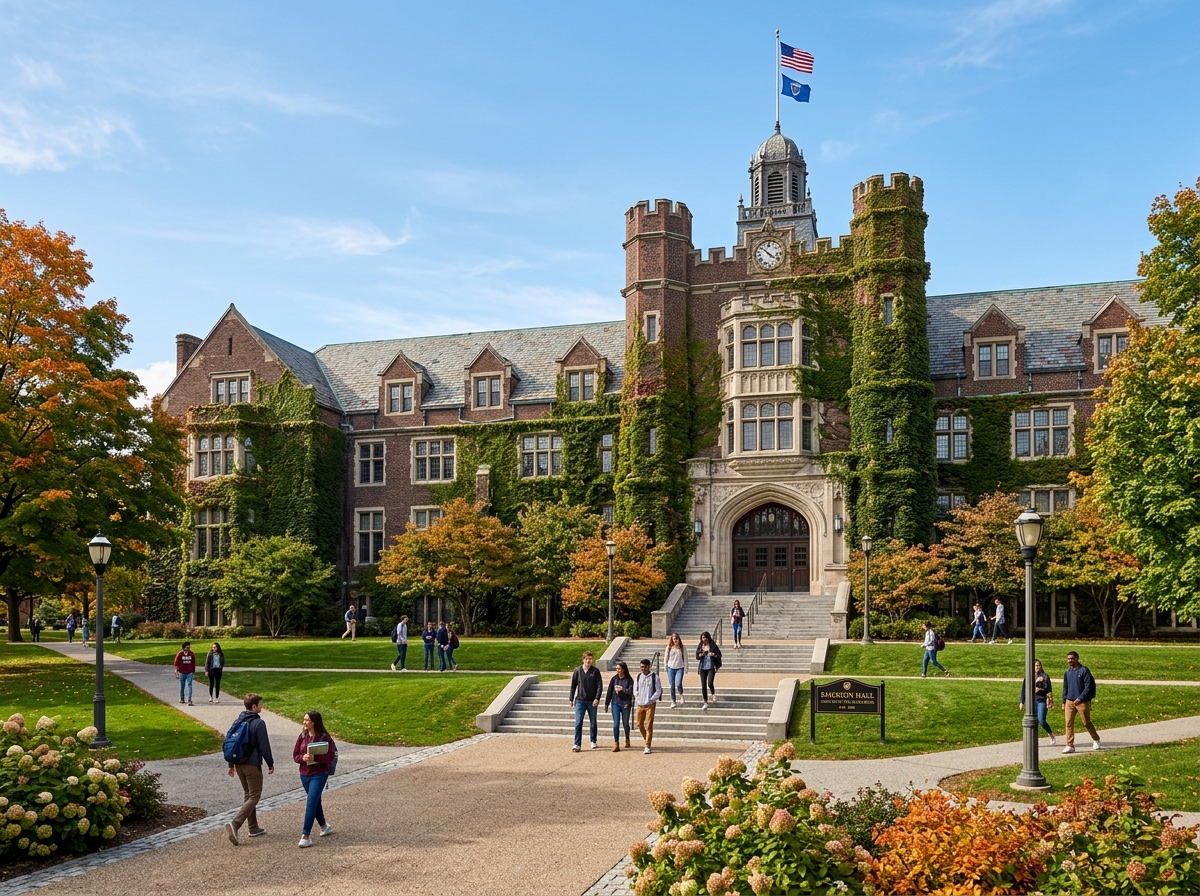
Navigating university life is hard enough without having to figure out how to get your money back for a cancelled class or a medical bill. When we talk about a guide to student claims, we are looking at a broad landscape. This includes everything from health insurance reimbursements and tuition refunds to responding to academic integrity allegations or dealing with the fallout of a school closure.
At RecipesGuard, we see these claims as more than just paperwork; they are a way to protect your rights as a consumer of education. Whether you are dealing with a provider in Australia or navigating overseas health cover, the principles remain the same: you deserve what you paid for. If a university fails to deliver the promised experience—perhaps due to poor facilities or course cancellations—you have the right to seek compensation. For a deeper look at how to handle these specific disputes, check out our RecipesGuard Guide to University Complaints and Compensation.
Essential Steps in Your Guide to Student Claims
While every claim is unique, most follow a standard trajectory. We recommend starting with these four pillars:
- Document Gathering: This is the “make or break” phase. You need itemized bills, receipts, emails from faculty, or even a log of cancelled sessions. If it isn’t written down, it didn’t happen.
- Formal Notification: Most institutions require you to try an “informal” resolution first. Talk to your tutor or the billing office. If that fails, move to the formal internal process.
- Internal Processes: Follow the school’s handbook. There are often specific webforms or portals for submitting claims. For example, at King’s College London, students must use a specific Stage 2 webform for industrial action claims.
- External Escalation: If the university rejects your claim, don’t panic. In many regions, there are independent agencies like the Office of the Independent Adjudicator (OIA) in the UK or Study Complaints (New Zealand) that provide free dispute resolution.
For those studying away from home, the process can feel even more daunting. We’ve simplified this in our guide on how overseas-student-claims-made-easy.
Common Pitfalls to Avoid in Your Guide to Student Claims
We’ve seen many valid claims get rejected for simple mistakes. The most common “claim killers” include:
- Missing Deadlines: Many medical claims must be submitted within 90 days of service. Tuition complaints often have strict windows (e.g., before the end of the academic year).
- Incomplete Evidence: Sending a credit card statement isn’t enough for a medical claim; you need the itemized bill showing the diagnosis and procedure codes.
- Vague Descriptions: Don’t just say “the class was bad.” Say “three out of ten scheduled lectures were cancelled without replacement materials.”
- Ignoring Policy: Every university has a “Student Contract.” If you don’t reference their specific failure to meet that contract, your claim is weaker.
To ensure you don’t fall into these traps, see our tutorial on how-to-submit-claim-paperwork-and-actually-get-paid.
Academic Integrity and Argumentative Claims
In academia, a “claim” isn’t just about money—it’s about your ideas. A strong academic argument requires a debatable claim. This isn’t a statement of fact (like “the sun is hot”), but a position that requires proof (like “renewable energy subsidies are the most effective way to combat climate change”).
To build these claims, we recommend the PIE structure:
- Point: The specific idea that furthers your thesis.
- Illustration: The evidence (data, quotes, or primary sources).
- Explanation: How the evidence proves your point.
When choosing evidence, use the STAR criteria: Is it Sufficient, Typical, Accurate, and Relevant? If you find yourself on the receiving end of a complaint regarding your academic work, refer to our RecipesGuard Learner Complaints Guide.
Responding to Academic Integrity Violations
Being accused of an academic integrity violation is stressful. Institutions like Penn State have centralized systems where you can respond to claims. Modern policies now focus heavily on Generative AI and “smart glasses.” Unless specifically permitted in your syllabus, using AI to write your essays or wearing smart glasses during an exam can lead to a violation claim.
If you are facing such a claim, your first step is to access the institution’s official system. You’ll typically have a set number of days to accept the charge or request a hearing. For students worried about how these violations might impact their financial aid or loan status, our RecipesGuard Student Finance Claim Back Guide offers some perspective on managing your financial records during disputes.
Supporting Claims with Evidence and Counterarguments
A “pro” move in any dispute—academic or financial—is acknowledging the counterargument. In a tuition refund claim, the university might argue they provided “online alternatives.” You should acknowledge this but then refute it by showing how those alternatives didn’t meet the learning outcomes of the original course.
Use primary sources (your own records of cancelled classes) and secondary data (university-wide statistics on strike impacts) to bolster your case. Knowing what-documents-students-need-for-travel-insurance-claims can also help you understand the level of detail required for any evidence-based claim.
Financial and Tuition Reimbursement Claims
When strikes or global events disrupt your education, you shouldn’t have to pay for services you didn’t receive.
| Feature | Strike-Related Claims | COVID-Related Claims |
|---|---|---|
| Primary Reason | Lost teaching hours/industrial action | Reduced facility access/online shifts |
| Evidence Needed | Dates of cancelled sessions | Proof of promised vs. delivered services |
| Typical Outcome | Percentage refund of tuition fees | Varies (often requires group litigation) |
| Escalation Path | Internal -> Ombudsman (OIA) | Internal -> Group Claim -> Court |
If you feel you’ve been given a “bad deal,” check out the RecipesGuard Guide to Tuition Fee Reimbursement.
Claiming Compensation for Educational Disruptions
During industrial action, universities often argue that they “mitigated” the loss with uploaded slides or extra reading. However, if you lost 4 weeks of a 20-week term, that represents 20% of your teaching. You have a strong case to ask for 20% of your fees back.
To succeed, you must obtain a Completion of Procedures (COP) letter from your university. This letter proves you have exhausted their internal complaints process and allows you to escalate to an external ombudsman. For those specifically impacted by pandemic-era disruptions, we have a specialized RecipesGuard Guide to COVID-19 University Compensation.
Reclaiming Student Finance and Expenses
Sometimes, the claim isn’t against the school, but the loan provider. Overpayments often happen if your income was lower than originally assessed or if your personal circumstances changed. In the UK, the Student Loans Company (SLC) has specific forms for this.
Additionally, don’t forget about smaller expenses. If you are volunteering for student-led projects, you can often claim back travel costs. For example, some universities reimburse bus or tube travel within certain zones. Keep your Oyster history or contactless journey records, as these often expire from the system after 8 weeks. For more on this, see our RecipesGuard Guide to Student Expense Claims.
Mastering the Student Medical Claim Process
Medical claims are perhaps the most common type of claim for students, especially those studying overseas. If you visit an in-network provider, they usually bill the insurance company directly—you just show your ID card. However, if you go out-of-network, you’ll likely have to pay upfront and file for reimbursement.
The golden rule? The 90-day window. Most providers require you to submit your claim within 90 days of the medical service. You will need an itemized bill that includes:
- Diagnosis codes (ICD-10)
- Procedure codes (CPT)
- Provider’s tax ID and address
- Proof of payment (receipt or bank statement)
For a step-by-step walkthrough, visit our RecipesGuard Guide to Online Medical Claims for Overseas Students.
Understanding the Explanation of Benefits (EOB)
After you submit a claim, you’ll receive an Explanation of Benefits (EOB). It is important to remember: An EOB is not a bill. It is a document explaining what the insurance company covered, what they didn’t, and what your “patient responsibility” (the amount you owe the doctor) is.
Many modern insurers now allow mobile submission. You can simply take a photo of your receipt and itemized bill and upload it via an app or email. This speeds up the process significantly. Learn more about this in our guide: mastering-the-student-medical-claim-process-in-5-easy-steps.
Filing Appeals for Denied Medical Claims
If your claim is denied, don’t take it personally—take action. Common reasons for denial include missing information or the service being deemed “not medically necessary.” To appeal:
- Read the denial reason on your EOB.
- Write an appeal letter explaining why the service should be covered.
- Attach supporting medical records or a letter from your doctor.
- Submit within the timeframe specified in your policy.
We’ve made claiming-medical-expenses-as-a-student-made-easy by providing templates for these situations.
Protecting Your Future During School Closures
A school closure is a student’s worst nightmare, but you have rights. The moment a closure is announced, your priority is record retrieval. Schools are required to provide a custodian of records. You must request your official transcripts and financial records immediately, as these offices can become unresponsive very quickly.
If you are a student in California, you might be eligible for the Student Tuition Recovery Fund (STRF). This fund is designed to relieve economic losses for students at qualifying private institutions. For more on this, see how-to-effectively-file-a-travel-insurance-claim-as-a-student.
Accessing the Student Tuition Recovery Fund (STRF)
To be eligible for STRF, you generally must have been enrolled at the time of closure or have withdrawn within 120 days of the closure. It covers prepaid tuition and other costs that weren’t reimbursed through other means. This is a vital safety net for students who find themselves with a half-finished degree and a pile of debt. Keep your stress levels down by following your-overseas-student-claim-guide-for-stress-free-travel.
Loan Discharge and Credit Transfers
If your school closes, you generally have two options:
- Teach-out programs: Another school agrees to let you finish your degree there, often for the same cost.
- Loan Discharge: If you don’t transfer your credits to a similar program, you may be able to have your federal student loans discharged entirely.
Always check with the U.S. Department of Education or your local state agency for the latest rules. If you are an international student, the situation is even more complex, so refer to how-to-file-a-study-abroad-medical-claim-without-the-headache for broader advice on managing your status.
Frequently Asked Questions about Student Claims
How long does it take to receive a refund for a student claim?
It varies. Medical claims are often processed in 2–4 weeks. Tuition fee reimbursements or student finance refunds can take several months, depending on the volume of applications and the complexity of the internal investigation.
What documents are required for an out-of-network medical claim?
You need an itemized bill (with ICD and CPT codes), a proof of payment (like a receipt or credit card statement), and a copy of your insurance ID card. Some insurers also require a completed claim form.
Can I claim compensation for lost teaching hours due to strikes?
Yes! If your university fails to provide the teaching sessions you paid for, and their “mitigations” (like online slides) are insufficient, you can file a formal complaint. If the university rejects it, you can escalate the claim to an independent ombudsman.
Conclusion
At RecipesGuard, we believe that every student should feel empowered to stand up for their rights. Whether it’s a medical bill that should have been covered or a semester disrupted by strikes, your voice matters. By using this guide to student claims, gathering your evidence, and following the proper escalation paths, you can ensure that your education—and your wallet—stay protected.
Don’t let bureaucracy win. Be specific, be persistent, and always keep a paper trail. For more tools and step-by-step tutorials, Visit RecipesGuard for more student claim resources.
