
Why Every Student Needs a Clear Insurance Claim Guide
A student insurance claim guide can be the difference between getting reimbursed quickly and losing hundreds of dollars in medical costs. Whether you’re studying abroad or at a campus far from home, knowing how to file a claim is a skill you genuinely need.
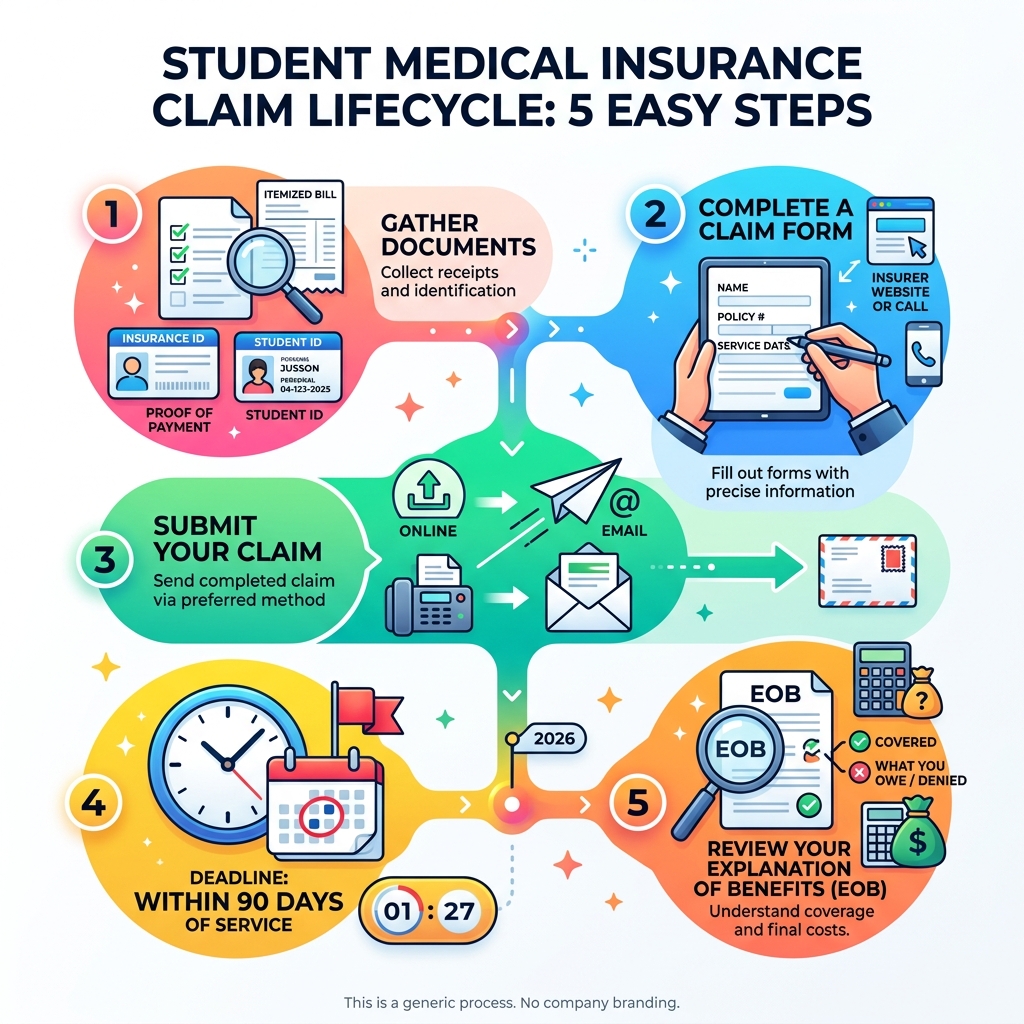
Here’s the quick answer — how to file a student insurance claim in 5 steps:
- Gather your documents — itemized bill, insurance ID, proof of payment, and personal details like your student ID
- Complete a claim form — find it on your insurer’s website or by calling the number on your insurance card
- Submit your claim — via online portal, email, fax, or mail, depending on your insurer
- Meet the deadline — most insurers require claims within 90 days of the date of service
- Review your Explanation of Benefits (EOB) — this document tells you what was covered, what you owe, and if anything was denied
Most of the time, in-network providers handle billing for you. But if you visit an out-of-network provider, pay upfront, or study in a country where direct billing isn’t available, you have to file the claim yourself.
That’s where most students get stuck — not because it’s hard, but because nobody explained it clearly.
This guide walks you through every step, from the first receipt to the final reimbursement.
Step 1: Gather Your Essential Documentation
The most common reason a student insurance claim guide emphasizes paperwork is that missing one tiny detail can lead to a rejection. Think of your claim as a university assignment; if you don’t cite your sources (or in this case, your receipts), you won’t get the grade—or the money.
Before you even open a claim form, you need to have a digital or physical folder ready with the following:
- The Itemized Bill: This is not just a credit card receipt. An itemized bill (often called a HCFA or UB-04 form in some regions) must include the provider’s name and address, the date of service, and a detailed description of the procedures performed.
- Medical Coding: For a claim to be processed, it usually needs CPT codes (procedure codes) and diagnosis codes. These tell the insurance company exactly what was done and why.
- Proof of Payment: If you paid out of pocket, you need to prove it. This can be a cash receipt from the clinic, a credit card statement, or a cancelled check.
- Personal Identification: Have your insurance ID card and your student ID number ready. If you are an international student, you may also need copies of your visa or passport to prove your eligibility.
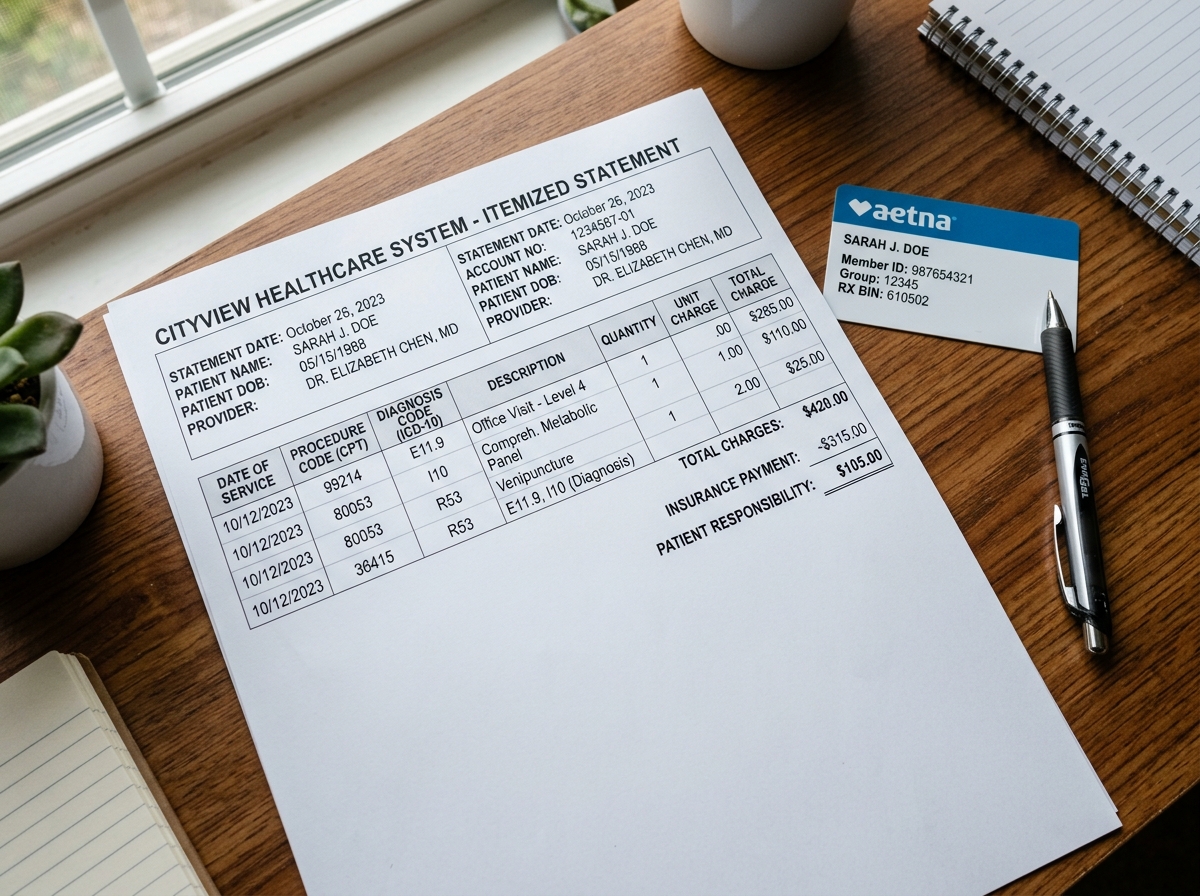
We often see students confuse a “balance due” statement with an itemized bill. If your document doesn’t list individual costs for each service, call your doctor’s billing office immediately. You can find more details on what documents students need for travel insurance claims to ensure you aren’t leaving anything out. It is always better to provide too much information than too little. We recommend making at least one copy of everything before you send it off.
Step 2: Navigating the Student Insurance Claim Guide Submission
Once your “evidence” is gathered, it’s time to actually file. How you do this depends entirely on your specific insurance provider. In Australia, many student health covers allow for digital submissions, which are significantly faster than the old-fashioned post.
In-Network vs. Out-of-Network
If you visit an in-network provider, they usually bill the insurer directly. You might only pay a small “gap” fee or a co-pay. However, if you go out-of-network, you will likely pay the full amount upfront and then use this student insurance claim guide to get your money back.
Submission Methods
Most modern insurers offer four ways to submit:
- Online Portals: The fastest method. You log in, upload your scans, and hit submit.
- Mobile Apps: Many Australian insurers have apps where you can simply snap a photo of your receipt.
- Email/Fax: A middle-ground option that provides a digital paper trail.
- Mail: The slowest method. If you choose this, never send your only copy of a receipt.
When filling out the claim form, be meticulous. Ensure your member ID matches your card exactly. If you’re unsure how to start, check out our guide on how to file a travel insurance claim as a student.
Special Considerations in Your Student Insurance Claim Guide
Not all claims are created equal. Depending on what happened, you might need extra steps:
- International Students: If you are studying in Australia on a visa, your OSHC is mandatory. Ensure your claim includes your current address so your reimbursement check or EOB reaches you. You can how to master the student travel claim process if your medical emergency happened while you were transitioning between home and university.
- Prescription Drugs: These are almost always paid upfront. Keep the official pharmacy receipt (not just the register receipt) which lists the drug name and dosage.
- Dental and Vision: These often have different claim forms or lower “limits” than general medical. Check if your policy requires “pre-approval” for expensive dental work.
- Emergency Evacuations: If you are a student traveler who needed to be transported to a hospital, these claims are high-value and will be audited closely. Ensure you have the medical report justifying the “medical necessity” of the transport.
Step 3: Respecting Deadlines and Processing Timelines
Time is your enemy when it comes to insurance. Every policy has a “timely filing” limit. If you miss it, the insurer has a legal right to refuse payment, even if the medical service was perfectly valid.
| Insurer Type | Typical Filing Deadline | Average Processing Time |
|---|---|---|
| Standard Student Health | 90 days from service date | 10–30 business days |
| OSHC (Australia) | End of policy year + 90 days | 5–10 working days |
| Travel Insurance | 30–60 days from incident | 30 business days |
In Australia, claims for student health insurance can be quite efficient, often processing within 5 to 10 working days. However, international providers may take up to 30 business days.
Pro Tip: Beware of “blackout periods.” These usually occur at the start of a new semester when thousands of students are enrolling at once. During these times, processing might slow down, so file early to beat the rush. We suggest setting a calendar reminder for 30 days after you submit to follow up if you haven’t heard back.
Step 4: Decoding the Explanation of Benefits (EOB)
After you submit your claim, you’ll receive a document that looks like a bill but usually says “THIS IS NOT A BILL” in big, bold letters. This is your Explanation of Benefits (EOB).
Reading an EOB is like deciphering a secret code, but it’s essential for your student insurance claim guide mastery. Here are the key terms you’ll see:
- Service Description: What you were treated for.
- Covered Amount: The total amount the insurance company agrees the service should cost.
- Patient Responsibility: This is what you actually have to pay. It includes your deductible (the amount you pay before insurance kicks in), your co-pay (a flat fee), and coinsurance (your percentage of the bill).
- Denied Charges: If a line item says $0.00 was paid, look for a “reason code” next to it. This will explain why it wasn’t covered (e.g., “duplicate claim” or “missing information”).
If the EOB shows that the insurance company paid the doctor, but you already paid the doctor upfront, you are entitled to a refund from the provider. For a deeper dive into this document, see our step-by-step guide to filing a travel insurance claim as a student.
Step 5: Managing Denials and Checking Claim Status
Don’t panic if your claim is denied. It happens to the best of us! Sometimes it’s just a typo.
How to Check Status
Most insurers have a “Member Portal” where you can see if your claim is “Pending,” “Processed,” or “Denied.” If it’s been more than 30 days and the status hasn’t changed, it’s time to pick up the phone. When you call, have your claim number and date of service ready.
The Appeals Process
If your claim is denied because the insurer deemed the treatment “not medically necessary” or a “pre-existing condition,” you have the right to appeal.
- Request a formal appeal form from your insurer.
- Gather supporting evidence: Ask your doctor for a letter explaining why the treatment was urgent.
- Submit the appeal: Include the original EOB and any new documentation.
Knowing how to handle an insurance claim after an accident is particularly helpful here, as accident claims often require extra “incident reports” to be approved.
Avoiding Pitfalls in Your Student Insurance Claim Guide
To make sure your claim sails through the first time, avoid these common student mistakes:
- Missing Signatures: Even in a digital world, some forms require a scanned signature.
- Outdated Address: If the insurer mails a check to your old dorm room, you’re in for a headache.
- Incomplete Itemization: Sending just the credit card receipt is the #1 reason for delays.
- Duplicate Submissions: Don’t send the same claim via mail and email. It confuses the system and triggers an audit.
By following the advice in this how to effectively file a travel insurance claim as a student resource, you can ensure your submission is clean, professional, and ready for approval.
Frequently Asked Questions about Student Insurance Claims
When do I need to file a health insurance claim myself as a student?
You generally need to file a claim yourself if you visit an out-of-network provider or a pharmacy that doesn’t accept your “Pay-Direct” card. In these cases, you pay the full bill at the time of service and then submit a request for reimbursement. You also have to file yourself if you are studying abroad in a country where your insurance doesn’t have a local direct-billing agreement with the hospital.
How do I obtain an itemized bill from my healthcare provider?
Simply call the provider’s billing department and ask for an “itemized statement for insurance purposes.” Specifically, ask for a document that includes CPT procedure codes and ICD-10 diagnosis codes. Most clinics can email this to you through a secure patient portal within 24–48 hours.
What should I do if my claim is denied or processed incorrectly?
First, compare the EOB with your original bill to see where the discrepancy lies. If it was a simple clerical error (like a misspelled name), call the claims department to have it corrected. If it was a medical denial, you will need to file a formal appeal. Be prepared to provide additional medical records or a letter of medical necessity from your physician.
Conclusion
Mastering the student insurance claim guide isn’t just about saving money; it’s about taking control of your health and financial well-being while you’re focusing on your studies. Insurance can feel like a maze, but when you break it down into these five easy steps—gathering documents, submitting correctly, meeting deadlines, reading your EOB, and managing denials—it becomes a manageable part of student life.
At RecipesGuard, we specialize in providing student-focused advisory services and step-by-step claim filing tutorials to make this process as painless as possible. Don’t let a medical bill sit on your desk and cause stress. Use these tools, stay organized, and Master your student insurance claims today.
