
What Is OSHC Insurance Australia and Why Does It Matter?
OSHC insurance Australia is mandatory health insurance that every international student must hold for the full duration of their student visa — no exceptions.
Here’s what you need to know at a glance:
| Key Point | Detail |
|---|---|
| What it is | Health insurance for international students in Australia |
| Who needs it | Anyone on a Subclass 500 Student Visa (and dependents) |
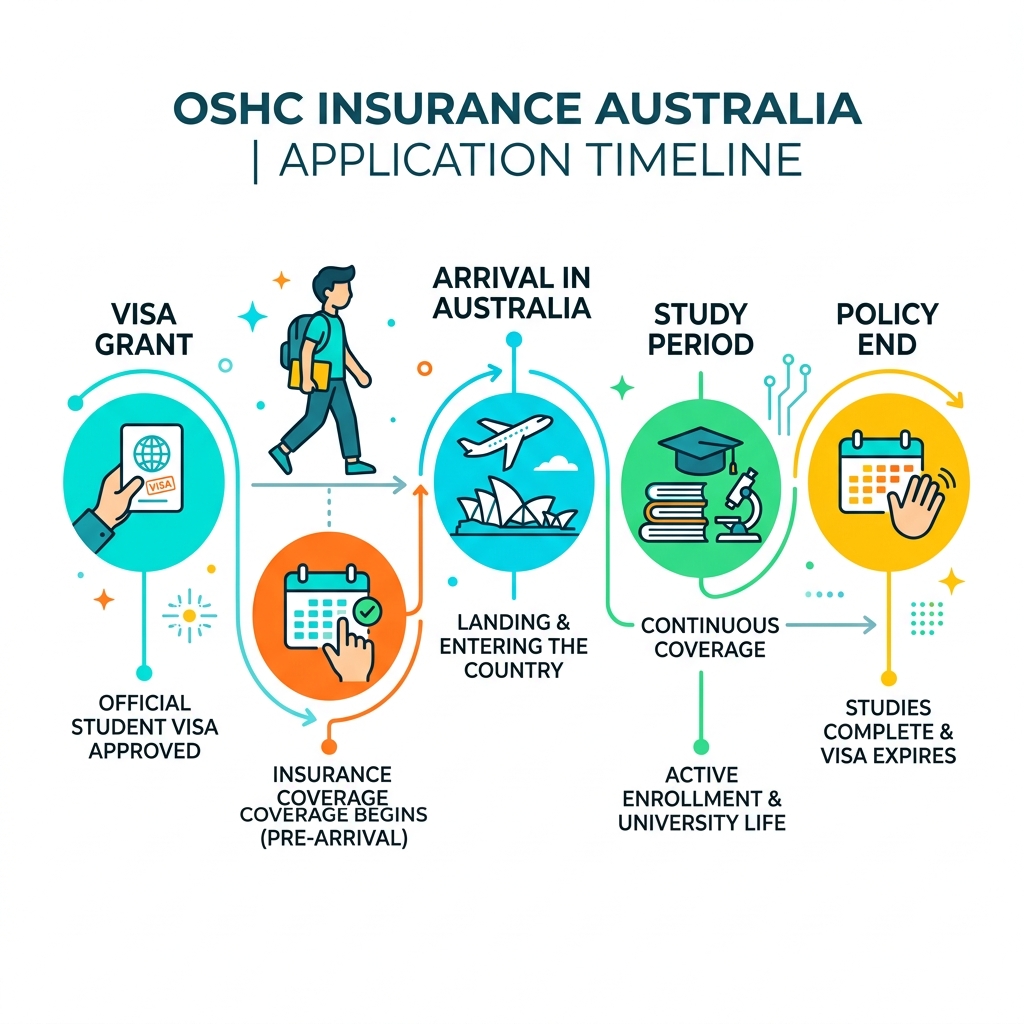
| When you need it | From arrival until your visa ends — continuously |
| What it covers | GP visits, hospital stays, ambulance, some prescriptions |
| What it doesn’t cover | Dental, optical, physiotherapy |
| Who provides it | ahm, Allianz, Bupa, CBHS, Medibank, nib |
| Cost | Varies by provider and policy type — comparison can save you up to $300 |
If you’ve just received your Australian student visa — or you’re about to apply — OSHC is one of the first things you need to sort out. And it’s not optional.
The Australian Government requires international students to maintain continuous OSHC under Visa Condition 8501. Let it lapse, and you risk having your visa cancelled.
The confusing part? Every provider prices differently, covers slightly different things, and has different apps, claims processes, and support tools. For a first-time student navigating a brand-new country, that’s a lot to take in.
This guide breaks it all down — simply and clearly.
Understanding the Basics of OSHC Insurance Australia
When we talk about oshc insurance australia, we are talking about a safety net designed specifically for the international student community. Australia’s public healthcare system, Medicare, is funded by taxpayers and generally isn’t available to those on temporary visas. Without OSHC, a simple night in a hospital could cost you thousands of dollars, potentially ending your study dreams before they truly begin.

To stay compliant with the Department of Home Affairs OSHC Requirements, your policy must cover the entire period of your stay. This applies primarily to the Subclass 500 Student Visa, but also to the Subclass 590 Student Guardian Visa.
One of the most important things to remember is that you must pay your premium upfront for the entire duration of your visa. If your course is three years long, you’ll need to pay for three years of insurance before you even set foot on the plane. Your policy should ideally start on the date you intend to arrive in Australia (or the date your visa is granted, whichever is later) and end on the day your visa expires.
Eligibility and Policy Types
Not every student comes to Australia alone. Because of this, insurers offer different “tiers” of coverage to ensure everyone in your inner circle is protected. According to Official OSHC Resources, there are three main types of policies:
- Single Cover: This is for the student only. It’s the most common and affordable option.
- Dual Family Cover: This covers the primary student plus one dependent. A dependent can be a spouse or de facto partner, or one or more children under the age of 18.
- Multi-Family Cover: This is designed for the primary student plus more than one dependent (such as a partner and one or more children).
A quick tip from us: sometimes two single policies can be cheaper than one couple’s policy. This is because “couple” policies often have higher premiums to account for the increased likelihood of pregnancy-related claims. It’s always worth checking the math before you hit “buy.”
What Your Policy Covers (and What It Doesn’t)
So, what exactly are you paying for? Most oshc insurance australia policies are designed to mirror the benefits Australians get through Medicare. This is based on the Medicare Benefits Scheme (MBS) fee—a set price the government thinks a medical service should cost.
Typically, your policy will cover:
- GP Visits: Your local family doctor. Most policies cover 100% of the MBS fee.
- Specialist Services: If your GP refers you to a dermatologist or cardiologist, OSHC usually covers 85% of the MBS fee.
- Public Hospital Accommodation: If you need to stay overnight in a public hospital, your insurance generally covers the full cost of a shared room.
- Emergency Ambulance: If you need a “lights and sirens” ride to the hospital, this is usually covered 100%. In Australia, ambulance rides are not free and can cost over $1,000 without insurance!
- Prescription Medicines: There are limits here. Most policies pay up to $50 per item, with a yearly cap (often $300 for singles or $600 for families).
| Feature | Included in Standard OSHC? | Notes |
|---|---|---|
| GP Visits | Yes | 100% of MBS fee |
| Hospital Stay | Yes | Shared ward in public hospitals |
| Ambulance | Yes | Emergency transport only |
| Surgery | Yes | If medically necessary and in-hospital |
| Dental | No | Requires “Extras” cover |
| Glasses/Contact Lenses | No | Requires “Extras” cover |
| Physiotherapy | No | Requires “Extras” cover |
Common Exclusions in OSHC Insurance Australia
It is just as important to know what you aren’t getting. Standard OSHC is “basic” hospital and medical cover. It does not include what Australians call “Extras.”
If you need a check-up at the dentist, new glasses from the optometrist, or a session with a physiotherapist after a gym injury, you will have to pay for these out of your own pocket unless you buy a separate “Extras” policy. Other common exclusions include cosmetic surgery, assisted reproduction (like IVF), and treatments received outside of Australia.
For students who travel frequently, it’s worth looking into more info about travel insurance for students to bridge the gaps that OSHC leaves behind, especially for lost luggage or flight cancellations.
Navigating Waiting Periods and Pre-existing Conditions
This is where many students get caught out. A “waiting period” is a set amount of time you must hold your insurance before you can claim for certain conditions.
- Pre-existing Medical Conditions: If you had a health issue in the six months before arriving in Australia, you generally have to wait 12 months before OSHC will pay for any treatment related to that condition.
- Pregnancy and Birth: There is almost always a 12-month waiting period for pregnancy-related services. If you arrive in Australia already pregnant, your OSHC likely won’t cover the birth costs.
- Psychiatric Conditions: Usually, there is a shorter 2-month waiting period for hospital psychiatric services.
We always recommend disclosing any chronic diseases or pre-existing conditions to your provider early. Some providers offer chronic disease management plans that can help you navigate the Australian system more effectively.
How to Choose and Manage Your Policy
With several government-approved providers to choose from, how do you pick the right one? While all “Standard” policies cover the same legal minimums, the “Extras” and support services vary wildly.
Cost is a major factor. For example, CBHS International Health offers policies starting from approximately $49.20 per month. However, price isn’t everything. Some providers have better apps, while others have “direct billing” agreements with more doctors.
By using comparison tools, students can often save an average of up to $300 on their total policy cost. For more tips on how to save and stay protected, check out more info about travel insurance tips.
Making a Claim with OSHC Insurance Australia
Actually using your insurance can happen in two ways:
- Direct Billing: This is the “gold standard.” You go to a doctor who has an agreement with your insurer. You show your digital membership card, and the doctor bills the insurance company directly. You pay nothing (or just a small “gap” fee).
- Paid and Claimed: You pay the full bill at the clinic, get a receipt, and then upload it via your insurer’s app to get a refund.
Most modern providers like Allianz, Medibank, and nib have excellent apps that allow you to find a doctor nearby and submit claims in seconds. If you are from a country with Reciprocal Health Care Agreements info, you might have some access to Medicare, but as a student, you are still legally required to maintain your OSHC policy for visa compliance.
At RecipesGuard, we specialize in student-focused, step-by-step claim filing tutorials. We know that the last thing you want to do when you’re feeling sick is navigate a complex insurance portal. Our mission is to make that process as painless as possible.
Switching Providers and Visa Transitions
You aren’t stuck with the first provider you choose. If you find a better deal or a provider with a better app, you can switch. To do this, you usually need to buy the new policy first and then show proof of that cover to your old provider to get a pro-rata refund for the unused portion of your premium.
Life changes, and so do visas. If you graduate and move onto a 485 Temporary Graduate Visa, you are no longer eligible for OSHC. You must switch to OVHC (Overseas Visitor Health Cover). Similarly, if you are on a bridging visa but your last substantive visa was a student visa, you generally stay on OSHC.
Frequently Asked Questions about OSHC
Can I get a refund if my visa is refused?
Yes. If your visa application is rejected by the Department of Home Affairs, all OSHC providers are required to give you a full refund of your premium. You will simply need to provide them with the official letter of refusal.
What happens to my cover if I leave Australia early?
If you finish your studies early or decide to go home permanently, you can apply for a refund for the remaining “unused” months of your policy. You’ll usually need to provide proof of your flight booking and the cancellation of your enrollment.
Do I need OSHC if my country has a Reciprocal Health Care Agreement?
Yes. Even if you are from a country like the UK, Sweden, or Belgium that has a reciprocal agreement with Australia, the Department of Home Affairs still mandates OSHC for the Subclass 500 visa. The reciprocal agreement acts as a backup, but it doesn’t satisfy your visa conditions.
Conclusion
Mastering oshc insurance australia doesn’t have to be a headache. By understanding that it’s a mandatory visa requirement, paying your premium upfront, and knowing exactly where to go when you need a doctor, you can focus on what really matters: your studies and enjoying the incredible Australian lifestyle.
At RecipesGuard, we are dedicated to providing international students with the peace of mind they deserve. Whether you are filing your first claim or trying to figure out which “Extras” policy is worth the money, our student-focused advice and step-by-step tutorials are here to guide you every step of the way.
Ready to take the stress out of your health cover? Contact RecipesGuard for insurance guidance and let us help you navigate the Australian insurance landscape with confidence. Safe travels and happy studying!
