
Why Filing an Insurance Claim as a Student Abroad Feels Overwhelming — and How to Get It Right
Filing an insurance claim student abroad doesn’t have to be a nightmare — but for most students, it is.
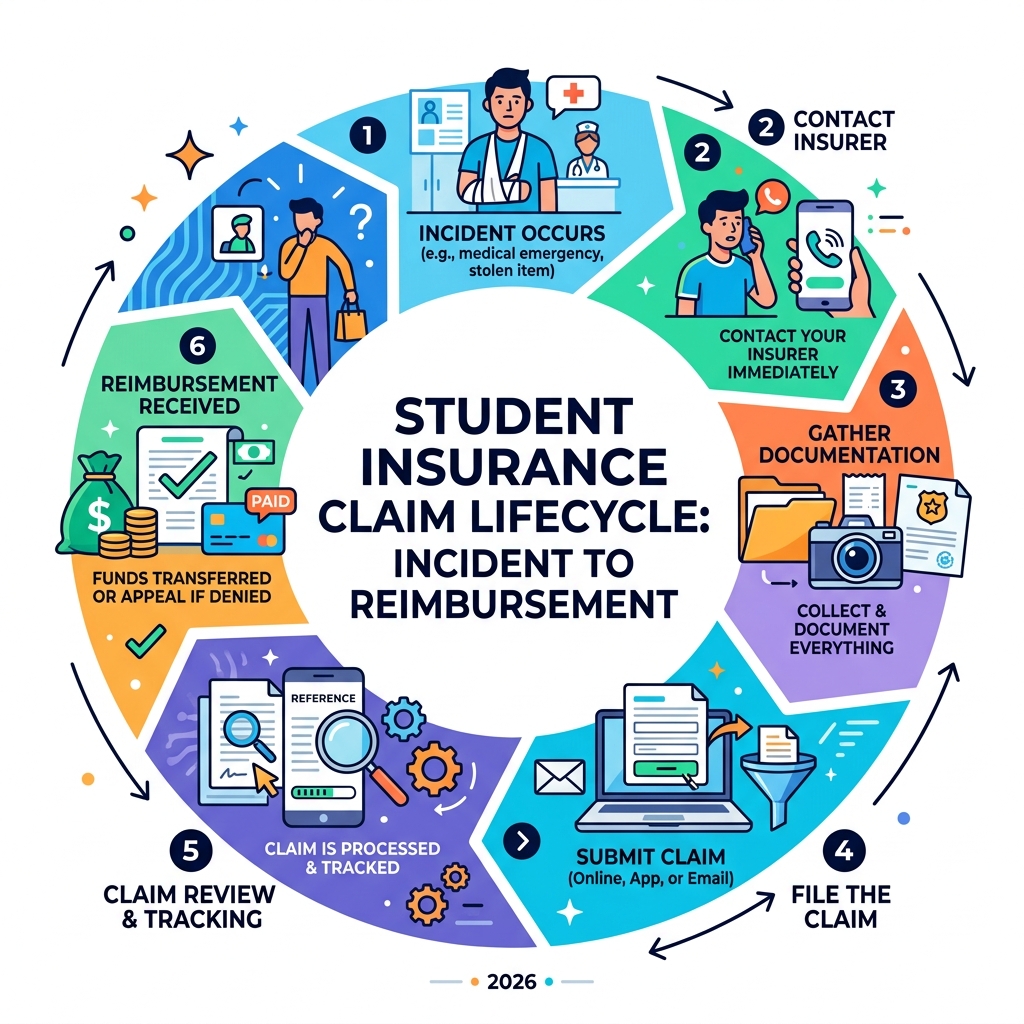
Here’s the quick version of what to do:
- Contact your insurer immediately after any incident (medical, theft, travel disruption)
- Document everything — photos, receipts, police reports, medical invoices
- File your claim via your insurer’s online portal, mobile app, or email
- Track your claim using your reference number and follow up regularly
- Appeal if denied — most insurers allow a 90-day appeal window
You’re thousands of miles from home. Your bag is stolen. Or you end up in a hospital where nobody speaks your language. The last thing you want to do is figure out insurance paperwork.
Yet that’s exactly when it matters most.
Studying abroad is one of the most exciting experiences of your life. But unexpected emergencies happen — medical crises, cancelled flights, lost passports, stolen laptops. Without the right knowledge, students often miss out on money they’re fully entitled to claim back.
The problem isn’t just the emergency itself. It’s not knowing:
- What your policy actually covers
- Who to call first
- What documents you’ll need
- How to avoid getting your claim rejected
This guide walks you through the entire process — from the moment something goes wrong to the moment you get reimbursed — in plain, simple language.
Understanding Your Coverage: What an Insurance Claim for a Student Abroad Covers

Before you can successfully file an insurance claim student abroad, you need to know what you are actually protected against. Most student-specific policies are designed to be comprehensive because insurers know that students are often on a tight budget and can’t afford a $50,000 medical bill or a lost laptop.
Medical Emergencies and Sickness
This is the “big one.” Whether it’s a sudden case of appendicitis or a nasty flu, medical coverage is the backbone of your policy. Most plans cover hospital stays, doctor visits, and prescriptions. Interestingly, many modern plans now treat COVID-19 the same as any other illness, covering your treatment and even isolation costs if medically necessary.
Trip Cancellation and Interruption
Life happens. If a family emergency requires you to fly back to Australia suddenly, or if your program is cancelled before you even leave, you don’t want to lose thousands in airfare and tuition. You can learn how to get your money back after a flight cancellation to ensure you aren’t left out of pocket when travel plans go south.
Property Loss and Theft
Students carry expensive gear—laptops, smartphones, and tablets. If your bag is stolen at a café in Melbourne or lost by an airline, your insurance usually provides a path to reimbursement. However, keep in mind that “baggage delay” is different; if your bags are just late (usually by 6+ hours), you can often claim for “essential items” like a change of clothes and toiletries.
Emergency Medical Evacuation
If you are studying in a remote area and require specialized care that the local clinic can’t provide, your insurance covers the cost of transporting you to a better facility. This can include ground ambulances, air ambulances, and even aeromedical escorts.
Personal Liability and Mental Health
If you accidentally damage someone else’s property (like your homestay host’s house), personal liability coverage kicks in. Furthermore, many student plans now include mental health support, recognizing that the stress of living abroad can be taxing.
| Claim Type | Common Examples | Key Requirement |
|---|---|---|
| Medical Expense | Hospitalization, GP visits, Dental emergency | Medical report & Itemized bill |
| Travel Property Loss | Stolen laptop, Lost luggage | Police report or Airline PIR |
| Trip Interruption | Death in the family, Program closure | Proof of cause (e.g., Death cert) |
Immediate Steps to Take After an Incident Occurs
When an incident occurs, the first 24 hours are critical. Your actions during this window often determine whether your insurance claim student abroad is approved or rejected.
1. Call the 24/7 Emergency Hotline
Every reputable student insurer provides a 24/7 assistance line. Call them first. If you are being admitted to a hospital, they need to know immediately. They can often arrange “Guarantee of Payment” so you don’t have to pay a massive bill upfront. They also provide non-medical help, such as legal referrals or help replacing a lost passport.
2. File a Police Report Within 24 Hours
If you’ve been the victim of theft or a robbery, you must go to the local police station. Insurers generally require a formal report filed within 24 hours of the discovery. If you are in a country where you can file online, do so and take a screenshot of the confirmation page. For sensitive situations, you may also need to Go to the National Domestic Violence Hotline or local equivalent for support and documentation.
3. Document the Evidence
Take photos of the scene if it’s an accident. If it’s a medical issue, keep every single scrap of paper the doctor gives you. For more complex situations like medical transfers, check out the international student guide to emergency claims and evacuations for a deeper dive into the logistics.
The Step-by-Step Process for an Insurance Claim for a Student Abroad
Once the dust has settled, it’s time to actually get your money back. Most companies have moved away from paper forms in favor of digital portals.
Step 1: Choose Your Submission Method
Most insurers now offer three ways to file:
- Online Portals: The most common method. You log in, fill out a digital form, and upload scans of your documents.
- Mobile Apps: Some providers have apps that allow you to snap photos of receipts and submit the claim in minutes.
- Email/Mail: The “old school” way, usually reserved for complex cases or if the digital portal is down.
Step 2: Fill Out the Claim Form Completely
Don’t leave blanks. If a question doesn’t apply to you, write “N/A.” Be very descriptive about the incident. Instead of saying “I got sick,” say “I developed a high fever and abdominal pain on Tuesday morning and visited the clinic at 2:00 PM.” Following a step-by-step guide to filing a travel insurance claim as a student can help you avoid simple mistakes that lead to delays.
Step 3: Direct Billing vs. Reimbursement
- Direct Billing: The insurer pays the hospital directly. This is common for large inpatient stays.
- Reimbursement: You pay the doctor out-of-pocket, then ask the insurer to pay you back. This is common for small clinic visits or pharmacy bills.
Note: If you are using digital tools to file, ensure the platform is accessible. You can Go to WCAG accessibility guidelines to understand the standards for digital inclusivity.
Essential Documentation for a Successful Insurance Claim for a Student Abroad
Documentation is the “evidence” the insurer uses to justify paying you. If you don’t have the proof, they won’t pay the claim.
- Medical Reports: These must include your diagnosis, the date of service, and the treatment provided.
- Itemized Invoices: A receipt that just says “$200” isn’t enough. It needs to list exactly what you were charged for (e.g., $50 for the consultation, $150 for the X-ray).
- Proof of Purchase: For stolen items, you need to prove you owned them. An emailed receipt, a photo of the original box, or even a bank statement showing the purchase will work. For a full list, see what documents students need for travel insurance claims.
- Travel Documents: If your claim involves a flight delay, you need written confirmation from the airline stating the reason for the delay and how long it lasted.
Navigating Provider Differences in an Insurance Claim for a Student Abroad
Not all insurance companies operate the same way. While the general logic is similar, the “user experience” varies.
- Processing Timelines: Some tech-forward companies can process a simple claim in 7 working days via their app. Larger, more traditional insurers might take 4 to 6 weeks.
- Currency Exchange: Most claims are settled in the currency of your home country (e.g., Australian Dollars). The insurer will use the exchange rate from the day the bill was issued.
- Multilingual Support: Many student insurers employ former international students who speak multiple languages to help bridge the communication gap between you and a foreign doctor.
- Verification: Expect the insurer to call the doctor or the police station to verify your story. This is standard procedure to prevent fraud. To stay ahead, how to master the student travel claim process offers expert tips on managing these interactions.
Avoiding Common Pitfalls and Handling Claim Denials
It is a gut-wrenching feeling to receive an email saying your claim was denied. However, a denial isn’t always the final word.
Common Reasons for Rejection
- Missing Documentation: This is the #1 reason for delays and denials. If you forgot to attach the police report, the insurer can’t process the claim.
- Pre-existing Conditions: Many basic plans exclude conditions you had before you left home. If you have a chronic illness, make sure your policy specifically covers it.
- Alcohol/Drug Involvement: If an incident happened while you were intoxicated, most insurers will immediately deny the claim.
- Late Reporting: If you wait three months to report a stolen phone, the insurer might argue that you didn’t give them a chance to investigate properly.
How to Appeal
If your insurance claim student abroad is denied, don’t panic. You usually have a 90-day window to file an appeal.
- Read the denial letter carefully to understand the exact reason.
- Gather new evidence (e.g., a more detailed letter from your doctor).
- Write a formal appeal letter explaining why the decision should be reconsidered. Learning how to effectively file a travel insurance claim as a student can prevent these issues before they start.
Frequently Asked Questions about Student Insurance Claims
How long does it typically take to process a student insurance claim?
The average processing time is 4 to 6 weeks. However, this varies wildly based on the complexity of the claim and the provider. If you submit via a mobile app for a simple prescription reimbursement, you might see the money in your account within 7 to 10 days. Delays are usually caused by missing information or the insurer waiting for a response from a foreign hospital.
Can I file a claim after I have already returned to my home country?
Yes! As long as the incident occurred while your policy was active and you were enrolled in your program, you can usually file the claim after you return to Australia. However, you must still have all the original documentation from the country where the incident happened. Check out study abroad claims: how to get your credits and cash back for more on post-travel logistics.
What is the difference between direct billing and out-of-pocket reimbursement?
Direct billing is like using a credit card—the hospital sends the bill to the insurance company, and you pay nothing (or just your deductible). Out-of-pocket reimbursement is like a “pay now, get paid back later” system. For a deep dive into hospital-specific claims, read how to handle the hospital stay claim process.
Conclusion
At RecipesGuard, we believe that your focus should be on your studies and your adventures, not on insurance paperwork. The key to a stress-free experience is preparation.
Before you leave Australia, take 20 minutes to save your insurer’s emergency number in your phone, print a physical copy of your ID card, and read the “Exclusions” section of your policy. By understanding the insurance claim student abroad process before you actually need it, you ensure that if something does go wrong, you have the tools to fix it quickly and get back to enjoying your time abroad.
Ready to secure your journey? Start your stress-free journey with our claim guides and travel with the confidence that we’ve got your back.
