
Why the Overseas Student Claim Process Catches So Many Students Off Guard
The overseas student claim process is something most international students only think about after they’re already sitting in a clinic — stressed, unsure what to pay, and wondering if they’ll get their money back.
Here’s a quick overview of how it works:
- Receive medical treatment at a clinic or hospital abroad
- Pay upfront (if your provider doesn’t bill insurance directly) and keep all receipts
- Complete a claim form from your insurer and gather supporting documents
- Submit your claim via app, online portal, email, or mail — within your insurer’s deadline (typically 30–90 days)
- Track your claim and receive reimbursement to your nominated bank account
Most claims are straightforward — but small mistakes like missing documents, wrong bank details, or missed deadlines can delay or deny your payout entirely.
The good news: once you understand the basics, it’s a manageable process. This guide walks you through everything — from submitting your first claim to appealing a denial.
Studying abroad is exciting. But unexpected medical bills in a foreign country? That’s a different story. If you’ve never dealt with health insurance in another country before, the claims process can feel overwhelming — unfamiliar forms, confusing terminology, and tight deadlines all at once.
You’re not alone. International students routinely struggle with the claims process simply because no one explained it to them before they left home.
Understanding the Overseas Student Health Insurance Claim Process
When we talk about an overseas student claim process, we are essentially describing the formal request you make to your insurance provider to cover the costs of your medical treatment. In Australia, this is almost always related to your Overseas Student Health Cover (OSHC), which is a mandatory requirement for your student visa.
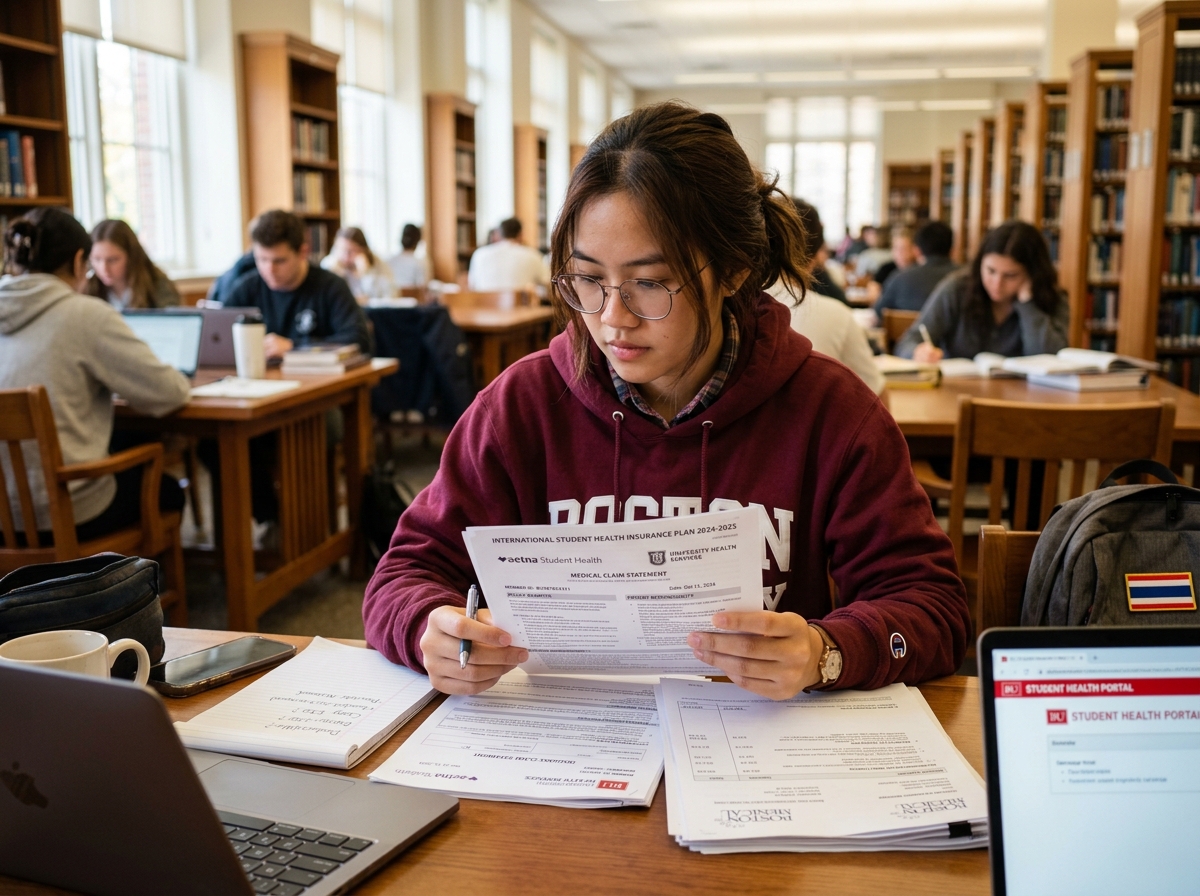
Navigating the U.S. healthcare system or the Australian medical landscape requires understanding two primary paths: Direct Billing and Reimbursement.
Direct Billing vs. Out-of-Network Care
The “Holy Grail” of the overseas student claim process is direct billing. This is where the medical provider sends the bill straight to your insurer, and you only pay any “gap” fee (the difference between what the doctor charges and what the insurance covers).
| Feature | Direct Billing (In-Network) | Reimbursement (Out-of-Network) |
|---|---|---|
| Upfront Cost | Usually $0 or a small gap fee | You pay the full amount upfront |
| Paperwork | Minimal; provider handles it | You must submit a claim form |
| Speed | Instant | 5 to 14 business days for refund |
| Provider Choice | Limited to “network” doctors | Any registered medical provider |
If you visit an out-of-network provider, you will likely have to pay the full bill at the reception desk. This doesn’t mean you aren’t covered; it just means you have to initiate the overseas student claim process yourself to get your money back. Always check your policy limits before booking an appointment, as some specialist services or high-end clinics may charge significantly more than your policy’s scheduled fee.
Step-by-Step Guide to the Overseas Student Claim Process
Filing a claim shouldn’t feel like a full-time job. Most Australian providers have modernized their systems to make it as painless as possible. Here is how we recommend handling it:
- Choose Your Method: You can usually submit via a mobile app (like MyHealth or myBupa), an online member portal, email, or traditional mail.
- Gather Evidence: You’ll need your policy number and the itemized invoice or receipt from the doctor.
- Fill the Form: Whether digital or paper, ensure your personal details match your policy exactly.
- Submit and Track: Once submitted, most digital claims are acknowledged immediately.
For a deeper dive into the nuances of travel-related medical issues, check out our guide on how to effectively file a travel insurance claim as a student.
Common Pitfalls in the Overseas Student Claim Process
Even the best students can stumble during the overseas student claim process. One of the biggest hurdles is the claim deadline. While some insurers give you up to two years, many student policies require submissions within 30 to 90 days of the service date. If you wait until the end of the semester to “clean up” your bills, you might find yourself out of luck.
Another common mistake is providing incorrect bank details. In Australia, insurers generally require an Australian bank account for Electronic Funds Transfer (EFT). If you haven’t set one up yet, your reimbursement could be stuck in limbo. For more tips on avoiding these errors, read our article on how to file a travel insurance claim as a student.
Essential Documentation and Bank Requirements
Documentation is the backbone of the overseas student claim process. Without the right papers, your insurer is essentially flying blind. We always tell students: “If it isn’t on paper, it didn’t happen.”
Required Medical and Non-Medical Documents
To ensure a smooth health insurance claim, you need more than just a credit card slip. A standard credit card receipt only shows how much you paid, not what you were treated for.
You will typically need:
- Itemized Bills: These must show the date of service, the provider’s name/address, the patient’s name, and the specific Medicare item numbers (in Australia).
- Payment Receipts: Proof that the bill was actually paid.
- Claim Forms: Fully completed and signed.
- Visa and Passport Copies: Sometimes required to prove your eligibility as an international student.
For non-general medical claims, the requirements get more specific. Prescription claims require the official pharmacy receipt (not just the cash register slip). Optical claims often require a prescription from an optometrist, and dental claims need a breakdown of the specific procedures performed.
Once the insurer processes these, you will receive an Explanation of Benefits (EOB). This is a crucial document that explains what was covered, what wasn’t, and why. It is not a bill, but a summary of the claim’s outcome. For a list of everything you should keep in your “insurance folder,” see what documents students need for travel insurance claims.
Setting Up Your Reimbursement Account
This is where many students get stuck. Most Australian OSHC providers, such as Bupa and Allianz Care, will only reimburse funds into an Australian bank account. They typically cannot transfer money to overseas accounts due to high fees and regulatory hurdles.
To set this up, you’ll need:
- BSB Number: A six-digit code identifying your bank branch.
- Account Number: Usually 8 to 9 digits.
- Account Name: Must match the name on your insurance policy.
If you don’t have an Australian account yet, some insurers might offer to pay the provider directly if the bill is still unpaid, or they may issue a check (though this is becoming rare). For a breakdown of the financial side of claims, check out our step-by-step-guide-to-filing-a-travel-insurance-claim-as-a-student.
Managing Denials, Appeals, and Waiting Periods
It is a frustrating reality: sometimes a claim is denied. Understanding why can help you navigate the overseas student claim process with less stress.
Why Claims Get Denied
The most common reason for a denial in the first year of study is the “waiting period.” For most OSHC policies in Australia, there is a 12-month waiting period for pre-existing conditions. This means if you had a condition before arriving in Australia (like a chronic back issue or a pregnancy), the insurer won’t cover related costs for the first year.
Other common reasons include:
- Exclusions: Certain services like cosmetic surgery or non-emergency ambulance transport are often excluded.
- Policy Limits: You may have hit your annual cap for things like dental or optical.
- Missing Information: The insurer might need a Bupa medical certificate or a similar form from your doctor to confirm when a condition first started.
To learn how to navigate these hurdles like a pro, read how to master the student travel claim process.
How to Appeal a Denied Claim
If you believe your claim was wrongly denied, don’t panic. You have the right to appeal. Most insurers have a formal internal review process.
- Contact the Insurer: Sometimes it’s a simple misunderstanding or a typo.
- Submit an Appeal Form: For example, ISO members can use a specific appeal form.
- Provide New Evidence: Get a detailed letter from your doctor explaining why the treatment was necessary and confirming it wasn’t a pre-existing condition.
- Observe the Window: You usually have about 90 days to lodge an appeal after receiving your EOB.
We’ve covered the complexities of hospital-related appeals in our guide on how to handle the hospital stay claim process.
Handling Emergency and Special Claims
In a true emergency, the overseas student claim process shifts gears. If you are admitted to a hospital, you (or a friend/family member) should contact your insurer’s 24/7 assistance line immediately. They can often arrange a “guarantee of payment” with the hospital, meaning you won’t have to pay thousands of dollars out of pocket.
Some policies also cover “Student Interruption” or “Education Funds.” These are special claims for when a serious illness or family emergency forces you to stop your studies. For more on these high-stakes situations, see the-international-student-guide-to-emergency-claims-and-evacuations.
Frequently Asked Questions about Overseas Student Claims
How long does it take for a claim to be processed?
In Australia, processing times are quite efficient. Allianz Care Australia typically processes claims within 10 working days if all info is provided. Bupa is even faster for simple doctor visits, often settling within 5 business days, though hospital claims can take 7 to 14 days. You can track the status of your claim through your provider’s app or member portal.
Can I claim for pre-existing medical conditions?
Generally, you cannot claim for pre-existing conditions during the first 12 months of your OSHC coverage. After this 12-month waiting period expires, you can claim just like any other medical expense. There is an exception for psychiatric conditions, which usually have a shorter waiting period (often only 2 months).
What should I do if I need to pay upfront at a clinic?
If you pay upfront, make sure you get an itemized tax invoice. Once you have it, log into your insurer’s app, take a clear photo of the invoice, and submit it for reimbursement. Ensure your Australian bank details are already saved in your profile to speed up the payment.
Conclusion
The overseas student claim process doesn’t have to be a source of anxiety. By choosing direct billing providers whenever possible, keeping your documents organized, and understanding your policy’s waiting periods, you can focus on what really matters: your education.
At RecipesGuard, we are dedicated to providing student-focused, step-by-step tutorials to help you navigate the complexities of international insurance. Whether you are dealing with a routine check-up or a complex emergency, timely submission and a clear understanding of your policy limits are your best tools for success.
Don’t wait until you’re sick to figure out how your insurance works. Log into your portal today, download your provider’s app, and make sure your bank details are up to date.
