
What You Need to Know About Delayed Bag Compensation in Australia
Delayed bag compensation Australia is something every traveler should understand before their flight lands. Here’s the quick answer if you need it fast:
Quick Answer: How to Get Compensation for a Delayed Bag in Australia
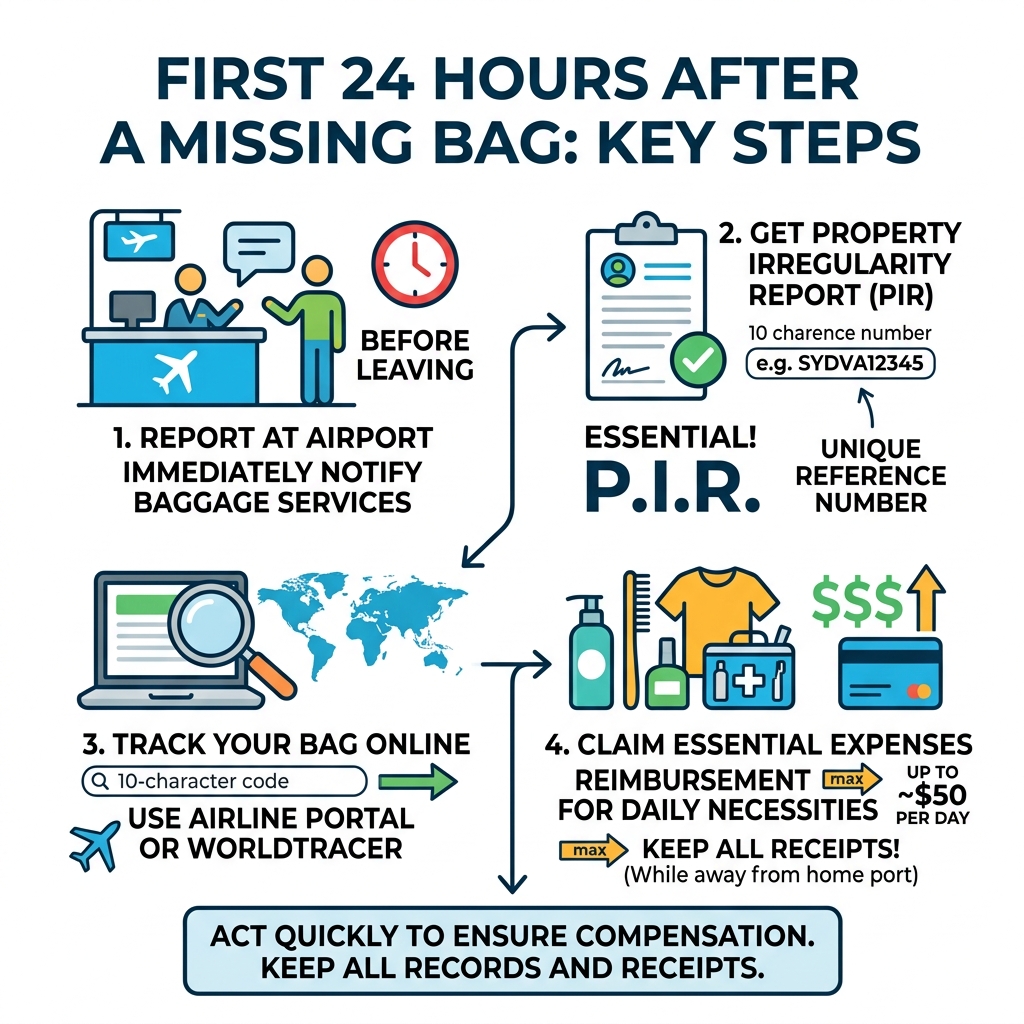
- Report immediately at the airport Baggage Services counter before you leave — get a Property Irregularity Report (PIR)
- Keep all receipts for essential items like toiletries and clothing you buy while waiting
- Claim essential expenses — up to ~$50/day (Virgin Australia) while away from your home port
- Track your bag using your 10-character reference number via WorldTracer or your airline’s portal
- Know your limits — domestic flights: up to $3,000 (checked bags); international flights: up to ~$1,735 (Montreal Convention)
- If bag is still missing after 21 days, it’s officially “lost” and a separate claims process begins
Imagine landing after a long international flight, exhausted and ready to settle in — only to find the baggage carousel empty where your bag should be. It’s a gut-punch moment, and it happens more often than you’d think.
Nearly 1 in 3 Australians — around 3.5 million people — experienced a travel mishap on an overseas trip in the past year. Of those, 14% dealt with travel delays and 8% reported losing personal belongings. If you’re an international student traveling to or from Australia, the stakes are even higher: you may not have a local support network, spare cash, or experience navigating airline claims.
The good news? You do have rights. Australian law and international conventions give you real protections — but only if you act quickly and know what to ask for.
This guide walks you through exactly what to do, step by step.
Immediate Steps for Delayed Bag Compensation Australia
When you realize your suitcase isn’t joining you at the arrivals hall, the clock starts ticking. The most critical rule for securing delayed bag compensation australia is this: Do not leave the airport without a paper trail.
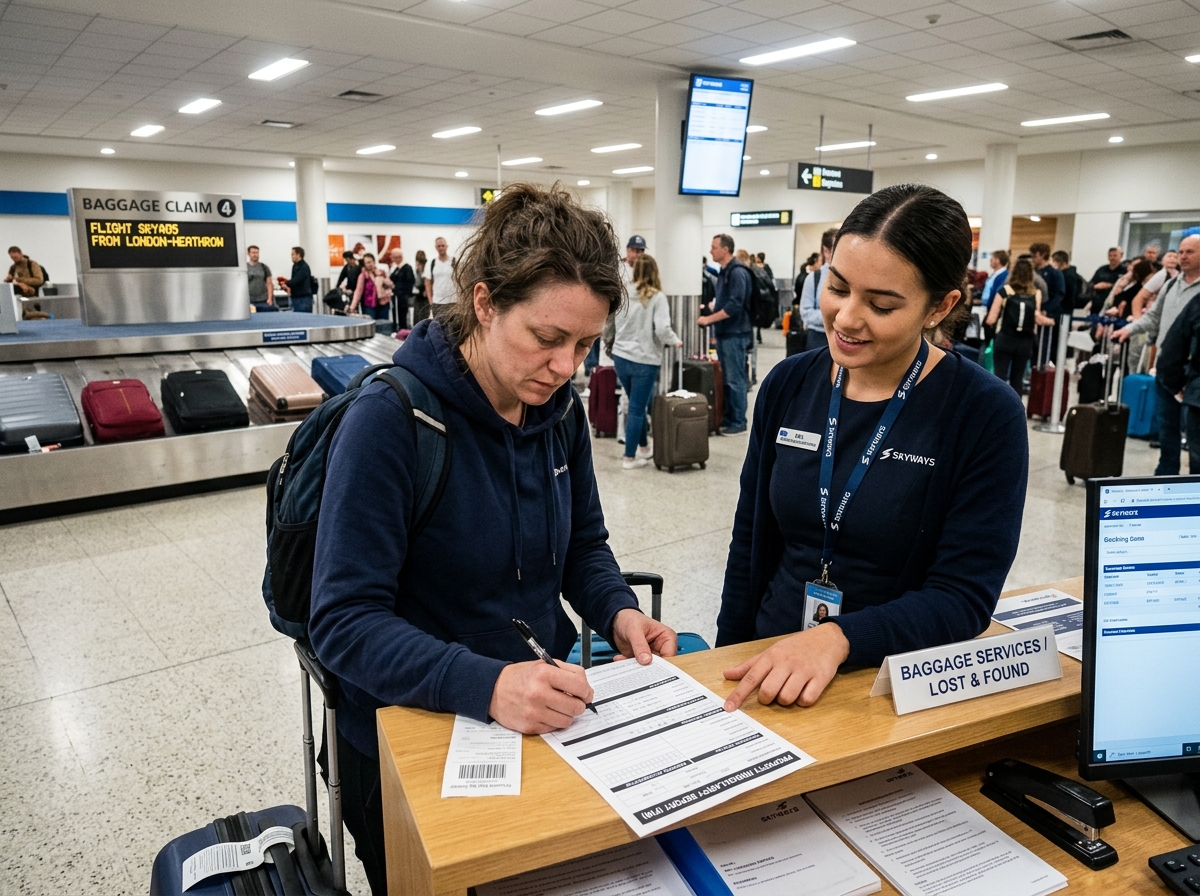
Your first stop must be the Baggage Services counter located within the baggage reclaim area. Tell the staff your bag hasn’t arrived. They will help you lodge a Property Irregularity Report (PIR). This document is the “Golden Ticket” for your claim. It contains a unique 10-character reference number (e.g., SYDVA12345) that you will need for every single interaction with the airline moving forward.
If the desk is unattended or you are forced to leave, you must Report your delayed bag online immediately. However, many airlines, including Virgin Australia, strongly prefer that you report the loss before passing through customs.
Reporting to Qantas, Virgin Australia, and Jetstar
Each major Australian carrier has its own rhythm for handling mishaps:
- Qantas: You can report via their app or at the counter. They are generally efficient, with most bags returned within 24 to 48 hours. You can Manage your delayed bag report through their dedicated portal to update your delivery address.
- Virgin Australia: If your bag is delayed overnight and you are away from your “home port” (the city where you live), you may be eligible for reimbursement for reasonable essential expenses. They estimate this at roughly $50 per person, per day.
- Jetstar: As a low-cost carrier, they still have legal obligations, but their reporting windows are strict. Ensure you have your boarding pass and baggage stubs ready when talking to their Baggage Services team.
Tracking with AirTags and WorldTracer
In the modern era, we don’t have to fly blind. Most airlines use the WorldTracer system, a global database that tracks mishandled luggage. You can log in to the Delayed baggage portal using your PIR code to see if your bag has been located.
For those who like to take matters into their own hands, Apple AirTags have become a game-changer. Qantas has even integrated AirTag location sharing into its recovery process. Under their Privacy policy, only trained agents see the location, and the link expires after seven days. While Samsung SmartTags and Tile aren’t officially integrated into airline portals yet, they still provide peace of mind by letting you know if your bag is still in Singapore while you’re in Sydney.
Understanding Your Legal Rights and Compensation Limits
Many travelers assume they are at the mercy of the airline’s “goodwill.” This is a myth. Your rights are enshrined in law. In Australia, the Civil Aviation (Carriers’ Liability) Act 1959 governs domestic flights, while international journeys fall under the Montreal Convention or the older Warsaw Convention.
Domestic Flight Compensation Limits
If you are flying between Australian cities (e.g., Melbourne to Perth), the liability limits are fixed by the Civil Aviation Act:
| Baggage Type | Maximum Compensation (AUD) |
|---|---|
| Checked Baggage | Up to $3,000 per person |
| Unchecked (Carry-on) | Up to $300 per person |
These are statutory rights. This means that even if an airline’s fine print says they aren’t liable, the law says otherwise. However, you must prove the value of the items you lost, so don’t expect a $3,000 payout for a bag full of old gym clothes.
International Delayed Bag Compensation Australia
For international travel, the Montreal Convention is the most common framework. It uses a “currency” called Special Drawing Rights (SDRs). Currently, the liability limit is 1,131 SDRs, which translates to approximately $1,735 AUD per passenger. This covers delay, damage, or loss.
Airlines like Qantas outline these specifics in their Compensation and flight refunds policy. It is important to note that these limits apply per passenger, not per bag. If you and a partner share one large suitcase, you may still be able to claim up to the combined limit if both your names are on the booking.
Claiming Expenses and Essential Item Reimbursement
If you arrive in a new city for a semester of study and your bag is missing, you can’t exactly wait three days to brush your teeth or change your underwear. This is where “essential item reimbursement” comes in.
Airlines are generally required to cover “reasonable” expenses. This includes:
- Toiletries (toothbrush, toothpaste, deodorant)
- Basic clothing (underwear, socks, a fresh shirt)
- Necessary medication (if not in your carry-on)
Qantas allows you to lodge a Reimbursement claim for lost or delayed baggage expenses online. Crucial Tip: You must keep every single receipt. A credit card statement is often not enough; the airline wants to see the itemized tax invoice.
The ACCC (Australian Competition and Consumer Commission) notes that what is “reasonable” depends on the circumstances. If you are attending a formal wedding the next day, a suit rental might be reasonable. If you are going to the beach, it probably isn’t.
When Does a Bag Become Officially ‘Lost’?
A bag isn’t considered “lost” the moment it misses the carousel. It is “delayed” first.
- The 21-Day Rule: Under international conventions, a bag is officially “lost” if it hasn’t arrived within 21 days. At this point, you can move from claiming small daily expenses to claiming the full value of the suitcase and its contents (up to the legal limits).
- Virgin Australia’s Trigger: Virgin starts their internal “lost baggage” assessment process if the bag is still missing after just 7 days, though the 21-day legal threshold still applies for final payouts.
Exclusions: What Airlines Won’t Pay For
Airlines are experts at limiting their liability. They will almost never pay for “consequential losses” (like missing a pre-paid tour because you were at the airport filing a report). They also exclude:
- Normal Wear and Tear: Minor scratches, dents, or scuffs that don’t affect the bag’s function.
- Fragile/Valuable Items: Most airlines warn you in their Conditions of Carriage not to pack jewelry, cash, or electronics in checked bags. If these are lost, they may refuse to pay.
- Over-packing: If your zipper burst because you tried to fit a year’s worth of textbooks into one suitcase, the airline won’t cover the damage.
- External Attachments: Damage to wheels, straps, or retractable handles is frequently excluded.
How Travel Insurance Enhances Delayed Bag Compensation Australia
While airline compensation is a great safety net, it has holes. This is why we always recommend travel insurance for students traveling to Australia.
Travel insurance often kicks in much sooner than airline compensation. For example, some policies offer a fixed “inconvenience payment” (e.g., $100) if your bag is delayed for more than 12 hours, sometimes without even requiring receipts for purchases.
Insurance also covers the “shortfall.” If you lost $5,000 worth of gear in your bag, the airline will only pay you up to the $1,735 international limit. Your travel insurance policy can cover the remaining amount, provided you’ve declared high-value items or have a high enough total limit.
Strict Time Limits for Reporting and Claims
If you wait too long, you lose your right to claim. These limits are strict and non-negotiable:
- Damaged Baggage (Domestic): You usually have only 3 days to report partial loss or damage.
- Damaged Baggage (International): You have 7 days from the date you received the bag to lodge a written claim.
- Delayed/Lost Baggage: You must lodge your claim within 21 days of the date the bag should have arrived (or did arrive).
Failure to meet these deadlines is the number one reason delayed bag compensation australia claims are rejected. Always check the WorldTracer status or your airline’s specific site to ensure your initial report was recorded correctly.
Frequently Asked Questions about Australian Baggage Claims
What if another passenger takes my bag?
It happens! Sometimes people have identical black suitcases. If another passenger mistakenly takes your bag, the airline is still your primary point of contact. They can often use security footage or baggage tag data to identify the passenger and facilitate a swap. However, the airline’s liability is lower here because it was a passenger error, so keep your travel insurance details handy.
Who is responsible on multi-airline itineraries?
If you flew from London to Dubai with one airline and then Dubai to Sydney with another, who do you talk to? The rule of thumb in the industry is the last carrier. The airline that operated the final leg of your journey is responsible for taking your report and initiating the search, regardless of where the bag actually went missing.
How does Australian Consumer Law (ACL) protect me?
The ACL provides “Consumer Guarantees.” One of these is that services (like flying you and your bag) must be provided within a reasonable time. If an airline takes an unreasonable amount of time to return your bag, you may be entitled to a refund or compensation under the ACL, which sits on top of the airline’s own policies. The ACCC monitors these situations to ensure airlines aren’t misleading passengers about their rights.
Conclusion
Navigating delayed bag compensation australia can feel like a full-time job, especially when you’re just trying to start your Australian adventure. Remember: stay calm, get your PIR at the airport, and keep every single receipt.
At RecipesGuard, we specialize in helping students navigate the complex world of insurance and travel claims. Whether you’re dealing with a missing suitcase or a cancelled flight, our travel insurance tips for students traveling to Australia provide the step-by-step tutorials you need to get what you’re owed.
Don’t let a missing bag ruin your trip. Know your rights, file your claims, and get back to exploring everything Australia has to offer. For more guides and advisory support, visit us at https://www.recipesguard.com/.
